
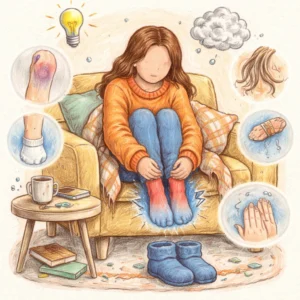
Is Your Body Sending SOS Signals?
Picture this.
You’re comfortably binge-watching your favorite show, curled up in a position that would probably make a yoga instructor proud. After a few episodes, you finally stand up to grab a snack.
Suddenly—BAM.
Your foot feels like it belongs to someone else. It’s buzzing with that weird pins and needles sensation, forcing you to hop around the room like you’re doing an impromptu dance routine.
Most of the time, that’s harmless. It just means you sat on your leg too long and temporarily blocked blood flow.
But what happens when those strange sensations show up even when you haven’t been sitting awkwardly?
That could be your body trying to tell you something important.
Think of your bloodstream as the world’s most efficient delivery service. Every second, it carries oxygen, nutrients, hormones, and immune cells to every part of your body—from the top of your scalp to the tips of your toes.
When everything runs smoothly, your body feels energized and balanced.
But when Poor Blood Circulation develops, the delivery system starts malfunctioning. Packages arrive late, some don’t arrive at all, and certain areas of your body get left waiting.
Your body is incredibly smart. Before a serious problem develops, it usually sends small warning signals.
The key is learning how to recognize them.
Below are 10 common warning signs of Poor Blood Circulation you should never ignore.
1. Constantly Cold Hands and Feet
Do your hands and feet always feel like ice cubes—even when the room temperature is comfortable?
While some people naturally run colder than others, persistently cold extremities can signal Poor Blood Circulation.
Your body prioritizes blood flow to essential organs like the heart, lungs, and brain. When circulation weakens, less blood reaches your fingers and toes.
Everyday example
Imagine your body as a large house with central heating.
If the heating system struggles, the main rooms stay warm, but the rooms at the end of the hallway—your hands and feet—get chilly first.
If you’re constantly reaching for socks or gloves, even indoors, it may be time to pay attention to your circulation.
2. Bruises That Appear Out of Nowhere
Ever noticed mysterious bruises on your legs or arms and wondered where they came from?
Occasional bruising is normal. But frequent or unexplained bruises can indicate sluggish blood flow.
Healthy circulation allows your body to repair damaged blood vessels quickly. When circulation is poor, the healing process slows down.
Everyday example
Think of road repair crews fixing potholes.
If the trucks carrying materials are stuck in traffic, the road stays damaged much longer.
The same thing happens in your body when blood flow struggles to reach injured areas.
3. Cuts and Wounds That Heal Slowly
A small cut should heal within days.
But if a minor scratch sticks around for weeks, Poor Blood Circulation might be interfering with your body’s repair system.
Blood carries:
- Oxygen
- Nutrients
- Infection-fighting white blood cells
Without adequate circulation, these healing tools can’t reach the wound quickly enough.
This issue is especially common in feet and lower legs, where gravity already makes circulation more difficult.
4. Tingling or “Pins and Needles”
That familiar buzzing or prickly feeling in your hands or feet usually happens when pressure briefly cuts off blood flow.
But if the sensation appears randomly or frequently, it may indicate nerve irritation caused by reduced circulation.
Nerves rely on a steady supply of oxygen. When blood flow drops, they react quickly—often by producing tingling, numbness, or burning sensations.
If this feeling happens often while you’re simply standing or walking, it may be worth investigating.
5. Constant Fatigue and Heavy Limbs
Everyone gets tired occasionally.
But fatigue caused by Poor Blood Circulation feels different.
Instead of general tiredness, it often shows up as heavy arms or legs, almost as if you’re moving through thick mud.
Why this happens
Muscles need oxygen to function. Blood delivers that oxygen.
When circulation slows down, muscles receive less fuel, making even small physical activities feel exhausting.
Climbing stairs, carrying groceries, or walking short distances can suddenly feel much harder than usual.
6. Brain Fog and Difficulty Concentrating
Have you ever walked into a room and completely forgotten why you went there?
Occasional forgetfulness happens to everyone. But frequent brain fog can sometimes be linked to circulation problems.
Your brain uses about 20% of your body’s oxygen supply.
If Poor Blood Circulation reduces blood flow to the brain, you may notice:
- Difficulty concentrating
- Slower thinking
- Memory lapses
- Mental fatigue
It’s like your brain’s internet connection suddenly becomes slow and unreliable.
7. Swelling in the Legs, Ankles, or Feet
Do your socks leave deep marks around your ankles by the end of the day?
That swelling is called edema, and it often occurs when blood struggles to travel back up toward the heart.
Gravity naturally pulls blood downward into your legs. Healthy circulation pumps it back upward efficiently.
When circulation weakens, fluid begins to pool in the lower extremities.
Everyday example
Imagine a sink with a clogged drain.
Water keeps flowing in, but it drains slowly—so the sink begins to fill.
That’s similar to what happens when circulation can’t keep fluids moving properly.
8. Skin Color Changes
Your skin normally has a healthy, natural tone.
But Poor Blood Circulation can cause visible color changes, including:
- Pale skin
- Blue or purple tint
- Redness in certain areas
A bluish tint, known medically as cyanosis, often means the blood in that area isn’t carrying enough oxygen.
This sign should never be ignored—especially if it appears suddenly.
9. Weak Nails and Thinning Hair
Your body always prioritizes vital organs first when distributing nutrients.
Hair and nails are considered non-essential.
So when circulation declines, your body sends fewer nutrients to them.
The result may include:
- Brittle nails that crack easily
- Slower nail growth
- Hair thinning
- Hair that looks dull or lifeless
While many factors affect hair and nail health, Poor Blood Circulation can definitely contribute.
10. Leg Pain or Cramping While Walking
One of the most recognizable symptoms of circulation problems is leg pain that appears during activity and disappears during rest.
This condition is called claudication.
It often feels like:
- Tightness in the calves
- Muscle cramps
- Heavy legs while walking
The pain typically fades once you stop moving because your muscles temporarily require less oxygen.
If you notice this pattern, it may be a sign that arteries supplying your legs are narrowed.
Simple Ways to Improve Blood Circulation
The good news?
In many cases, simple lifestyle changes can significantly improve blood flow.
Here are a few habits that support healthy circulation.
Move Your Body Frequently
Sitting for long periods slows circulation.
Try standing up every hour and stretching or walking for a few minutes.
Even small movements can stimulate blood flow.
Stay Hydrated
Water helps keep blood at the right thickness.
Dehydration can make blood more sluggish and harder for your heart to pump efficiently.
Exercise Regularly
Activities like walking, cycling, and swimming strengthen the heart and improve circulation throughout the body.
Even 30 minutes of daily movement can make a noticeable difference.
Eat Circulation-Friendly Foods
Certain foods naturally support vascular health, including:
- Leafy greens
- Berries
- Garlic
- Turmeric
- Cayenne pepper
- Green tea
These foods contain compounds that help support healthy blood vessels and circulation.
Elevate Your Legs
If your legs feel heavy or swollen, try lying down and elevating them above heart level for 15–20 minutes.
This allows gravity to assist blood flow back toward your heart.
When to See a Doctor
While mild circulation issues can often improve with lifestyle changes, certain symptoms require medical attention.
Seek medical care immediately if you experience:
- Chest pain
- Sudden shortness of breath
- Severe leg pain
- Sudden coldness in one limb
- Skin turning blue or purple suddenly
These could signal serious cardiovascular conditions that need immediate evaluation.
Early diagnosis can prevent long-term complications and keep your circulatory system functioning properly.
Final Thoughts
Your circulatory system works quietly in the background every second of your life.
But when Poor Blood Circulation develops, your body often sends subtle warning signals long before a serious health problem appears.
From cold hands and feet to brain fog, slow healing wounds, or swollen ankles, these signs are your body’s way of saying:
“Something isn’t flowing the way it should.”
The sooner you notice these signals, the sooner you can take action.
Small daily habits—moving more, eating healthier, staying hydrated, and listening to your body—can go a long way toward keeping your blood flowing smoothly.
Because when your circulation runs well, every part of your body benefits.
References
Centers for Disease Control and Prevention (CDC)