
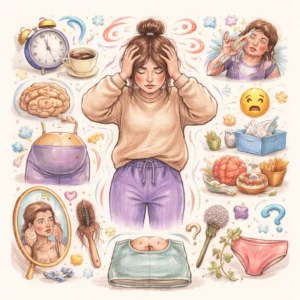
Life is exhausting.
Between juggling deadlines, remembering to drink enough water, trying to eat something green, and convincing yourself that you will start sleeping earlier tomorrow, it’s easy to blame your symptoms on “just being busy.”
Tired? Must be stress.
Moody? Probably hormones—whatever that means.
Brain fog? Too much screen time.
Belly fat? Getting older.
But what if your body is waving a tiny red flag, and you keep ignoring it?
Your hormone system is like an invisible command center. Hormones are chemical messengers that travel through your bloodstream, telling your organs and tissues what to do and when to do it. They control everything from metabolism and mood to sleep, skin, sex drive, digestion, and energy.
When your hormone levels are balanced, you feel like yourself—clear, steady, capable.
When even one hormone falls out of rhythm? The whole system feels off.
The good news: your body is constantly communicating with you. You just need to learn its language.
Here are seven hormone imbalance signs you should never ignore.
1. The “Wired but Tired” Feeling
You wake up exhausted.
You drag yourself through the day.
Then suddenly at 10 PM… your brain decides it’s showtime.
This “wired but tired” state often points toward cortisol, your primary stress hormone.
Cortisol is produced by your adrenal glands and helps you:
- Wake up in the morning
- Respond to stress
- Regulate blood sugar
- Control inflammation
In a healthy rhythm, cortisol peaks in the morning and gradually declines at night.
But chronic stress—work pressure, lack of sleep, emotional strain—can disrupt that rhythm. When cortisol stays elevated too long, it leaves you feeling:
- Jittery yet drained
- Unable to relax
- Restless at night
- Dependent on caffeine
According to the Cleveland Clinic, prolonged stress can significantly disrupt hormone balance and sleep cycles.
If you feel exhausted but can’t truly rest, your hormone system may be asking for a reset.
2. Stubborn Weight Gain (Especially Around the Belly)
You’re eating well.
You’re moving your body.
Yet your waistline seems to be expanding without permission.
Two major hormone players are often involved here: insulin and thyroid hormones.
Insulin Resistance
Insulin’s job is to move glucose (sugar) from your blood into your cells for energy. When your body becomes resistant to insulin, glucose stays in the bloodstream longer, and your body stores more fat—particularly around the abdomen.
The Mayo Clinic explains that insulin resistance is strongly associated with belly fat, fatigue, and increased risk of metabolic disorders.
Thyroid Slowdown
Your thyroid gland controls metabolism. If thyroid hormone levels drop (a condition known as hypothyroidism), your metabolic rate slows. This can cause:
- Weight gain
- Cold intolerance
- Fatigue
- Constipation
- Hair thinning
If weight gain feels disproportionate to your habits, it may not be about willpower. It may be about hormone signaling.
3. Mood Swings That Don’t Feel Like “You”
One moment you’re fine. The next, you’re overwhelmed, irritable, or teary—and you’re not entirely sure why.
While emotions are normal, intense or sudden mood shifts can signal imbalances in estrogen, progesterone, or testosterone.
Estrogen affects serotonin, the brain’s “feel-good” chemical. When estrogen fluctuates—such as during perimenopause—it can cause:
- Anxiety
- Irritability
- Low mood
- Sleep disruption
The Office on Women’s Health notes that hormone shifts during reproductive transitions significantly affect emotional health.
If your emotional responses feel amplified beyond your circumstances, your hormone levels may be influencing your brain chemistry more than you realize.
4. Skin and Hair Changes You Didn’t Expect
Your skin and hair often reveal hormone shifts before blood tests do.
Adult Acne
Breakouts along the jawline and chin often suggest increased androgen activity (including testosterone). These hormones stimulate oil glands, leading to clogged pores and inflammation.
The American Academy of Dermatology highlights the connection between adult acne and hormonal fluctuations.
Thinning Hair
Hair loss or thinning—especially at the crown or outer eyebrows—can point toward thyroid dysfunction.
Low thyroid hormone levels affect hair growth cycles, pushing more hairs into shedding mode.
If your reflection looks subtly different and you can’t explain why, it might be time to consider hormone testing.
5. Brain Fog and Memory Slips
You walk into a room and forget why.
You reread the same email three times.
You struggle to find words you used effortlessly before.
Hormones like estrogen and thyroid hormones influence brain function, focus, and memory. When they fluctuate, cognitive clarity can suffer.
Research referenced by the Harvard Health Publishing shows that hormonal changes—especially during perimenopause—can significantly affect memory and concentration.
Brain fog isn’t laziness.
It’s not lack of intelligence.
It can be a hormone communication issue.
6. Digestive Drama
Your gut and your hormone system are deeply connected.
High cortisol levels can disrupt digestion. Estrogen fluctuations can influence gut motility. Thyroid hormones regulate how quickly food moves through your system.
Imbalances may cause:
- Bloating
- Constipation
- Diarrhea
- Gas
- Increased food sensitivities
The Johns Hopkins Medicine explains that stress hormones significantly affect gut health and digestive rhythm.
If your stomach feels unpredictable despite stable eating habits, your hormone levels may be involved.
7. Low Libido (The Missing Spark)
Desire isn’t just emotional—it’s biological.
Testosterone plays a key role in libido for both men and women. Estrogen and progesterone also contribute to sexual function and comfort.
A hormone imbalance may lead to:
- Reduced interest in intimacy
- Vaginal dryness
- Erectile changes
- Difficulty reaching orgasm
According to the Endocrine Society, sex hormone fluctuations are among the most common contributors to low libido.
If your spark feels dimmed, it’s not a personal failing. It may be a hormone shift.
Quick Symptom Guide
| Symptom | Possible Hormone | What It Controls |
|---|---|---|
| Belly fat | Insulin / Cortisol | Blood sugar & stress |
| Thinning hair | Thyroid | Metabolism & growth |
| Adult acne | Testosterone | Oil production |
| Night sweats | Estrogen | Temperature control |
| Sleep issues | Progesterone | Nervous system calm |
| Brain fog | Estrogen / Thyroid | Cognitive clarity |
| Low libido | Testosterone | Sexual desire |
Why Hormone Imbalances Happen
Hormone disruption doesn’t appear randomly. Common causes include:
- Chronic stress
- Poor sleep
- Ultra-processed diets
- Excess sugar
- Lack of movement
- Perimenopause or menopause
- Thyroid disorders
- Polycystic ovary syndrome (PCOS)
- Aging
Your hormone system is adaptive—but it’s not indestructible.
How to Start Feeling Like Yourself Again
You don’t have to live in a state of “meh.”
Step 1: Get Tested
A healthcare professional can order:
- Thyroid panel
- Fasting insulin
- Cortisol levels
- Sex hormone panel
Blood work provides clarity. Guessing creates confusion.
Step 2: Prioritize Sleep
Sleep regulates nearly every hormone. Aim for:
- Consistent bedtime
- 7–9 hours nightly
- Limited late-night screen exposure
Step 3: Stabilize Blood Sugar
Focus on:
- Protein at every meal
- Fiber-rich vegetables
- Healthy fats
- Reduced refined sugar
Step 4: Lower Stress
Stress management isn’t luxury—it’s hormone medicine.
Try:
- Daily walks
- Breathwork
- Journaling
- Short digital detox periods
Step 5: Move Your Body
Strength training improves insulin sensitivity and supports hormone balance.
When to See a Doctor
Seek medical advice if you experience:
- Rapid unexplained weight changes
- Severe fatigue
- Persistent depression
- Hair loss
- Menstrual irregularities
- Night sweats or hot flashes
Hormone imbalance is treatable. You don’t have to normalize feeling unwell.
Final Thoughts
Your body is not betraying you.
It’s communicating.
Hormones are not mysterious enemies. They are messengers. When they fall out of balance, your body speaks through fatigue, mood, skin, digestion, and desire.
Listening early prevents bigger problems later.
If several of these signs sound familiar, consider taking that next step—whether it’s improving sleep, adjusting nutrition, or requesting a hormone panel.
Balance is possible.
And the version of you on the other side?
Clear-headed. Energized. Steady. Vibrant.
References
Cleveland Clinic – Hormone Imbalance Overview