
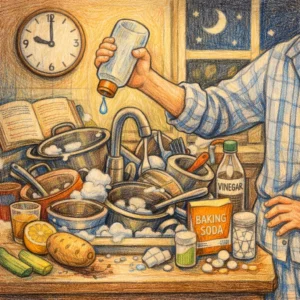
It’s 9:00 PM on a quiet Sunday night—the kind of night where motivation is already hanging by a thread. You’ve just finished cooking what can only be described as a culinary marathon. Three dishes. Two sauces. One ambitious dessert. Every single pot, pan, spoon, and bowl you own now sits in the sink like a silent accusation.
You roll up your sleeves. You turn on the tap. You reach for the dish detergent.
You squeeze.
Nothing.
You shake the bottle upside down like it owes you money. You add a little water, swirl it around, and squeeze again, hoping for at least one heroic bubble to appear. Instead, you get a sad, watery foam that disappears before it even touches the pan.
That’s when it hits you: you’re out of detergent.
For a brief moment, you consider your options. Leave the dishes overnight? Dangerous. Go to the store? You’re already in pajamas. Accept defeat and live off takeaway forever? Tempting—but expensive.
Before you spiral, take a breath.
Welcome to the age of Kitchen MacGyver energy, where a missing detergent bottle isn’t a crisis—it’s an opportunity. Because here’s the truth most of us forget: your kitchen is already stocked with powerful, grease-fighting, grime-lifting cleaning heroes. You just haven’t been giving them the credit they deserve.
In this guide, we’ll explore five genius DIY ways to clean kitchenware without detergent, using simple ingredients you probably already have. These methods don’t just work in emergencies—they’re eco-friendly, budget-friendly, and surprisingly satisfying.
Let’s turn that sink of doom into a sparkle zone.
Why Cleaning Kitchenware Without Detergent Actually Works
Before we jump into the hacks, let’s clear something up. Detergent is helpful—but it’s not magic. What really cleans kitchenware is a combination of:
- Abrasives to scrub away stuck-on food
- Acids to break down grease and mineral buildup
- Absorbents to lift oil and residue
- Heat and time to loosen grime
Many everyday kitchen ingredients naturally do these things. Long before modern detergents existed, people cleaned their kitchenware with salt, ash, vinegar, and plant-based acids—and their pots survived just fine.
So no detergent? No problem.
1. Baking Soda: The Heavy-Lifter Your Sink Deserves
If detergent is the polite office intern of cleaning, baking soda is the gym-obsessed personal trainer who doesn’t believe in excuses.
Baking soda is mildly abrasive, which means it scrubs without scratching. It also neutralizes odors and breaks down grease at a molecular level. In other words, it doesn’t just hide the mess—it evicts it.
The Vibe
Strong, reliable, and slightly aggressive—in a good way.
How to Use It
- Rinse your kitchenware with warm water.
- Sprinkle a generous layer of baking soda directly onto the surface.
- Let it sit for 5–10 minutes. This is crucial—it needs time to loosen the grime.
- Scrub with a sponge or brush in circular motions.
- Rinse with hot water and admire the transformation.
Best For
- Burnt stainless steel pots
- Baking trays with baked-on residue
- Cloudy plastic containers
- Sink stains and cutting boards
Bonus Tip: Add a few drops of lemon juice to baking soda for extra grease-cutting power.
2. Vinegar and Lemon: The Natural Power Couple
Sometimes, running out of detergent is actually a blessing—because it pushes you toward this iconic duo.
Vinegar is acidic, which helps dissolve grease, soap scum, and mineral deposits. Lemon, rich in citric acid, boosts cleaning power while leaving behind a fresh, clean scent. Together, they disinfect, deodorize, and restore shine.
The Vibe
Mediterranean kitchen meets minimalist wellness influencer.
How to Use It
- Mix equal parts white vinegar and warm water in a bowl.
- Add the juice of half a lemon.
- Dip your scrubber or cloth into the mixture.
- Clean plates, glasses, and lightly greasy kitchenware.
- Rinse thoroughly with warm water.
The Secret Hack
For dull or cloudy glasses, soak them in straight vinegar for 10 minutes. Rinse well, and they’ll come out so clear you’ll double-check they’re actually there.
Best For
- Glassware and mugs
- Plates and bowls
- Kettles and coffee carafes
- Odor removal
3. Coarse Salt and Potato: The Cast Iron Savior
This method feels like a secret passed down through generations—and for good reason.
Coarse salt works as a natural abrasive, while potatoes contain oxalic acid, which helps break down rust and stubborn burnt food. Together, they clean without damaging delicate surfaces like cast iron.
The Vibe
Old-school pioneer energy with modern satisfaction.
How to Use It
- Cut a potato in half.
- Pour a thick layer of coarse salt into your pan.
- Use the flat side of the potato to scrub the salt around.
- Rinse lightly and dry immediately.
Why It’s Amazing
- No detergent residue
- Preserves cast iron seasoning
- Removes rust and burnt bits naturally
Best For
- Cast iron skillets
- Griddles
- Heavy-duty pans
Pro Tip: After cleaning cast iron, lightly oil it to keep it seasoned and rust-free.
4. The Fizzy Miracle: Alka-Seltzer or Denture Tablets
Some kitchenware is impossible to scrub by hand. Narrow bottles. Blenders. Coffee carafes. This is where science steps in.
Effervescent tablets release carbon dioxide bubbles that agitate stains and residue, loosening them without effort.
The Vibe
A tiny science experiment in your sink.
How to Use It
- Fill the item with warm water.
- Drop in 1–2 effervescent tablets.
- Let it fizz for 15–20 minutes.
- Rinse thoroughly.
Best For
- Water bottles
- Thermoses
- Vases
- Blender jars
The bubbles do the scrubbing for you. Honestly, it feels like cheating.
5. Cornstarch: The Grease Magnet You Didn’t Know You Needed
Grease is stubborn—especially without detergent. Water alone just spreads it around. This is where cornstarch shines.
Cornstarch is highly absorbent, meaning it pulls oil out of surfaces instead of smearing it.
The Vibe
Dry shampoo, but for your frying pan.
How to Use It
- Sprinkle cornstarch generously over greasy areas.
- Let it sit for a few minutes.
- Scrape the clumped paste into the trash.
- Wipe the pan with a damp cloth.
Best For
- Frying pans
- Bacon grease disasters
- Oil-slick baking trays
Once the grease is gone, normal rinsing becomes effortless—even without detergent.
Why DIY Kitchen Cleaning Is the Future
In 2026, more households are rethinking how they clean. Heavy chemical detergents can irritate skin, harm the environment, and cost more than we realize over time.
DIY cleaning methods:
- Reduce chemical exposure
- Are safer for kids and pets
- Save money
- Lower plastic waste
- Still get your kitchenware sparkling clean
And let’s be honest—there’s a certain confidence boost that comes from cleaning your kitchen with lemons, salt, and sheer competence.
Final Thoughts: When Detergent Lets You Down, You Level Up
Running out of detergent doesn’t mean giving up—it means getting creative.
Whether it’s baking soda tackling burnt pans, vinegar and lemon restoring shine, or a humble potato saving your cast iron skillet, your kitchen already has everything it needs to stay clean.
So next time your detergent bottle is empty, don’t panic.
Turn on some music. Grab a lemon. Maybe a potato.
And remind those dishes who’s in charge.
References
The Spruce – Natural Dish Soap Substitutes That Work
Real Simple – Cleaning With Vinegar and Baking Soda: Dos and Don’ts
Better Homes & Gardens – How to Clean Every Type of Kitchenware
Martha Stewart – The Ultimate Guide to Removing Burnt-On Food
2 thoughts on “Beyond the Bubbles: 5 DIY Ways to Make Your Kitchenware Shine”
Yo, 56jllogin is the real deal. Super smooth interface and easy to navigate. Been having some good luck here lately! Check it out 56jllogin.
Sorry dude I am not into casino....anyways thanks for the reminder