
Let’s face it: walking down the skincare aisle can feel like navigating a labyrinth blindfolded while juggling flaming torches. There are bottles everywhere, all shouting promises like, “Use me, and you’ll glow like a morning sunrise!” But then comes the moment of truth—the crossroads that can make or break your hydration game:
Water-based vs. Oil-based moisturizers.
If that sounds like a chemistry final you didn’t study for, relax. You don’t need a lab coat or a PhD in dermatology to get it right. In fact, choosing the right moisturizer is probably the ultimate “Lazy Girl” skincare hack. Pick wisely, and your skin does 90% of the work for you: no more midday grease, no more tight, uncomfortable skin, and definitely no more makeup melting off like chocolate in the sun.
Grab your coffee, green juice, or your preferred caffeinated elixir, and let’s decode exactly what your face is craving.
The Water-Based Squad: Lightweight, Refreshing, Instant Relief
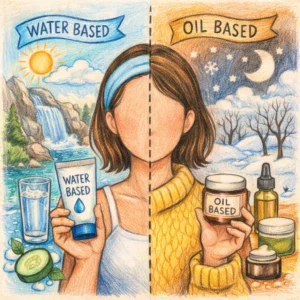
Think of water-based moisturizers as a tall, icy glass of water for your face. They’re usually marketed as gels, lotions, or sorbets, and their claim to fame is this: they feel like… well, nothing. And in skincare, sometimes “nothing” is exactly what your face needs.
Who Should Swipe Right?
If you have oily or acne-prone skin, water-based products are your soulmate. Why? Because oily skin is already a master of oil production—sometimes too much of a master. You don’t need to add extra grease; what you need is hydration that sinks in instantly without clogging your pores.
The Science Without the Jargon
Water-based creams rely on humectants, the tiny miracle workers that pull moisture from the air into your skin. Ingredients like Hyaluronic Acid and Glycerin are the superheroes here. They plump your skin, smooth fine lines, and give your face that dewy, bouncy look—without feeling like you’ve slathered butter on your forehead.
According to Healthline, humectants are the go-to choice for anyone seeking lightweight hydration that disappears into the skin, leaving it soft and supple.
The Vibe
Imagine standing under a mountain spring on a hot summer day—that’s the sensation water-based moisturizers aim to give. They’re perfect for warm climates, daytime routines, or when you’re rocking a full face of makeup.
The Oil-Based Crew: Rich, Protective, and Luxurious
Now let’s talk about the heavy hitters: oil-based moisturizers. Think of them as the oversized cashmere sweaters of the skincare world—warm, protective, and indulgent. They tend to be thicker and stay on the skin longer, giving it the love it deserves.
Who Should Swipe Right?
Dry, flaky, or mature skin types, this is your squad. If your face drinks your moisturizer like a desert absorbing a rare rainstorm, then oil-based products are your hydration lifesaver. They don’t just moisturize—they seal in hydration.
The Magic of Occlusives
Oil-based creams are rich in emollients and occlusives, which create a protective barrier over your skin. Ingredients like Shea Butter, Squalane, and Ceramides trap moisture, soothe irritation, and protect against harsh environmental conditions. According to DermNet, these barriers are essential for skin that tends to lose moisture quickly.
The Vibe
Think of it as a warm, protective hug for your face. Best for winter, nighttime routines, or dry climates where your skin could use a little extra love.
How to Know What Your Skin Actually Wants
If you’re still staring at the shelves wondering whether to swipe left or right, try the Tissue Test:
- Wash your face with a gentle cleanser.
- Wait 30 minutes—don’t apply anything!
- Press a single ply of tissue against different parts of your face.
- Tissue falls off and skin feels tight? You’re dry → Go Oil-Based.
- Tissue sticks to your forehead and nose? You’re oily → Go Water-Based.
- Tissue sticks in some areas but not others? Welcome to combination skin. (Bonus: you’re officially part of a club that no one warned you about.)
The Lazy Girl’s Cheat Sheet
If you’re standing in the skincare aisle with decision paralysis, here’s a quick guide:
Choose Water-Based If:
- Skin is oily, acne-prone, or large-pored
- You want hydration without the grease
- Labels say “Oil-Free” or “Non-comedogenic”
Choose Oil-Based If:
- Skin is dry, flaky, or mature
- You experience tightness or redness
- Fine lines need smoothing and a moisture barrier
Can You Mix Both? (The Pro Move)
Yes! This is called skin mapping. Many skincare enthusiasts use a water-based gel on their oily T-zone (forehead and nose) and a richer, oil-based cream on drier cheeks. It’s like giving each part of your face exactly what it craves—hydration where it’s light, moisture where it’s needed.
Seasonal Tweaks
Even if you’ve nailed your routine, your skin changes:
- Winter: Swap to oil-based to combat dryness and harsh winds.
- Summer: Light, water-based gels keep shine at bay.
- Stress or Diet Changes: Skin may temporarily need more hydration; listen to it.
A Few Extra Tips
- Always apply moisturizer on slightly damp skin. It helps lock in hydration.
- Don’t forget sunscreen—moisturized skin is not invincible against UV rays.
- Keep an eye on ingredients; fragrance-free options often reduce irritation.
The Bottom Line
Your skin isn’t a math problem; it’s a living organ that communicates with you. You just need to listen.
- Water-based = Hydration (think drinkable water)
- Oil-based = Moisture (think protective seal)
Don’t overthink it. Try a product for a week, watch your glow, and adjust accordingly. If your face looks shiny like a disco ball, go lighter. If it feels like a desert, go richer.
Pro Tip: If you have specific concerns—like redness, adult acne, or sensitivity—factor those into your moisturizer choice. Sometimes a hybrid approach or targeted serum is the answer.
References
Healthline. “Best Moisturizers for Your Skin Type.”
DermNet NZ. “Moisturizers and Occlusives.