
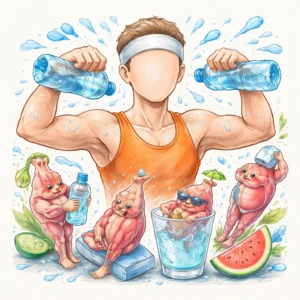
Imagine your muscles as high-maintenance celebrities living behind the scenes of your everyday life. They don’t ask for much—just oxygen, nutrients, and one very important thing: hydration. But the moment you forget that last one, even briefly, they react like their dressing room snacks were replaced with stale crackers.
One minute you’re fine. The next? Your calf tightens, your back stiffens, or your eye starts twitching like it’s trying to send Morse code.
It feels dramatic—but your body isn’t overreacting. It’s responding to something very real: dehydration affecting your muscles at a cellular level.
Let’s break this down in a way that actually makes sense—and maybe even makes you rethink that glass of water sitting untouched beside you.
Your Muscles Are Basically Living Sponges
Here’s something most people don’t realize:
Your muscles are made up of about 70–75% water.
That means every movement you make—walking, lifting, stretching, even blinking—is powered by hydrated tissue.
Think of your muscles like a sponge:
- Well-hydrated sponge: soft, flexible, strong
- Dry sponge: stiff, fragile, prone to cracking
Now imagine trying to perform daily activities with that “dry sponge” version of your muscles. That’s exactly what happens when your body lacks proper hydration.
Water doesn’t just “sit” in your muscles—it helps maintain their shape, elasticity, and ability to contract efficiently.
Without enough water, your muscles lose their ability to function smoothly. And that’s when problems begin.
Why Hydration Is Your Body’s Performance Engine
Hydration is not just about “avoiding thirst.” It’s the foundation of how your body operates.
Your bloodstream relies heavily on water. When you’re hydrated:
- Blood flows smoothly
- Oxygen reaches muscles faster
- Nutrients are delivered efficiently
But when hydration drops, your blood becomes thicker and slower—like trying to push syrup through a straw. Your heart has to work harder, and your muscles receive less of what they need.
The result?
- Faster fatigue
- Reduced strength
- Slower reaction time
Even simple tasks start feeling harder than they should.
The 2% Dehydration Rule: Small Loss, Big Impact
Here’s where things get surprising.
You don’t need to be severely dehydrated for your body to struggle. Losing just 2% of your body weight in water can significantly impact performance.
For example:
- A 70 kg person losing just 1.4 kg of water
- That’s easily possible through sweat, heat, or daily activity
At this point:
- Strength decreases
- Endurance drops
- Coordination suffers
And perhaps most noticeably—everything feels harder.
This is called increased perceived exertion.
In simple terms: your body isn’t just tired—it feels exhausted faster.
The 3 Core Ways Hydration Supports Muscles
Let’s simplify the science into three powerful roles hydration plays in muscle performance.
1. Muscle Contraction: The Electrical System
Every time your muscles move, they rely on electrical signals sent through your body.
These signals depend on electrolytes—mainly sodium, potassium, and magnesium—which function properly only when there’s enough water.
When hydration is low:
- Signals become inefficient
- Muscles may contract improperly
- Cramps and spasms occur
That sudden “Charlie horse” in your leg?
That’s often your muscles struggling with poor hydration and electrolyte imbalance.
2. Temperature Control: Your Built-In Cooling System
Your body heats up when you move. Muscles generate heat like a small engine.
To prevent overheating, your body uses sweating as a cooling mechanism.
But sweating requires—you guessed it—water.
If you’re dehydrated:
- Sweating becomes less effective
- Body temperature rises
- Fatigue increases rapidly
Eventually, your body slows you down as a protective mechanism.
3. Recovery: Cleaning Up the Mess
Every movement produces metabolic waste—like lactic acid and other byproducts.
Hydration helps:
- Flush out toxins
- Reduce inflammation
- Support muscle repair
When hydration is lacking:
- Waste builds up
- Recovery slows down
- Soreness increases
This is why poor hydration often leads to Delayed Onset Muscle Soreness (DOMS)—that stiff, painful feeling the day after activity.
Signs Your Muscles Are Dehydrated
Your body sends signals long before serious dehydration kicks in. The trick is recognizing them early.
Common signs include:
- Muscle cramps or tightness
- Fatigue without reason
- Headaches
- Dizziness
- Dry mouth
- Reduced performance
The “Lemonade Test” (Urine Color Check)
One of the easiest ways to monitor hydration:
- Pale yellow: Well hydrated
- Dark yellow/amber: Dehydrated
- Completely clear: Possibly overhydrated
Yes—overhydration is real. Drinking excessive water can dilute electrolytes, which also affects muscle function.
Balance is key.
How to Stay Hydrated Without Overthinking It
You don’t need extreme routines or gallon challenges. Simple habits can keep your muscles and hydration levels optimized.
1. Start Your Day with Water
After 7–8 hours of sleep, your body is naturally dehydrated.
Drinking a glass of water first thing:
- Rehydrates muscles
- Boosts metabolism
- Improves alertness
2. Sip Consistently, Don’t Chug
Drinking large amounts at once:
- Overloads your system
- Leads to frequent urination
- Reduces absorption efficiency
Instead:
- Take small sips throughout the day
3. Eat Water-Rich Foods
You don’t have to rely only on liquids.
Foods high in water include:
- Cucumbers
- Watermelon
- Oranges
- Strawberries
- Lettuce
These support hydration while providing vitamins and minerals.
4. Adjust for Activity and Weather
If you:
- Exercise
- Spend time in heat
- Sweat heavily
You need more hydration—and possibly electrolytes.
5. Listen to Your Body (Not Just Thirst)
Thirst is actually a late signal.
Instead, watch for:
- Energy dips
- Muscle tightness
- Headaches
These often appear before strong thirst.
The Connection Between Hydration and Everyday Life
Hydration isn’t just for athletes or gym enthusiasts.
It affects:
- Walking stamina
- Focus and concentration
- Mood stability
- Energy levels
- Sleep quality
Even mild dehydration can make a regular day feel harder than it should.
The Bigger Picture: Why Muscles Depend on Hydration
At its core, the relationship between muscles and hydration is about survival and efficiency.
Water enables:
- Cellular function
- Nutrient transport
- Temperature balance
- Waste removal
Without it, your body doesn’t just perform poorly—it struggles to maintain normal function.
Final Thoughts: Drink Before Your Body Complains
Your muscles aren’t actually dramatic—they’re just incredibly dependent on water to do their job.
The cramps, stiffness, fatigue, and soreness?
They’re not random—they’re signals.
Hydration isn’t a trend or optional health tip. It’s a biological necessity.
So whether you’re:
- Exercising
- Working
- Walking
- Or just trying to get through your day
A simple glass of water can make a noticeable difference.
Because when your muscles are hydrated, everything works better.
References
MayoClinic – Water: How much should you drink every day?