
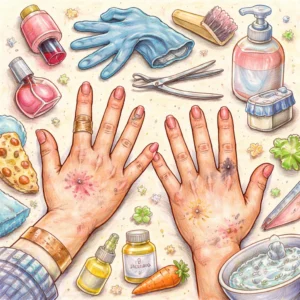
Look at your hands for a second. Seriously—pause and check.
Do they look like the hands of someone who has their life together? Smooth, clean, quietly confident?
Or… do they look like they’ve been through emotional damage, three DIY projects, and a battle with a stubborn jar lid?
If you’re leaning toward the second option, don’t worry—you’re in very good company.
The truth is, most of us don’t actually understand Nail Hygiene. We assume that if our nails are still attached and not causing pain, everything must be “fine.” But “fine” is often just damage waiting to happen.
We use our nails as tools, ignore the basics, and unknowingly follow habits that slowly ruin their strength, texture, and appearance.
This guide isn’t about perfection. It’s about fixing the small mistakes that make a big difference—and giving your nails the care they’ve quietly been begging for.
The Cuticle Mistake Everyone Keeps Making
Let’s start with one of the biggest Nail Hygiene crimes: cutting your cuticles.
It’s one of those habits that feels right. You see extra skin, you want a clean look, so you trim it away. Simple, right?
Not quite.
Your cuticle isn’t “extra.” It’s protection. It acts like a seal between your skin and your nail, blocking out bacteria, fungus, and irritation. When you cut it, you’re not improving your nails—you’re exposing them.
That’s why infections, redness, and painful swelling often follow aggressive cuticle cutting.
What to do instead:
- Soften your cuticles after a shower
- Apply a nourishing oil or cream
- Gently push them back—never forcefully
And those annoying hangnails? Only trim the dead part. If it hurts, it’s alive—leave it alone.
Your Nails Are Not Tools (Stop Treating Them Like One)
We’ve all done it.
Used our nails to peel off a sticker. Open packaging. Scratch something off a surface. Maybe even pry open a can (bold move, honestly).
But every time you do this, you’re weakening your nails.
Nails are made of keratin layers. They’re flexible, yes—but they’re not built for pressure. Using them as tools causes tiny fractures that lead to peeling, splitting, and breakage.
And here’s the frustrating part: you don’t notice the damage immediately. It builds up slowly—until one day your nails just won’t grow without breaking.
The fix is simple but requires discipline:
Use actual tools. A coin, a spoon, keys—anything but your nails.
Think of it this way: every time you don’t use your nails as tools, you’re investing in stronger nails later.
The Overwashing Problem No One Talks About
Clean hands are important—we all know that.
But when it comes to Nail Hygiene, there is such a thing as too much cleaning.
Here’s something most people don’t realize: nails absorb water. When they get wet, they expand. When they dry, they contract.
Now imagine this happening over and over again throughout the day.
That constant expansion and contraction weakens the nail structure, causing layers to separate. That’s where peeling nails come from.
Add harsh soaps and aggressive scrubbing into the mix, and you’ve got a recipe for dryness and brittleness.
What helps:
- Wear gloves while doing dishes or cleaning
- Switch to gentle, moisturizing soaps
- Avoid scrubbing nails aggressively
Clean doesn’t have to mean stripped and damaged.
The Filing Habit That’s Secretly Ruining Your Nails
Most people file their nails like they’re sawing wood—back and forth, fast and aggressively.
It feels efficient, but it’s actually one of the worst things you can do.
This motion creates tiny tears along the edge of your nails. Over time, those tiny tears turn into splits, peeling edges, and frustrating snags.
Better approach:
- File in one direction only
- Use gentle strokes
- Lift and repeat instead of sawing back and forth
It may take a few extra seconds, but it makes a huge difference in maintaining smooth, strong edges.
The Gel Polish Peeling Trap
Let’s talk about that moment when your gel polish starts lifting at the corner.
It’s tempting. It’s right there. You just want to peel a little bit.
But here’s the truth: you’re not just removing polish—you’re removing layers of your nail.
That’s why nails feel thin, weak, and sensitive after peeling off gel or acrylics.
It’s not always the salon’s fault—it’s the removal process.
The right way:
- Soak off polish with acetone
- Use oil to loosen stubborn areas
- Or visit a professional
Peeling might feel satisfying in the moment, but it costs you weeks of nail strength.
Cleaning Under Your Nails: The Hidden Risk
Seeing dirt under your nails can be annoying. The instinct is to grab something sharp and dig it out.
But this can actually cause more harm than good.
If you push too deep, you can separate your nail from the nail bed—a condition that leads to gaps where bacteria and dirt can easily collect.
This turns a small problem into a long-term one.
Safe cleaning method:
- Use a soft nail brush
- Wash with warm, soapy water
- Be gentle—no digging
Your nails aren’t meant to be excavated.
The Diet–Nail Connection You Might Be Ignoring
You can apply all the oils, creams, and treatments in the world—but if your body isn’t getting the right nutrients, your nails will still struggle.
Nail Hygiene isn’t just external. It’s internal too.
Weak, brittle, or slow-growing nails can often signal nutritional gaps.
Your body prioritizes vital organs first. Nails get whatever is left—which means deficiencies show up there early.
Key nutrients for nail health:
- Protein (for keratin production)
- Biotin (supports nail strength)
- Zinc (helps growth and repair)
- Iron (prevents ridges and brittleness)
And don’t forget water. Hydration keeps nails flexible, so they bend instead of breaking.
The “Let Them Breathe” Myth
You’ve probably heard this before:
“I’m taking a break from polish to let my nails breathe.”
It sounds logical—but it’s not actually true.
Nails don’t breathe. They get nutrients and oxygen through your bloodstream, not from the air.
That said, taking breaks from polish can still be helpful—not because of breathing, but because it reduces exposure to harsh removers and chemicals.
So what’s the takeaway?
Skip the myth, keep the balance. Give your nails a break when they look stressed—but don’t worry about them “suffocating.”
The Most Underrated Step: Moisturizing
If there’s one thing that transforms nails faster than anything else, it’s hydration.
Dry nails are weak nails.
Most people only moisturize when their hands feel dry—but by then, the damage has already started.
Make this a habit:
- Apply cuticle oil daily
- Use hand cream regularly
- Massage oil into nails before bed
Even simple options like olive oil or jojoba oil can make a visible difference.
Consistent moisture improves flexibility, reduces breakage, and gives nails that naturally healthy shine.
Why Nail Hygiene Is Actually Self-Care
Taking care of your nails isn’t about vanity—it’s about respect.
Your hands are constantly working. They help you communicate, create, cook, clean, and connect with people.
Ignoring Nail Hygiene means ignoring one of the most used parts of your body.
And the best part? It doesn’t take expensive treatments or salon visits.
Small habits—like gentle filing, proper hydration, and mindful use—can completely transform your nails over time.
Final Thoughts: It’s the Small Habits That Matter
You don’t need perfect nails. You need healthy ones.
And healthy nails come from consistent, simple care—not occasional effort.
So here’s your reset:
- Stop cutting your cuticles
- Stop using your nails as tools
- Stop peeling off polish
- Start moisturizing daily
- Start being gentle
That’s it.
Because Nail Hygiene isn’t complicated—it’s just often misunderstood.
Take care of your hands, and they’ll quietly return the favor—every single day.
References