
here is a strange little trap hidden inside almost every good thing in life.
The very thing that once made you feel energized, inspired, loved, confident, or deeply happy can slowly become the exact thing that drains your peace, steals your balance, and leaves you emotionally exhausted.
And the scary part?
Most people do not notice it happening until they are already overwhelmed.
We have all experienced this in one form or another.
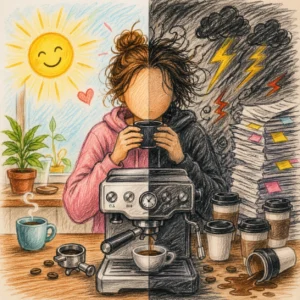
Imagine finally buying the dream espresso machine you always wanted. The kind with shiny chrome handles, café-level steam pressure, and enough buttons to make you feel like a scientist every morning.
Saturday morning arrives.
You make the perfect espresso shot.
The smell fills the kitchen. The foam looks flawless. You take a sip and suddenly feel like you have your life completely together. You are focused, productive, awake, and ridiculously happy.
You think:
“This is it. This is the lifestyle I wanted.”
Then Monday shows up.
Deadlines pile up.
Stress climbs.
You feel tired before lunch.
So naturally, your brain decides:
“If one cup made me feel amazing, five more should make me unstoppable.”
A few hours later, your heart is racing like it is auditioning for an action movie. Your hands shake while typing emails. You are anxious, sweaty, restless, and somehow both exhausted and over-energized at the same time.
The espresso machine did not change.
The coffee did not change.
But the relationship you had with it did.
That is the hidden paradox of human life:
The same thing that can make you deeply happy can also destroy your peace when balance disappears.
And this pattern exists everywhere.
In work.
In love.
In ambition.
In fitness.
In comfort.
Even in self-improvement.
The problem usually is not the thing itself.
The problem is when enjoyment quietly transforms into excess.
Why Humans Always Think “More” Will Make Us Happier
Human beings are fascinating creatures.
Our brains are built on one very simple survival formula:
If something feels good, more of it must feel even better.
Sounds logical, right?
Unfortunately, life rarely works that way.
A little success motivates us.
Too much pressure burns us out.
A little comfort helps us recharge.
Too much comfort traps us in stagnation.
A little discipline improves our lives.
Too much discipline makes life feel emotionally suffocating.
The truth is that happiness has a “sweet spot.”
Cross that line, and the thing that once supported your life can start controlling it.
The Oversized Sweater Problem
Think about your favorite oversized sweater during winter.
You put it on during a cold evening and instantly feel safe. Warm. Cozy. Protected from the world.
It feels amazing.
Now imagine wearing that exact same heavy sweater to an outdoor barbecue in the middle of July.
Within minutes, you would feel trapped inside your own clothing. Sweaty. Miserable. Irritated.
The sweater itself is not evil.
The context changed.
And that is exactly how most lifestyle burnout happens.
Something that once served you beautifully eventually stops matching your emotional environment, but you continue forcing it into your life anyway.
That is when happiness quietly turns into stress.
When Beautiful Things Become Emotional Traps
One of the hardest truths about adulthood is realizing that almost everything good in life has the potential to become unhealthy when boundaries disappear.
A dream job can become chronic burnout.
A passionate romance can become emotional dependence.
Healthy eating can become obsession.
Peaceful solitude can become loneliness.
Motivation can become perfectionism.
Even positivity can become emotional suppression when you force yourself to “stay happy” all the time.
Life constantly asks us to manage balance, but most people only notice imbalance after their emotional system starts falling apart.
The Dangerous Shift Nobody Notices
Burnout rarely arrives dramatically.
It sneaks in quietly.
You skip one lunch break.
Then another.
You answer one email at midnight.
Then it becomes routine.
You cancel plans “just this once.”
Then months pass without seeing your friends.
You stop resting because productivity starts feeling more important than peace.
Eventually, your body begins sounding alarms.
You become impatient over tiny inconveniences.
Your sleep quality drops.
Your mind races constantly.
Small tasks feel exhausting.
The scary part is that many high-achieving people mistake these warning signs for dedication.
But constant exhaustion is not ambition.
It is imbalance.
Why We Attach Our Identity to One Thing
One of the biggest reasons people become emotionally destroyed by things that once made them happy is identity attachment.
We stop having interests and start becoming them.
If you enjoy fitness, suddenly you become “the fitness person.”
If you succeed at work, your entire self-worth becomes tied to performance.
If you fall in love, your emotional stability becomes dependent on one person’s attention.
This creates enormous pressure because now every challenge feels personal.
If your career struggles, you feel worthless.
If your relationship suffers, your identity collapses.
If your passion fades, you panic.
That is why emotional balance requires multiple sources of meaning.
Your happiness should never rest entirely on one pillar.
Salt Was Never Meant to Be the Entire Meal
Think about salt.
Salt makes food incredible.
It enhances flavor beautifully.
But nobody sits down and eats an entire bowl of plain salt for dinner.
Why?
Because things that improve life are not always meant to consume life completely.
Your career should enrich your life — not replace it.
Your relationship should support your identity — not erase it.
Your goals should inspire you — not emotionally imprison you.
Healthy things become unhealthy when moderation disappears.
Comfort vs Emotional Escaping
There is also a massive difference between comfort and avoidance.
Comfort restores you.
Avoidance numbs you.
That distinction matters more than most people realize.
Watching your favorite show after a stressful day can be healthy.
But binge-watching for twelve hours to avoid dealing with anxiety is something entirely different.
Ordering comfort food occasionally is normal.
Using food as your primary emotional coping mechanism slowly becomes destructive.
The same activity can either recharge your mental health or quietly damage it depending on your intention.
A powerful question to ask yourself is:
“Am I doing this to enjoy my life, or am I doing this to escape my life?”
That one question can reveal more truth than most people expect.
The Law of Diminishing Happiness
Another hidden reality of human psychology is that repetition slowly weakens emotional impact.
Your favorite song feels magical the first few times you hear it.
But if that same song becomes your alarm clock every single morning for six months, eventually you will hate it with surprising intensity.
Humans adapt quickly.
Pleasure loses power when overexposed.
That is why constant stimulation eventually creates emotional numbness.
Too much scrolling.
Too much entertainment.
Too much work.
Too much productivity.
Too much noise.
Your brain stops appreciating things when it never gets space to breathe.
Ironically, one of the best ways to stay happy is learning when to step away from the things you love.
Distance protects appreciation.
Rest protects passion.
Balance protects joy.
Practical Ways to Protect Your Peace
1. Diversify Your Identity
Do not build your entire personality around one thing.
Have hobbies outside work.
Maintain friendships outside relationships.
Create goals unrelated to money.
A balanced identity creates emotional resilience.
If one area struggles, your entire sense of self does not collapse with it.
2. Create Boundaries Before You Need Them
Most people wait until burnout hits before establishing limits.
That is backwards.
Healthy boundaries should exist before stress appears.
Turn work notifications off at night.
Protect your sleep schedule.
Schedule rest intentionally.
Your future mental health depends on the boundaries your current self creates.
3. Learn Your Personal Warning Signs
Everybody has emotional red flags.
Some people become irritable.
Some withdraw socially.
Some overeat.
Some lose motivation entirely.
Pay attention to your patterns.
Your body often notices imbalance before your mind admits it.
4. Stop Glorifying Exhaustion
Modern culture treats burnout like a trophy.
People brag about sleeping less.
Working constantly.
Being “booked and busy.”
But exhaustion is not proof of value.
A peaceful, balanced life is not laziness.
Protecting your mental health is not weakness.
Rest is part of productivity — not the opposite of it.
5. Give Yourself Permission to Evolve
Sometimes the thing that made you happy five years ago simply no longer fits who you are today.
And that is okay.
You are allowed to outgrow goals.
You are allowed to change direction.
You are allowed to want a slower life.
Growth often requires editing old dreams.
Holding onto outdated versions of yourself can quietly destroy your peace.
The Most Important Realization of All
Here is the powerful truth most people eventually learn:
External things do not control your emotional state nearly as much as your relationship with them does.
A career is not automatically destructive.
A relationship is not automatically suffocating.
Ambition is not automatically unhealthy.
The real difference comes from awareness, boundaries, and balance.
You are the filter.
You decide when enough is enough.
You decide whether something supports your life or consumes it.
That realization is incredibly freeing because it means you are not powerless.
You can love your work passionately while still resting.
You can chase goals without sacrificing your health.
You can enjoy comfort without losing discipline.
You can be deeply happy without slowly destroying yourself in the process.
Life Was Never Meant to Be Perfectly Balanced Every Day
Now, let’s be realistic.
Nobody maintains perfect balance constantly.
Some seasons of life will naturally require more energy, more focus, or more sacrifice.
That is normal.
The goal is not perfection.
The goal is awareness.
The moment you notice your joy turning into pressure, your passion turning into obsession, or your comfort turning into emotional escape, that is your signal to pause and recalibrate.
Not quit.
Not panic.
Just adjust.
Tiny corrections prevent major emotional crashes.
Your Happiness Deserves Protection
You deserve a life that feels exciting without feeling emotionally destructive.
You deserve ambition without burnout.
Love without losing yourself.
Discipline without punishment.
Comfort without stagnation.
The key is not removing happiness from your life.
The key is learning how to hold happiness responsibly.
Protect your energy.
Respect your limits.
Listen to your internal warning signs.
Because the same thing that makes you happy today can absolutely destroy your peace tomorrow if you stop paying attention to balance.
Final Thoughts
Take ten quiet minutes this weekend.
Sit somewhere peaceful with your favorite drink.
Look honestly at the biggest areas of your life:
your work,
your routines,
your relationships,
your goals,
your habits.
Ask yourself:
“Is there anything that once made me genuinely happy but is now quietly draining me?”
If the answer is yes, you do not need to destroy your entire life and start over.
You probably just need boundaries.
A little space.
A little rest.
A little recalibration.
Sometimes balance is not about giving things up.
Sometimes it is simply about taking your power back.
And trust me — your peace is worth protecting.
References
American Psychological Association – Stress Effects
Mayo Clinic – Burnout Symptoms and Causes