
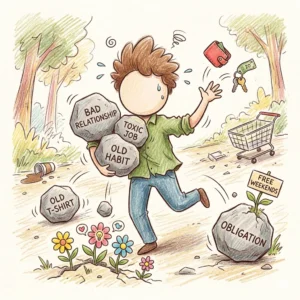
We spend a huge part of our lives trying to avoid loss. We protect our relationships, our routines, our plans, our jobs, our possessions, and even our expectations like they are priceless treasures. The moment something slips away, our brain immediately labels it as failure, disappointment, or heartbreak.
But life has a strange way of proving us wrong.
Sometimes the very thing we thought destroyed our peace was actually protecting it. Sometimes what leaves our life creates space for something healthier, lighter, and far more meaningful. And sometimes, the losses we mourn the most end up becoming the turning points we later thank life for.
That is the uncomfortable but beautiful truth: not everything you lose is a loss.
Why Humans Fear Loss So Much
Human beings are naturally wired to avoid losing things. Psychologists call this loss aversion, which basically means losing something hurts us more emotionally than gaining something of equal value makes us happy.
Losing twenty dollars feels awful. Finding twenty dollars feels good, but not equally good.
That imbalance shapes the way we see life. We treat every ending like damage. Every rejection feels personal. Every delay feels unfair. Every goodbye feels permanent.
But what if many of those endings are actually forms of protection?
What if losing certain things is life’s way of removing what no longer fits who we are becoming?
We often imagine success as constant accumulation:
- More money
- More achievements
- More relationships
- More commitments
- More possessions
- More validation
But an overloaded life can become just as exhausting as an empty one.
Think about an overstuffed closet. At first, it looks abundant. But eventually you cannot find anything you actually want to wear. The clutter creates stress instead of comfort.
Life works the same way.
Sometimes subtraction creates clarity.
The Small Everyday Losses That Secretly Help Us
Life constantly gives us tiny examples of how losing something is not always negative.
Imagine rushing out the door for work only to realize you cannot find your car keys. You search everywhere in frustration. Your coffee gets cold. Your stress level skyrockets. Finally, after ten frantic minutes, you discover the keys sitting in the refrigerator beside leftover pizza because apparently adulthood is a confusing experience.
You finally leave the house annoyed and convinced the day is ruined.
But then you discover there was a huge traffic accident on your normal route. If you had left on time, you would have been stuck for hours.
Suddenly, losing ten minutes does not feel like a disaster anymore.
Life often works this way. We judge events too quickly because we only see the immediate inconvenience. We rarely see the hidden protection behind delays, detours, or disappointments.
Sometimes the universe is not blocking your path.
It is rerouting you.
When Losing Friends Becomes Emotional Freedom
One of the hardest forms of loss involves relationships.
Most people have experienced a friendship that slowly faded over time. At one point, you talked every day, shared inside jokes, stayed out late discussing dreams, and believed the connection would last forever.
But eventually something changes.
The conversations become one-sided. The effort disappears. The friendship starts draining more energy than it gives. You notice that every interaction leaves you emotionally exhausted instead of fulfilled.
Then one day the communication simply stops.
At first, it feels painful. Your mind immediately labels it as a loss. You replay memories and wonder what went wrong.
But after enough time passes, something surprising happens.
Your life becomes quieter.
You stop anxiously waiting for replies. You stop overextending yourself for someone who barely reciprocates. You stop carrying the emotional burden of a relationship that survived mostly through your effort alone.
What initially felt like abandonment slowly begins to feel like relief.
Not every person who leaves your life is taking happiness with them. Some people leave and take chaos, guilt, pressure, and emotional exhaustion with them too.
That is not always a loss.
Sometimes it is emotional decluttering.
The Dream Job You Didn’t Get
Few things sting more than rejection.
Especially when it involves something you desperately wanted.
Imagine spending weeks preparing for your dream job interview. You update your resume, practice answers in the mirror, buy a new outfit, and convince yourself this opportunity will finally change your life.
Then the rejection email arrives.
Immediately, your confidence collapses. You question your abilities. You feel embarrassed, disappointed, and defeated.
But months later, you hear from someone who actually got the position. They tell you the workplace culture is toxic, employees are burned out, management is manipulative, and the company is struggling financially.
Suddenly, that rejection no longer feels cruel.
It feels protective.
Many opportunities look perfect from the outside because we only see the polished surface. We do not see the hidden stress, unhealthy environments, or long-term damage hiding behind attractive packaging.
Sometimes losing an opportunity saves you from a future you would have regretted.
Failure Often Produces Better Results
One of the strangest truths about life is that failure frequently improves us faster than success.
Consider the experience of losing hours of work after a laptop crash.
At first, it feels catastrophic.
Maybe you were writing an important document, editing a presentation, or creating a project you spent hours perfecting. Then suddenly the screen freezes, the file disappears, and panic takes over.
After the frustration settles, you begin rebuilding the work from memory.
And surprisingly, the second version often turns out better.
Why?
Because your first attempt already taught you what did not work. You naturally remove unnecessary details, improve weak sections, and think more clearly.
The original work disappeared, but the lessons remained.
That is how many losses operate in life.
You lose the first version of something so you can create a stronger second version.
Why Letting Go Feels So Difficult
People do not struggle with loss because everything they lose is valuable.
They struggle because familiarity feels safe.
Even unhealthy routines can become comforting simply because they are predictable.
People stay in exhausting jobs because uncertainty scares them.
They remain in unhealthy relationships because loneliness feels terrifying.
They cling to outdated versions of themselves because change requires courage.
But growth almost always demands release.
You cannot carry every past version of yourself into your future life.
At some point, something must be left behind.
Old habits.
Old identities.
Old expectations.
Old fears.
Old attachments.
Loss becomes painful when we resist necessary change.
The Hidden Peace of Having Less
Modern culture constantly encourages accumulation.
More followers.
More productivity.
More possessions.
More commitments.
More achievements.
But very few people talk about the peace that comes from having less.
Less drama.
Less stress.
Less emotional baggage.
Less pressure to impress others.
Less attachment to things that no longer serve you.
There is something deeply freeing about simplifying your life.
Think about cleaning out a cluttered room after years of avoiding it. At first, it feels emotional throwing things away. But once the space is clear, you breathe easier.
Your mind feels calmer.
Your environment feels lighter.
That same feeling applies emotionally too.
When toxic dynamics leave your life, you finally gain room for healthier experiences.
When unnecessary obligations disappear, your energy returns.
When unrealistic expectations fade, peace often replaces pressure.
How to Know if Something Was Truly a Loss
Not every ending deserves grief forever.
Sometimes what hurts initially becomes meaningful later.
Here are three questions that can help you evaluate whether something was truly a loss or simply a necessary release.
1. Did It Constantly Disturb Your Peace?
If maintaining something required endless stress, anxiety, or emotional exhaustion, losing it may actually improve your quality of life.
Anything that demands constant suffering just to keep it alive may not belong in your future.
2. Do You Feel Lighter Without It?
After the initial emotional shock fades, notice your body and mind.
Do you feel calmer?
Do you feel less pressured?
Do you feel emotionally lighter?
Relief can sometimes reveal what attachment was hiding.
3. Does This Ending Create Space for Growth?
Some things only leave because your life is evolving.
An old dream may disappear because a better direction is emerging.
A failed plan may force you toward opportunities you never considered.
Loss often creates empty space.
But empty space is where new things grow.
The Beauty of Empty Hands
There is an old story about a traveler carrying a massive rock on his shoulders while walking down a long road.
A stranger asks, “Why are you carrying that?”
The traveler pauses and replies, “I forgot I could put it down.”
Many people live exactly this way.
They carry outdated guilt.
Expired relationships.
Past failures.
Unrealistic expectations.
Emotional wounds.
Fear of change.
Eventually the weight becomes so familiar they stop questioning it.
But life occasionally forces us to drop what we were never meant to carry forever.
And while the release initially feels painful, it also creates freedom.
Because empty hands can finally receive something new.
Loss Is Sometimes Life’s Redirection System
One of the biggest mistakes people make is assuming every closed door means punishment.
Sometimes closed doors are protection.
Sometimes delays are preparation.
Sometimes rejection is redirection.
And sometimes losing something simply means your life is making room for what actually belongs there.
Imagine trying to build a beautiful modern home on top of a collapsing structure. The demolition phase looks messy and destructive. Dust fills the air. Walls disappear. Chaos unfolds.
But destruction is often the first stage of rebuilding.
Without clearing the unstable foundation, nothing stronger can be created.
Life often follows the same pattern.
Learning to Trust the Process of Subtraction
Trusting loss does not mean pretending pain does not exist.
Some losses genuinely hurt.
Some endings leave scars.
Some goodbyes break your heart.
Some disappointments take time to heal.
But healing becomes easier when you stop assuming every loss ruined your life.
Many things that disappear were only temporary chapters.
Their purpose may have been to teach you, strengthen you, redirect you, or prepare you.
Not everything is meant to stay forever.
And that is okay.
Trees lose leaves every year without panicking. They understand that release is part of renewal.
Human beings often resist the very process nature uses to survive.
Sometimes you need to lose comfort to discover strength.
Sometimes you need to lose certainty to discover growth.
Sometimes you need to lose what no longer fits so your real life can finally begin.
Final Thoughts
The next time something leaves your life, pause before immediately calling it a tragedy.
Maybe it is.
But maybe it is also freedom disguised as disappointment.
Maybe that closed door is protecting your peace.
Maybe that rejection is saving your future.
Maybe that ending is creating space for a healthier beginning.
Life is not always about gaining more.
Sometimes the greatest breakthroughs arrive through subtraction.
Not everything you lose is meant to break you.
Sometimes losing is simply life’s way of helping you travel lighter.
References
American Psychological Association – Loss Aversion
Verywell Mind – Understanding Emotional Attachment
Harvard Business Review – Failure and Growth Mindset