
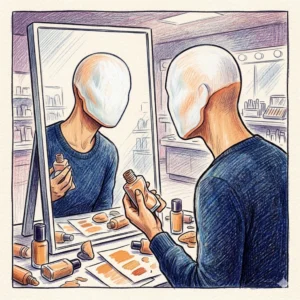
Let’s be brutally honest for a second.
Almost everyone who has ever worn makeup has experienced the terrifying “ghost face” moment at least once in their life.
You know exactly what I am talking about.
You walk into a beauty store feeling hopeful and optimistic. Shelves are glowing with hundreds of beautiful bottles promising flawless skin, airbrushed perfection, and “radiant confidence.” A salesperson confidently swatches something on your jawline and tells you this shade was practically created by the makeup gods specifically for your face.
You believe them.
Of course you do.
You rush home, excited like a kid opening birthday presents. You apply your brand-new Foundation/Base in your bathroom mirror, and suddenly you feel unstoppable. Your skin looks smooth. Your pores seem invisible. You are convinced you have finally unlocked the secret to becoming effortlessly glamorous.
Then daylight happens.
Natural sunlight — the undefeated villain of bad makeup decisions — exposes everything.
Suddenly your face is mysteriously three shades lighter than your neck. There is an awkward orange border sitting on your jawline like a failed art project. Your complexion resembles a haunted Victorian porcelain doll while the rest of your body looks perfectly normal.
At this point, you begin avoiding mirrors like they owe you money.
The truth is, finding the right Foundation/Base can feel unnecessarily complicated. Brands throw around confusing names, random numbers, strange undertones, and fancy marketing words that sound more like chemistry textbooks than beauty products.
But here is the good news:
Choosing the right Foundation/Base is not magic.
You do not need professional makeup training, celebrity genes, or supernatural beauty powers to get it right. Once you understand a few simple tricks, everything becomes dramatically easier.
So let’s break this down in the most simple, funny, and human way possible.
No confusing beauty jargon.
No unnecessary drama.
No more ghost face disasters.
Why Choosing the Wrong Foundation/Base Happens So Often
Most people think matching a Foundation/Base is only about choosing a light or dark shade.
That is exactly where things go wrong.
Your skin is far more complicated than “beige” or “tan.” Underneath your surface skin tone lives something called an undertone, and that tiny detail controls whether your makeup melts beautifully into your skin or makes you look like you lost a fight with peanut butter.
Store lighting also deserves prison time.
Most beauty stores use aggressive fluorescent lights that can make literally every shade look correct for five seconds. Then you step outside into sunlight and suddenly your makeup starts revealing secrets you never agreed to share publicly.
The wrong formula can also sabotage everything.
Some Foundation/Base products become oily after a few hours. Others dry out your face until you resemble an abandoned raisin. Some oxidize and turn orange halfway through the day like they are participating in a science experiment.
The struggle is deeply personal.
But thankfully, fixable.
Step 1: Discover Your Undertone First
Before you even think about buying a Foundation/Base, you need to figure out your undertone.
Think of undertones like the hidden color beneath your actual skin.
Your surface skin tone may change throughout the year depending on tanning, weather, or sun exposure, but your undertone stays the same forever.
There are three main undertones:
- Cool
- Warm
- Neutral
And thankfully, discovering yours does not require advanced science.
Cool Undertone
If your skin naturally carries hints of pink, blue, or red, you likely have a cool undertone.
Signs You Are Cool-Toned
- Your wrist veins appear blue or purple
- Silver jewelry looks incredible on you
- You burn easily in the sun
- Extremely golden makeup can make you look tired or washed out
Cool-toned people usually look best in Foundation/Base shades labeled:
- Cool
- Pink
- Rose
- Ivory
- C
Warm Undertone
Warm undertones contain golden, peachy, or yellow hues.
Signs You Are Warm-Toned
- Your veins appear greenish
- Gold jewelry makes your skin glow beautifully
- You tan easily
- Earthy colors look amazing on you
Warm-toned people should look for Foundation/Base shades labeled:
- Warm
- Golden
- Honey
- Beige
- W
Neutral Undertone
Neutral undertones are a balanced mix of warm and cool.
Basically, your skin won the genetic lottery.
Signs You Are Neutral
- Your veins look both blue and green
- Both gold and silver jewelry suit you
- Most makeup shades look relatively natural
Neutral Foundation/Base shades are usually labeled:
- Neutral
- Beige
- N
Step 2: Choose the Right Foundation/Base Finish
Now that you know your undertone, it is time to choose your finish.
This step matters because even a perfect shade can look terrible if the formula fights against your skin type.
The two biggest finishes are matte and dewy.
Matte Foundation/Base
A matte finish creates a smooth, shine-free appearance.
Think soft velvet.
It controls oil and gives your skin a polished look that lasts longer throughout the day.
Matte Foundation/Base Is Perfect For:
- Oily skin
- Acne-prone skin
- Humid weather
- People who hate shiny skin
If your face becomes oily by lunchtime, matte formulas are about to become your new emotional support system.
However, matte products can sometimes emphasize dry patches, so preparation matters.
Dewy Foundation/Base
Dewy formulas create a hydrated, glowing appearance.
Think “I drink green juice and meditate at sunrise” energy.
These formulas reflect light beautifully and make skin appear fresh, youthful, and moisturized.
Dewy Foundation/Base Is Perfect For:
- Dry skin
- Dull skin
- Mature skin
- People who love natural glow
If your skin constantly feels tight, flaky, or dehydrated, dewy formulas can completely transform your makeup experience.
Step 3: Stop Swatching on Your Hand
This beauty myth needs to end immediately.
Swatching Foundation/Base on your hand is one of the least accurate things you can do.
Your hands experience sun exposure, washing, steering wheels, weather changes, and life in general. Their color is often completely different from your face and neck.
Instead, use the jawline and chest method.
The Three-Stripe Test
This simple trick can save you from countless bad purchases.
Here is how to do it properly:
Pick Three Similar Shades
Choose:
- One slightly lighter
- One slightly darker
- One that seems closest
Apply Stripes
Draw vertical lines from:
- Your cheek
- Across your jawline
- Down toward your neck
This helps you see whether the Foundation/Base actually blends with your entire body.
Check in Natural Light
This step is absolutely critical.
Walk outside or stand near a window.
Store lighting lies more than an ex texting at 2 AM.
Natural daylight reveals the truth instantly.
Look for the Shade That Disappears
The correct Foundation/Base should almost vanish into your skin.
If it looks:
- Grey → too cool
- Orange → too warm
- Ashy → too light
- Muddy → too dark
The perfect shade blends seamlessly without creating obvious borders.
Step 4: Beware of Oxidation
Oxidation is one of the sneakiest makeup betrayals on Earth.
You apply your Foundation/Base in the morning looking flawless, then suddenly by afternoon your face turns darker, orange, or oddly patchy.
This happens because certain ingredients react with air and your skin’s natural oils.
It is literally chemistry happening on your face.
How to Test for Oxidation
Never buy a new Foundation/Base immediately after swatching.
Instead:
- Apply your test stripes
- Leave the store
- Wait at least 30 minutes
- Check the color again
If the shade stays consistent, congratulations.
You may have finally found “the one.”
If it becomes darker or orange, move on immediately and protect your peace.
Step 5: Your Skin Changes Throughout the Year
This is something many people do not realize.
Your perfect Foundation/Base shade in winter may become completely wrong in summer.
And that is normal.
Skin changes depending on:
- Sun exposure
- Weather
- Humidity
- Skincare routines
- Hormones
Many makeup lovers actually keep two Foundation/Base shades:
- A lighter winter shade
- A deeper summer shade
Then they mix both during seasonal transitions.
It sounds dramatic, but honestly, it works beautifully.
Common Foundation/Base Mistakes to Avoid
Choosing a Shade That Is Too Light
People often choose lighter shades because they think it makes them appear brighter.
Instead, it usually creates ghost face.
Your Foundation/Base should match your skin — not transform you into a completely different species.
Ignoring Skin Type
Oily skin with a heavy dewy formula can become greasy fast.
Dry skin with ultra-matte formulas can look cracked and flaky.
Choose formulas that work with your skin, not against it.
Applying Too Much Product
More Foundation/Base does not equal better makeup.
In fact, heavy layers usually make texture, pores, and fine lines look worse.
Thin layers almost always look more natural.
Forgetting to Blend Down the Neck
The jawline should never look like a sharp border separating two different humans.
Blend everything properly into your neck for a seamless finish.
Confidence Matters More Than Perfection
Here is the truth nobody talks about enough:
Perfect skin does not exist.
Not in real life.
Not outside filters.
Not even for celebrities.
Most flawless makeup photos online involve:
- Professional lighting
- Editing
- Filters
- Multiple artists
- Camera tricks
Your Foundation/Base is not supposed to erase your humanity.
It is simply there to enhance your natural beauty and help you feel confident.
Some days your makeup will look incredible.
Other days your skin may decide to behave like an emotional support cactus.
That is normal.
Learning makeup is a journey, not a final exam.
Final Thoughts
Finding the perfect Foundation/Base does not have to feel impossible anymore.
Once you understand undertones, finishes, natural lighting, and oxidation, everything suddenly becomes far less intimidating.
Remember these key rules:
- Know your undertone
- Test in daylight
- Match your neck and chest
- Wait for oxidation
- Choose formulas for your skin type
And most importantly:
Do not panic if you make mistakes along the way.
Every makeup lover has experienced ghost face at least once. Some of us just survived long enough to tell the story publicly.
With patience, practice, and the right Foundation/Base, you can create makeup that looks natural, beautiful, and completely seamless.
No orange lines.
No floating ghost face.
No accidental peanut butter mask.
Just skin that looks like your skin — only happier.
References
Maybelline Foundation Shade Finder