
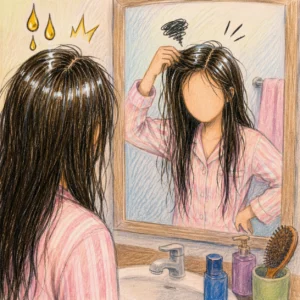
Have you ever stood in front of the mirror on a Friday morning, excited for the weekend, only to discover that your hair has completely different plans?
Your outfit looks great. Your makeup is on point. You are ready for dinner with friends, a family gathering, or a relaxing weekend brunch.
Then you glance at your reflection.
Your roots are flat.
Your bangs are sticking together.
Your once-fluffy hairstyle now resembles something that has been dipped in cooking oil.
Suddenly, your confidence takes a small hit.
If this sounds familiar, you’re certainly not alone. Millions of people struggle with oily hair, especially toward the end of the week. No matter how expensive the shampoo is or how carefully you style it, your scalp somehow decides it’s time to produce enough oil to power a small frying pan.
The good news?
Your scalp isn’t broken.
Your hair isn’t impossible to manage.
And you definitely don’t need to wash it three times a day.
Understanding why hair becomes oily is the first step toward solving the problem. Once you know what’s happening beneath your scalp, keeping your hair fresh becomes much easier.
Let’s uncover the mystery behind oily hair—and discover practical ways to enjoy cleaner, healthier-looking hair all week long.
Why Does Hair Become Oily?
Before blaming your shampoo or your genetics, it’s important to understand that oil itself isn’t the enemy.
Every strand of hair grows from a tiny follicle located in your scalp. Attached to each follicle is a small sebaceous gland whose job is to produce sebum, a natural oil.
Think of sebum as your scalp’s own conditioner.
Its job is to:
- Keep hair soft
- Prevent dryness
- Protect against breakage
- Lock in moisture
- Defend your scalp from environmental damage
Without this natural oil, your hair would quickly become dry, brittle, and prone to splitting.
Problems begin only when your scalp starts producing more oil than your hair actually needs.
Instead of traveling down the length of your hair, excess oil collects around the roots, making them appear greasy, heavy, and flat.
Why Does Hair Feel Oilier Toward the End of the Week?
Many people notice a pattern.
Monday?
Fresh.
Tuesday?
Still manageable.
Wednesday?
A little flat.
Thursday?
Questionable.
Friday?
Grease city.
This isn’t your imagination.
Several habits throughout the week gradually increase oil buildup until it finally becomes noticeable.
Let’s explore the biggest reasons.
1. Washing Hair Too Often Can Make It Oilier
It sounds backward, but washing your hair too frequently can actually increase oil production.
Imagine your scalp as a thermostat.
Whenever you strip away every drop of natural oil using harsh shampoos, your scalp thinks it’s becoming dangerously dry.
Its response?
Produce even more oil.
This creates an endless cycle:
- Hair gets oily.
- You wash it.
- The scalp becomes dry.
- The scalp makes extra oil.
- Hair gets oily even faster.
- You wash it again.
Before long, your scalp becomes conditioned to produce oil at maximum speed.
Instead of solving the problem, over-washing often makes it worse.
2. Product Buildup Is Sneakier Than You Think
Think about everything your hair experiences during one week.
Monday:
A little leave-in conditioner.
Tuesday:
Heat protectant.
Wednesday:
Dry shampoo.
Thursday:
Hair spray.
Friday:
Texturizing spray.
Individually, these products seem harmless.
Together?
They create layers upon layers of residue.
Many styling products contain ingredients that don’t completely rinse away during a regular shampoo.
Eventually, these ingredients trap natural oils close to your scalp.
Instead of flowing down your hair shaft, the oil gets stuck near your roots, making your hair appear greasy much sooner.
3. You Touch Your Hair More Than You Realize
Here’s a surprising culprit.
Your hands.
While working, studying, scrolling your phone, or watching television, many people constantly:
- Twist their hair
- Flip it back
- Scratch their scalp
- Adjust their bangs
- Run fingers through their hair
Every touch transfers natural oils from your fingertips directly onto your scalp.
Your hands also carry:
- Sweat
- Lotion
- Makeup residue
- Dirt
- Food oils
All of these contribute to greasy roots.
Even worse, repeatedly massaging your scalp stimulates sebaceous glands, encouraging them to produce more oil.
4. Hot Showers Can Trigger More Oil Production
Few things feel better after a long day than standing under a steaming hot shower.
Unfortunately, your scalp doesn’t enjoy it nearly as much.
Very hot water removes the protective oils that keep your scalp healthy.
As your skin begins drying out, your body immediately works to replace that lost moisture by producing more sebum.
The result?
Hair that becomes oily much faster.
Warm water is usually enough to clean your scalp effectively without causing excessive dryness.
Finishing your rinse with cool water may also help smooth the hair cuticle, leaving hair shinier and less frizzy.
5. Hormones Play a Bigger Role Than You Think
Hormones strongly influence oil production.
Many people notice oilier hair during:
- Puberty
- Pregnancy
- Menstrual cycles
- High-stress periods
- Hormonal changes
Androgens, a group of hormones present in both men and women, stimulate sebaceous glands.
When these hormone levels fluctuate, oil production often increases as well.
This is perfectly normal and usually temporary.
6. Stress Can Affect Your Scalp
Stress doesn’t only affect your mood.
It can also influence your scalp.
When you’re under pressure, your body releases stress hormones that may stimulate oil production in some individuals.
If you’ve ever noticed your hair becoming greasier during exam week, a demanding work project, or a busy month, stress could be playing a role.
Finding healthy ways to manage stress benefits both your overall well-being and your hair.
7. Your Hair Type Matters
Not all hair becomes oily at the same speed.
People with:
- Fine hair
- Straight hair
- Thin hair
often notice oil much faster.
Why?
Because sebum can easily travel from the scalp down straight strands.
Curly and coily hair naturally slow the movement of oil because each bend in the hair acts like a barrier.
This is one reason curly hair often appears drier even when the scalp produces a similar amount of oil.
How to Keep Hair Fresh Longer
The great news is that managing oily hair doesn’t require an expensive salon treatment.
A few smart habits can make a huge difference.
Use a Clarifying Shampoo Once a Week
Regular shampoos remove daily dirt.
Clarifying shampoos go one step further by removing:
- Product buildup
- Excess oils
- Silicones
- Mineral deposits
Using one once every week or two helps reset your scalp without over-drying it.
If you use lots of styling products, this step can be especially helpful.
Apply Conditioner Correctly
One of the biggest mistakes people make is applying conditioner from roots to ends.
Your scalp already produces natural moisture.
Your ends don’t.
Instead:
- Start applying conditioner around the middle of your hair.
- Focus on the ends.
- Avoid placing conditioner directly on your scalp.
This simple habit keeps roots lighter while nourishing dry ends.
Wash Your Hair Gradually Less Often
If you currently wash your hair every day, don’t suddenly stop.
Instead:
Week 1:
Wash every other day.
Week 3:
Stretch to two days between washes.
Week 5:
See how your scalp responds.
For many people, oil production gradually balances over time.
Patience is key.
Be Gentle While Shampooing
More scrubbing doesn’t mean cleaner hair.
Use your fingertips instead of your nails.
Massage gently for about one minute.
Aggressive scratching can irritate the scalp and increase oil production.
Clean Your Hairbrush Regularly
Your hairbrush collects:
- Oil
- Dust
- Dead skin
- Styling products
Brushing freshly washed hair with a dirty brush simply transfers yesterday’s oil back onto clean strands.
Wash brushes every one to two weeks using warm water and gentle shampoo.
Change Your Pillowcase Frequently
Your pillowcase absorbs:
- Sweat
- Facial oils
- Hair products
- Dirt
Sleeping on the same pillowcase for days means those oils keep returning to your hair.
Changing it every few days can help keep hair cleaner.
Silk or satin pillowcases may also reduce friction and help protect hair from breakage.
Don’t Overuse Dry Shampoo
Dry shampoo is fantastic in emergencies.
It isn’t designed to replace washing.
Using it for several days in a row can create heavy buildup that mixes with natural oils.
Think of dry shampoo as a temporary helper—not a permanent solution.
Eat a Balanced Diet
Healthy hair starts from within.
Eating foods rich in:
- Protein
- Omega-3 fatty acids
- Zinc
- Iron
- Vitamin A
- Vitamin D
- B vitamins
supports healthy hair growth and scalp function.
Staying hydrated also helps maintain overall skin and scalp health.
Protect Your Hair While Exercising
Sweat mixes with oil throughout the day.
If you exercise regularly:
- Tie hair loosely.
- Let your scalp dry after workouts.
- Wash only when necessary.
- Avoid leaving sweaty hair tied up for hours.
This reduces buildup and keeps your scalp feeling fresher.
Common Myths About Oily Hair
Myth 1: Oily Hair Is Dirty
Not true.
Oil is naturally produced by your body.
Clean hair can still become oily within hours.
Myth 2: Shampoo More Often
Overwashing often increases oil production instead of reducing it.
Myth 3: Conditioner Makes Hair Greasy
Only if it’s applied incorrectly.
Conditioner belongs on your lengths and ends—not your scalp.
Myth 4: Cutting Hair Stops Oil
Hair length doesn’t change how much oil your scalp produces.
Short hair simply makes oil easier to notice.
When Should You See a Dermatologist?
Occasional oily hair is completely normal.
However, consider professional advice if you notice:
- Severe itching
- Persistent dandruff
- Painful scalp irritation
- Excessive hair shedding
- Extremely oily hair that doesn’t improve with proper care
Sometimes underlying skin conditions such as seborrheic dermatitis may require medical treatment.
Final Thoughts
Having oily hair can certainly be frustrating, especially when it seems to appear at the worst possible moment.
But remember, your scalp is simply doing the job it was designed to do—protecting your hair.
The goal isn’t to eliminate oil completely.
It’s to create balance.
By washing thoughtfully, avoiding excessive product buildup, using conditioner correctly, limiting unnecessary hair touching, and treating your scalp gently, you’ll likely notice cleaner, fresher hair that lasts much longer throughout the week.
Small changes in your routine often lead to surprisingly big improvements.
So the next time Friday arrives, you can spend less time worrying about greasy roots and more time enjoying your weekend with confidence.
References
American Academy of Dermatology – Hair Care Tips