
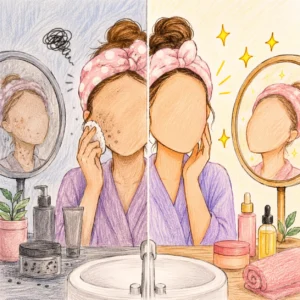
Have you ever looked in the mirror after getting enough sleep, drinking plenty of water, and following your skincare routine, only to wonder why your skin still looks dull?
It can be incredibly frustrating.
Your complexion appears tired, your favorite serum doesn’t seem to work anymore, and those stubborn dark spots from old acne or too much time in the sun refuse to fade. Instead of glowing, your skin looks flat and uneven.
If this sounds familiar, you’re far from alone.
The good news is that your skin hasn’t lost its natural beauty. In many cases, it simply needs a little help revealing the healthy skin hiding underneath. One of the simplest and most effective ways to do that is through exfoliation.
This often-overlooked skincare step can instantly improve your skin’s texture, restore radiance, and gradually reduce pigmentation when done correctly.
Let’s explore how exfoliation works, why it matters, and how you can safely include it in your skincare routine.
What Is Exfoliation?
Exfoliation is the process of removing dead skin cells from the surface of your skin.
Your body naturally sheds old skin cells every month and replaces them with fresh ones. However, this natural process doesn’t always work perfectly.
Age, stress, pollution, dehydration, sun damage, hormonal changes, and even lack of sleep can slow down your skin’s renewal cycle. Instead of falling away naturally, dead skin cells begin to accumulate on the surface.
This buildup creates several common skin concerns:
- Dull complexion
- Rough texture
- Clogged pores
- Uneven skin tone
- Acne breakouts
- Stubborn pigmentation
- Fine lines appearing more noticeable
Think of your skin like a window.
A clean window allows sunlight to shine through beautifully.
A dusty window blocks the light, making everything appear darker and less vibrant.
Dead skin works the same way. It hides the fresh, healthy skin beneath.
Exfoliation simply cleans the window.
Why Does Skin Become Dull?
Your skin constantly creates new cells deep within its layers.
These fresh cells slowly travel upward until they reach the surface, where they protect your skin before naturally shedding.
When this cycle slows down, dead cells remain stuck on your face longer than they should.
Instead of smooth, glowing skin, you get:
- Dry patches
- Flakiness
- Rough texture
- Uneven makeup application
- Loss of natural radiance
Light reflects beautifully from smooth skin.
When the surface becomes rough and uneven, light scatters in different directions, making your complexion look tired and lifeless.
That’s one of the biggest reasons why healthy skin can still look dull.
How Exfoliation Restores Your Natural Glow
One of the biggest benefits of exfoliation is how quickly it improves your skin’s appearance.
By removing dead skin cells, exfoliation allows newer, smoother skin to become visible.
Almost immediately, many people notice:
- Brighter skin
- Softer texture
- Better hydration
- Improved smoothness
- More even skin tone
Even better, your skincare products begin working more effectively.
When dead skin is removed, ingredients like Vitamin C, Niacinamide, Hyaluronic Acid, and moisturizers can penetrate the skin more efficiently instead of sitting on top of old skin cells.
It’s like clearing a blocked road before sending in supplies.
How Exfoliation Helps Fade Pigmentation
Pigmentation is one of the most common skincare concerns.
It can appear as:
- Acne marks
- Sunspots
- Melasma
- Post-inflammatory hyperpigmentation
- Uneven patches of darker skin
These darker areas often exist within the upper layers of your skin.
As you consistently remove older skin cells through exfoliation, those pigmented cells gradually disappear and are replaced by newer, healthier ones.
This doesn’t happen overnight.
However, regular exfoliation encourages continuous skin renewal, making pigmentation appear lighter over time.
Combined with sunscreen and brightening ingredients, exfoliation becomes one of the most effective tools for achieving an even complexion.
The Two Main Types of Exfoliation
Not all exfoliants work the same way.
Understanding the difference helps you choose the right one for your skin.
1. Physical Exfoliation
Physical exfoliation uses tiny particles or textured materials to manually remove dead skin cells.
Common examples include:
- Oatmeal
- Rice powder
- Jojoba beads
- Soft facial brushes
- Silicone cleansing tools
These products gently buff away loose flakes while leaving the skin smoother.
Best For
- Normal skin
- Combination skin
- Occasional dry patches
Avoid Harsh Scrubs
Not every scrub is skin-friendly.
Products containing crushed walnut shells or apricot kernels may feel satisfying, but their sharp edges can create tiny invisible injuries on delicate facial skin.
These micro-tears may lead to irritation, redness, and even worsen pigmentation over time.
Gentle always wins.
2. Chemical Exfoliation
Despite the intimidating name, chemical exfoliants are often gentler than physical scrubs.
Instead of rubbing away dead cells, they dissolve the bonds holding those cells together.
The old skin naturally sheds without aggressive scrubbing.
Popular chemical exfoliants include:
AHAs (Alpha Hydroxy Acids)
Excellent for:
- Dull skin
- Sun damage
- Dry skin
- Uneven skin tone
Common AHAs:
- Glycolic Acid
- Lactic Acid
- Mandelic Acid
BHAs (Beta Hydroxy Acids)
Best for:
- Oily skin
- Acne
- Blackheads
- Enlarged pores
The most popular BHA is:
- Salicylic Acid
Which Exfoliant Is Best for Pigmentation?
If fading pigmentation is your primary goal, dermatologists often recommend gentle chemical exfoliants.
Lactic Acid is especially suitable for beginners because it exfoliates while helping the skin stay hydrated.
Glycolic Acid penetrates deeper and can produce faster visible improvements, although sensitive skin may require a lower concentration.
For acne-prone skin with dark marks, Salicylic Acid offers the added benefit of unclogging pores while helping prevent future breakouts.
Signs You’re Over-Exfoliating
More isn’t always better.
Exfoliating too frequently can damage your skin barrier.
Watch for these warning signs:
- Redness
- Burning sensation
- Tightness
- Peeling
- Increased sensitivity
- Unexpected breakouts
- Dryness that won’t improve
If these symptoms appear, stop exfoliating for several days and focus on moisturizing until your skin recovers.
Healthy skin should feel comfortable—not irritated.
How Often Should You Exfoliate?
The ideal frequency depends on your skin type.
Sensitive Skin
Once every 7–10 days.
Dry Skin
One to two times weekly.
Normal Skin
Two to three times weekly.
Oily Skin
Two to four times weekly, depending on product strength.
Daily exfoliation is rarely necessary unless specifically recommended by a dermatologist.
A Gentle DIY Oatmeal and Honey Exfoliating Mask
If you enjoy natural skincare, this simple recipe is beginner-friendly.
Ingredients
- 1 tablespoon finely ground oatmeal
- 1 tablespoon raw honey
Directions
Mix both ingredients into a smooth paste.
Apply to damp skin using gentle circular motions for about one minute.
Leave it on for another five minutes before rinsing with lukewarm water.
The oatmeal provides mild exfoliation while honey helps soothe and hydrate the skin.
How to Use a Chemical Exfoliant Correctly
If you’re ready to try a chemical exfoliant, follow these simple steps:
- Wash your face with a gentle cleanser.
- Pat your skin completely dry.
- Apply a small amount of your exfoliant.
- Avoid the eye area.
- Allow it to absorb fully.
- Follow with a moisturizer.
- Use it only at night unless the product instructions state otherwise.
Start slowly.
Once a week is enough in the beginning.
As your skin adjusts, gradually increase frequency if needed.
Never Skip Sunscreen
This may be the single most important skincare rule.
Freshly exfoliated skin is more vulnerable to UV damage.
Without sunscreen, all your progress can disappear quickly.
Sun exposure stimulates melanin production, causing pigmentation to return—or even worsen.
Choose a broad-spectrum sunscreen with SPF 30 or higher every single morning.
Reapply throughout the day if you’re outdoors.
Think of sunscreen as the bodyguard protecting all the hard work your skincare routine is doing.
Additional Tips for Naturally Glowing Skin
Exfoliation works even better when combined with healthy daily habits.
Try to:
- Drink plenty of water.
- Eat antioxidant-rich fruits and vegetables.
- Get quality sleep.
- Avoid smoking.
- Manage stress.
- Moisturize consistently.
- Cleanse gently.
- Remove makeup before bed.
Healthy skin is built through small, consistent habits rather than expensive products.
Common Exfoliation Mistakes to Avoid
Many people unknowingly slow their skin’s progress by making simple mistakes.
Avoid these habits:
- Scrubbing aggressively.
- Using multiple exfoliating products together.
- Exfoliating sunburned skin.
- Ignoring moisturizer afterward.
- Forgetting sunscreen.
- Expecting overnight results.
- Trying every trending skincare product at once.
Patience is one of the most powerful skincare ingredients.
When Should You See Results?
Some improvements appear surprisingly quickly.
Within the first few uses, your skin may feel:
- Softer
- Smoother
- Fresher
- More radiant
Pigmentation usually requires more time.
With consistent exfoliation, daily sunscreen, and supportive skincare, many people begin noticing visible improvement after four to twelve weeks.
Remember, skin renewal is a gradual process.
Healthy change is built over time.
Final Thoughts
Beautiful skin isn’t about perfection.
It’s about caring for your skin in a way that supports its natural ability to renew itself.
Exfoliation isn’t a miracle treatment—but it is one of the most effective and science-backed steps for restoring brightness, improving texture, and reducing stubborn pigmentation.
Whether you choose a gentle oatmeal scrub or a dermatologist-recommended chemical exfoliant, consistency will always deliver better results than harsh treatments.
Pair regular exfoliation with hydration, moisturizer, and daily sunscreen, and you’ll give your skin the best opportunity to reveal its healthy, natural glow.
Instead of chasing impossible beauty standards, focus on helping your skin become its healthiest version. With patience, gentle care, and the right routine, brighter, smoother, and more even-toned skin is absolutely within reach.
References
American Academy of Dermatology – Exfoliation Tips
Mayo Clinic – Skin Care Basics