
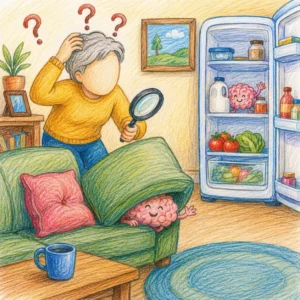
There are few things more unsettling than watching someone you love slowly forget pieces of the life you built together.
Maybe your father suddenly forgets where he parked his car every single day. Perhaps your grandmother calls you by your mother’s name. Or your spouse, who has lived in the same neighborhood for decades, suddenly struggles to remember the way home.
At first, everyone brushes it off.
“It’s just old age.”
“Everyone becomes forgetful.”
“They’re probably just tired.”
While occasional forgetfulness is a completely normal part of life, persistent memory loss that affects daily living is something very different. For millions of families worldwide, these moments are the beginning of a life-changing journey called Dementia.
Although dementia can feel overwhelming, understanding what is happening inside the brain can replace fear with compassion. While there is currently no cure for most forms of dementia, there is still plenty that families can do to improve quality of life, reduce stress, and help loved ones continue living with dignity and joy.
Let’s break it all down in simple, human language.
What Is Dementia?
One of the biggest misunderstandings is believing that Dementia is a disease.
It isn’t.
Dementia is actually an umbrella term used to describe a collection of symptoms that affect memory, thinking, language, reasoning, and daily functioning.
Think about it like this.
Imagine someone tells you they drive a “vehicle.”
That could mean a car, truck, motorcycle, bus, or van.
“Vehicle” is the general category.
The same idea applies here.
“Dementia” is the broad category, while different diseases fall underneath it, including:
- Alzheimer’s disease
- Vascular dementia
- Lewy body dementia
- Frontotemporal dementia
- Mixed dementia
Among these, Alzheimer’s disease accounts for approximately 60–70% of dementia cases, making it the most common form.
Understanding this difference helps families better understand diagnosis and treatment options.
What Happens Inside the Brain?
Imagine your brain as an enormous city.
Every memory, conversation, emotion, skill, and experience travels along billions of tiny roads made of nerve cells called neurons.
When you remember your first day of school…
Recognize your child’s smile…
Cook your favorite family recipe…
These brain highways are working perfectly.
In dementia, however, these communication routes slowly become damaged.
Some diseases cause abnormal proteins to build up.
Others reduce blood flow to parts of the brain.
Over time, messages begin taking longer to arrive—or never arrive at all.
That is why someone may:
- Forget recent conversations
- Lose track of time
- Repeat the same question
- Become confused in familiar places
- Struggle finding simple words
The memories may still exist somewhere inside the brain.
The pathways used to reach them simply become damaged.
Early Signs of Dementia
Everyone forgets things occasionally.
Misplacing your phone once isn’t dementia.
Walking into a room and forgetting why you’re there isn’t dementia either.
The concern begins when memory problems interfere with daily life.
Some common early warning signs include:
Frequent Memory Loss
Forgetting recently learned information repeatedly.
Repeating Questions
Asking identical questions several times within minutes.
Confusion About Time
Forgetting dates, seasons, or appointments.
Difficulty Completing Familiar Tasks
Getting confused while cooking meals they have prepared for years.
Trouble Finding Words
Stopping mid-sentence because common words disappear.
Poor Judgment
Giving away large amounts of money or becoming vulnerable to scams.
Personality Changes
An outgoing person suddenly becomes withdrawn, anxious, fearful, or irritable.
If several of these symptoms appear together, it is important to seek medical evaluation early.
Dementia Is More Than Memory Loss
Many people believe dementia only affects memory.
In reality, it changes many different aspects of thinking.
It can affect:
- Language
- Attention
- Decision-making
- Problem-solving
- Emotional regulation
- Balance
- Sleep
- Vision processing
As dementia progresses, simple daily tasks gradually become more difficult.
Getting dressed.
Preparing meals.
Managing finances.
Recognizing loved ones.
These changes can be heartbreaking—but understanding them helps families respond with patience rather than frustration.
What Causes Dementia?
Different forms of dementia develop for different reasons.
Some common causes include:
Alzheimer’s Disease
Abnormal protein deposits gradually damage brain cells.
Vascular Dementia
Reduced blood flow following strokes or small vessel disease damages parts of the brain.
Lewy Body Dementia
Protein deposits interfere with movement, sleep, and thinking.
Frontotemporal Dementia
Damage occurs primarily in the brain areas controlling personality, language, and behavior.
Sometimes, a person may experience more than one type simultaneously.
Can Dementia Be Prevented?
There is currently no guaranteed way to prevent dementia.
However, research consistently shows that healthy lifestyle habits may lower the risk of cognitive decline.
These include:
- Regular physical activity
- Managing blood pressure
- Controlling diabetes
- Eating a balanced diet
- Staying socially connected
- Sleeping well
- Challenging the brain with learning
- Avoiding smoking
- Limiting excessive alcohol
Healthy habits support overall brain health throughout life.
There Is No Miracle Cure—And That’s Okay
Receiving a dementia diagnosis often sends families searching desperately for a miracle.
Social media advertisements promise miracle pills.
Supplements claim to reverse memory loss overnight.
Unfortunately, most of these claims have little or no scientific evidence.
Current treatments may help manage symptoms or slow progression in some individuals, but they do not cure dementia.
Rather than chasing unrealistic promises, families often achieve far better outcomes by focusing on everyday comfort, safety, and emotional well-being.
Practical Ways to Help Someone Living with Dementia
The goal isn’t simply adding years to life.
It’s adding life to each day.
1. Create a Calm Environment
People with dementia become highly sensitive to emotional energy.
They may forget your exact words.
They won’t forget how you made them feel.
Speak gently.
Smile often.
Avoid arguing.
If they become confused, reassure them rather than correcting every mistake.
Calm voices often reduce anxiety more effectively than lengthy explanations.
2. Build Predictable Daily Routines
Routine reduces uncertainty.
Try keeping daily activities consistent:
- Wake up at the same time
- Eat meals on schedule
- Take medications consistently
- Walk at similar times
- Maintain regular bedtime
Predictability helps reduce stress and confusion.
3. Simplify the Home
A busy environment overwhelms an already struggling brain.
Simple adjustments make a huge difference:
- Label bathroom doors
- Organize closets
- Remove clutter
- Improve lighting
- Install grab bars
- Secure loose rugs
- Keep important items in consistent places
Small changes increase confidence and independence.
4. Encourage Gentle Exercise
Physical activity benefits both body and brain.
Depending on ability, encourage:
- Walking
- Gardening
- Chair exercises
- Light stretching
- Dancing
- Tai Chi
Exercise improves circulation, mood, balance, and sleep.
5. Use Music as Therapy
Music reaches parts of the brain that often remain surprisingly resilient.
Favorite songs from childhood or early adulthood can trigger remarkable emotional responses.
Someone who struggles to recognize family members may still remember every lyric from a beloved song.
Create personalized playlists using music from their younger years.
Music can reduce anxiety, improve mood, and encourage social interaction.
6. Offer Brain-Friendly Foods
Nutrition cannot cure dementia, but it supports overall brain health.
Include foods such as:
- Leafy green vegetables
- Berries
- Fatty fish
- Walnuts
- Olive oil
- Avocados
- Whole grains
- Beans
- Colorful vegetables
Limit excessive processed foods, sugar, and unhealthy fats whenever possible.
Hydration is equally important because dehydration often worsens confusion.
7. Encourage Conversation
Even when communication becomes difficult, conversation still matters.
Instead of asking memory-testing questions like:
“Do you remember this?”
Try:
“Tell me about this picture.”
“What do you think about these flowers?”
“How does this music make you feel?”
Open-ended conversations reduce pressure and create meaningful connections.
8. Celebrate Small Victories
Success looks different after dementia.
Maybe they remembered breakfast.
Maybe they smiled.
Maybe they laughed.
Maybe they recognized a grandchild for just a few moments.
Celebrate every positive moment.
These victories matter.
Supporting Emotional Well-Being
People living with dementia still experience:
- Love
- Fear
- Joy
- Loneliness
- Comfort
- Frustration
Even when memories fade, emotions remain deeply real.
Simple acts can brighten an entire day:
- Looking through family photographs
- Holding hands
- Watching birds outside
- Baking together
- Watering plants
- Folding laundry
- Reading favorite stories
- Spending time with grandchildren
Connection is often more important than conversation.
Caring for the Caregiver
Family caregivers often experience exhaustion, stress, anxiety, and grief.
Many spend years caring for someone while slowly watching the disease progress.
It is emotionally draining.
Remember the familiar airline safety instruction:
Put on your own oxygen mask first.
The same principle applies here.
Taking care of yourself allows you to continue caring for someone else.
Make time to:
- Rest
- Exercise
- Eat healthy meals
- Accept help
- Join support groups
- Take breaks
- Spend time with friends
There is no shame in asking for support.
Caregiving is a marathon—not a sprint.
When Should You See a Doctor?
Don’t ignore persistent changes in memory or thinking.
Seek medical evaluation if someone:
- Frequently becomes lost
- Repeats conversations
- Experiences personality changes
- Struggles managing finances
- Has difficulty following conversations
- Forgets medications
- Cannot complete familiar daily activities
Early diagnosis allows families to plan treatment, improve safety, and access valuable support services.
Living with Hope
Although dementia changes many things, it does not erase a person’s humanity.
Your loved one is still there.
They still appreciate kindness.
They still feel comfort.
They still recognize love in countless ways.
Some days will be difficult.
Others will surprise you with unexpected smiles, shared laughter, familiar songs, and precious moments of clarity.
Focus less on what has been lost and more on what can still be shared.
Every gentle conversation.
Every warm hug.
Every peaceful walk.
Every favorite song.
Every quiet afternoon together.
These moments become priceless gifts.
Dementia is undoubtedly one of life’s greatest challenges, but with patience, compassion, structure, and understanding, families can continue creating meaningful memories—even when memory itself begins to fade.
Sometimes, the greatest act of love isn’t helping someone remember the past.
It’s helping them feel safe, valued, and loved in the present.
Frequently Asked Questions (FAQs)
Is dementia the same as Alzheimer’s disease?
No. Dementia is an umbrella term for symptoms affecting memory and thinking, while Alzheimer’s disease is the most common cause of dementia.
Can dementia be cured?
Most types of dementia currently have no cure. However, treatments, healthy lifestyle habits, and supportive care can help manage symptoms and improve quality of life.
What are the first signs of dementia?
Early signs may include frequent memory loss, repeating questions, confusion about time, difficulty performing familiar tasks, personality changes, and trouble finding words.
What foods are good for people with dementia?
A balanced diet rich in leafy greens, berries, fatty fish, nuts, olive oil, whole grains, beans, and colorful vegetables supports overall brain health.
Can exercise help dementia?
Regular physical activity may improve mood, sleep, balance, heart health, and overall well-being, while also supporting healthy brain function.
References
World Health Organization (WHO) – Dementia
Alzheimer’s Association – What Is Dementia?
Centers for Disease Control and Prevention (CDC) – About Alzheimer’s Disease and Healthy Aging