
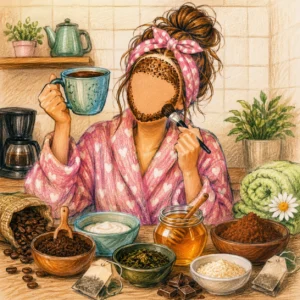
There’s something comforting about starting the day with a warm cup of coffee or tea. That first sip wakes your mind, lifts your mood, and gives you the energy to tackle the day ahead. But have you ever looked in the mirror afterward and thought, “I wish my skin could wake up this quickly too?”
Many of us deal with tired-looking skin, morning puffiness, dullness, uneven tone, or dry patches. The first instinct is often to reach for expensive skincare products, hoping they’ll work miracles overnight. While quality skincare certainly has its place, your kitchen may already hold two surprisingly effective ingredients for healthier-looking skin: coffee and tea.
These everyday beverages aren’t just comforting drinks—they’re packed with natural compounds that can support your skincare routine. Whether you want a brighter complexion, smoother skin, or a refreshing pick-me-up before a busy day, homemade coffee and tea face masks can be a fun, affordable addition to your weekly self-care ritual.
Let’s explore why these simple ingredients deserve a place in your beauty routine and learn how to create effective DIY face masks using items you probably already have at home.
Why Coffee and Tea Are Good for Your Skin
Before mixing ingredients together, it’s helpful to understand why coffee and tea have become popular in natural skincare.
Coffee: More Than Your Morning Energy Boost
Coffee contains natural antioxidants, particularly polyphenols, which help protect the skin from environmental stress caused by pollution and UV exposure. While no face mask can stop aging, antioxidants may help reduce the appearance of dullness caused by everyday environmental damage.
Coffee also contains caffeine, which can temporarily reduce the appearance of puffiness by constricting blood vessels. That’s one reason caffeine is commonly found in eye creams.
Coffee grounds also work as a gentle physical exfoliant, helping remove dead skin cells to reveal smoother, fresher-looking skin.
Benefits of Coffee Face Masks
- Gently exfoliates dead skin
- Helps reduce temporary puffiness
- Makes skin feel smoother
- Leaves skin looking refreshed
- Rich in antioxidants
Tea: Nature’s Gentle Skin Soother
Tea, especially green and black tea, is packed with plant compounds called polyphenols.
Green tea contains EGCG (epigallocatechin gallate), one of the most researched antioxidants for skin health. It may help calm the appearance of redness and support the skin’s natural protective barrier.
Black tea contains tannins that provide a temporary tightening effect while helping reduce excess oil on the skin’s surface.
Benefits of Tea Face Masks
- Helps soothe irritated skin
- Rich in antioxidants
- Supports a brighter complexion
- Can temporarily reduce puffiness
- Refreshes tired-looking skin
DIY Coffee and Honey Glow Mask
If your skin feels rough, dry, or lacks radiance, this mask is one of the easiest homemade treatments to try.
Why It Works
Coffee gently exfoliates the skin, while honey is a natural humectant, meaning it attracts and retains moisture.
Ingredients
- 1 tablespoon used coffee grounds
- 1 tablespoon raw honey
Directions
- Mix both ingredients until well combined.
- Apply to clean skin.
- Avoid the eye area.
- Leave on for 10–15 minutes.
- Before rinsing, massage gently using circular motions.
- Wash with lukewarm water.
Best For
- Dry skin
- Dull complexion
- Rough texture
Green Tea and Yogurt Soothing Mask
Long night? Salty dinner? Puffy face?
This cooling mask can help your skin look more refreshed.
Why It Works
Green tea delivers antioxidants while yogurt contains lactic acid, a naturally occurring alpha hydroxy acid that gently exfoliates and softens the skin.
Ingredients
- 1 cooled green tea bag
- 1 tablespoon plain yogurt
Directions
- Open the tea bag.
- Mix the leaves with yogurt.
- Apply evenly over the face.
- Leave for 15 minutes.
- Rinse with cool water.
Best For
- Puffy skin
- Sensitive skin
- Mild redness
- Tired-looking complexion
Black Tea and Rice Flour Brightening Mask
Uneven skin tone and post-acne marks often make skin appear dull.
This simple mask helps polish the skin’s surface.
Why It Works
Black tea provides antioxidants while rice flour gently exfoliates and absorbs excess oil.
Ingredients
- 2 tablespoons cooled black tea
- 1 tablespoon rice flour
Directions
- Slowly mix tea into the rice flour.
- Stir until smooth.
- Apply a thin layer.
- Leave for about 10–12 minutes.
- Rinse thoroughly.
Best For
- Oily skin
- Uneven tone
- Mild pigmentation
- Dull complexion
Coffee and Cocoa Antioxidant Mask
This mask feels luxurious while providing a powerful dose of antioxidants.
Why It Works
Both coffee and cocoa are rich in antioxidants, while milk or almond oil adds moisture.
Ingredients
- 1 tablespoon ground coffee
- 1 tablespoon unsweetened cocoa powder
- 2 tablespoons milk or almond oil
Directions
- Mix dry ingredients.
- Add milk or almond oil gradually.
- Apply evenly.
- Leave on for 15 minutes.
- Rinse with lukewarm water.
Best For
- Dry skin
- Mature skin
- Dull complexion
Which Face Mask Should You Choose?
| Skin Concern | Recommended Mask |
|---|---|
| Dull Skin | Coffee & Honey |
| Puffy Face | Green Tea & Yogurt |
| Oily Skin | Black Tea & Rice Flour |
| Dry Skin | Coffee & Cocoa |
| Rough Texture | Coffee & Honey |
| Uneven Tone | Black Tea & Rice Flour |
Weekly Coffee and Tea Skincare Routine
You don’t need to use every mask every day. In fact, over-exfoliating can irritate your skin.
Here’s a simple weekly routine.
Wednesday Evening
✔ Green Tea & Yogurt Mask
- Reduces the appearance of puffiness
- Helps skin feel calm after a busy week
Sunday Morning
✔ Coffee & Honey Mask
- Removes dead skin cells
- Leaves skin feeling soft and refreshed
Once Every Two Weeks
✔ Coffee & Cocoa Mask
Provides an antioxidant-rich treatment for dry or tired-looking skin.
Tips for Safe DIY Skincare
Natural doesn’t always mean irritation-free. Follow these simple precautions before trying any homemade face mask.
- Always perform a patch test 24 hours before applying a new ingredient.
- Never scrub aggressively with coffee grounds.
- Avoid applying masks to broken or irritated skin.
- Use fresh ingredients every time.
- Discard leftovers instead of storing them.
- Follow up with a moisturizer.
- Wear sunscreen every morning, especially after exfoliating.
Can Coffee and Tea Replace Your Skincare Products?
Not entirely.
DIY face masks are excellent as occasional treatments, but they shouldn’t replace a complete skincare routine.
For healthy skin, continue using:
- Gentle cleanser
- Daily moisturizer
- Broad-spectrum SPF 30 or higher
- Targeted treatments recommended by a dermatologist if needed
Think of coffee and tea masks as a weekly spa treatment rather than an everyday necessity.
Frequently Asked Questions
Can I use fresh coffee instead of used grounds?
Yes. Finely ground fresh coffee works well, but avoid coarse grounds that may scratch the skin.
How often should I use coffee face masks?
Once or twice a week is usually enough.
Is green tea suitable for sensitive skin?
Generally yes, but always patch test first since everyone’s skin reacts differently.
Can these masks remove acne scars?
No homemade mask can erase acne scars. However, gentle exfoliation may temporarily improve skin brightness and texture over time.
Which tea is best for skincare?
Green tea is often preferred because of its high antioxidant content, while black tea works well for oily skin.
Final Thoughts
Healthy, glowing skin doesn’t always require an overflowing skincare shelf. Sometimes, the simplest ingredients can become enjoyable additions to your routine.
Coffee helps gently exfoliate and temporarily reduce puffiness, while tea delivers antioxidants that support healthier-looking skin. Combined with ingredients like honey, yogurt, cocoa, or rice flour, they create easy homemade treatments that are inexpensive, accessible, and satisfying to use.
Remember, consistency matters more than perfection. Pair these DIY masks with a balanced diet, adequate hydration, quality sleep, and daily sunscreen for the best long-term results.
The next time you brew your morning coffee or steep your favorite cup of tea, don’t rush to throw away the leftovers. Your skin might appreciate them just as much as your morning routine does.
References
Harvard T.H. Chan School of Public Health – The Nutrition Source: Coffee
National Center for Biotechnology Information (Green Tea Polyphenols and Skin Health)