
Have you ever stepped out of a warm shower on a freezing morning, accidentally splashed cold water on your face, and instantly questioned every decision that led you to that moment?
For a few seconds, your face feels like it has been transported to Antarctica.
Then something interesting happens.
Your cheeks look a little pinker. Your face appears more awake. Puffiness seems less noticeable, and your skin can temporarily look tighter and fresher.
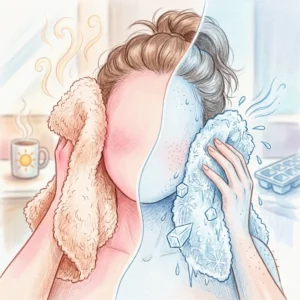
That simple experience has inspired a growing beauty idea often described as thermal shock cycling—alternating comfortably warm and cool temperatures on the skin.
It sounds wonderfully dramatic. Fire and ice! But before we start treating the bathroom sink like a miniature spa laboratory, there is an important distinction to make.
Warmth and cold can temporarily change blood-vessel behavior, sensation, redness, and the appearance of puffiness. However, there is currently no strong evidence that repeatedly switching between hot and cold water at home can permanently rebuild collagen, regenerate elastin, or reverse skin aging.
Still, there are reasonable ways to use temperature changes as a refreshing addition to a gentle skincare routine.
So let’s separate the beauty myth from the biology and explore what thermal shock cycling may—and may not—do for your skin.
What Actually Determines Skin Elasticity?
Before discussing temperature, we need to talk about what gives youthful skin its famous bounce.
Think about a fresh rubber band. Stretch it, release it, and it quickly returns toward its original shape.
Healthy skin has its own version of that springiness.
The deeper dermis contains an extracellular matrix made largely of structural proteins and other components that help provide strength, flexibility, and support. Collagen contributes much of the skin’s structural framework, while elastic fibers help the tissue stretch and recoil.
Specialized cells called fibroblasts help produce and maintain these components.
Unfortunately, this system doesn’t remain exactly the same throughout life.
As skin ages, collagen becomes more fragmented, elastic fibers become altered, and fibroblast activity changes. These processes contribute to wrinkles, thinning, reduced firmness, and declining skin elasticity. Sun exposure and other environmental factors can accelerate these changes.
In other words, skin elasticity isn’t controlled by one magic switch.
It’s the result of a complicated biological support system.
And unfortunately, your skin cannot be bullied into behaving like it did at 22 simply by yelling, “WAKE UP!” at it with an ice cube.
So, What Is Thermal Shock Cycling?
Thermal shock cycling simply refers to alternating between warm and cool temperatures.
In skincare, that might mean applying a comfortably warm washcloth to the face and then following it with a cool washcloth.
The basic physiological idea is straightforward.
Warmth can cause superficial blood vessels to widen, a process known as vasodilation. Cold can cause them to narrow, known as vasoconstriction.
That’s one reason your face may look noticeably different after exposure to different temperatures.
But here’s where beauty advice sometimes gets carried away.
The temporary opening and narrowing of blood vessels does not mean you’re exercising your capillaries in a way that permanently strengthens them. And it doesn’t mean that cold water is squeezing toxins out of your skin or forcing fibroblasts to manufacture new collagen.
Your circulatory system is considerably more sophisticated than a kitchen sponge.
Thermal cycling can create temporary changes in circulation and appearance, but that should not be confused with rebuilding the underlying architecture of aging skin.
Why Does Cold Water Make Your Face Look Tighter?
This is where the technique becomes genuinely interesting.
Cold exposure can temporarily constrict superficial blood vessels. It can also change sensation and may reduce the appearance of some puffiness for a short period.
That’s why a cool compress can feel so refreshing after a long night, a hot day, or a morning when your face seems determined to look like it spent the night arguing with gravity.
The effect is mainly temporary.
Your face isn’t suddenly producing a brand-new supply of collagen because you used a cold washcloth.
Instead, you’re seeing a short-term physiological response.
And honestly, sometimes that’s all you need.
If you have an important meeting, event, photograph, or simply want to feel more awake in the morning, a gentle cool compress can be a pleasant little ritual.
What About Warmth?
Warmth has its own role.
A comfortably warm cloth can feel relaxing and may temporarily increase superficial blood flow. It can also soften surface oils and make cleansing feel more comfortable.
But there’s a huge difference between warm and hot.
Your face does not need to be steamed like a dumpling.
Excessive heat can irritate the skin, increase redness, and disrupt the skin barrier, particularly if you already have sensitive or reactive skin.
So if your washcloth feels like something you would immediately pull away from your hand, it does not belong on your face.
Your skin is not impressed by bravery.
Can Thermal Shock Rebuild Collagen?
This is probably the biggest claim surrounding the trend—and the one that needs the biggest reality check.
Not based on current evidence for simple at-home hot-and-cold facial treatments.
Fibroblasts are absolutely important to collagen production and skin structure. Research into skin aging shows that changes in fibroblast function, collagen organization, and the extracellular matrix contribute to declining skin elasticity.
But that doesn’t mean every stimulus that makes your skin tingle activates fibroblasts enough to rebuild youthful collagen.
Professional dermatological procedures can deliberately create controlled biological responses using specific technologies and carefully measured energy. Those procedures are very different from placing a warm washcloth on your face followed by a cold one.
So think of thermal cycling as a refreshing skincare ritual, not a collagen-rebuilding treatment.
That’s a much more realistic—and much safer—expectation.
The Potential Benefits You Can Actually Expect
If you enjoy temperature-based skincare, there are several reasonable benefits to appreciate.
1. A Temporary Refreshed Appearance
Cool temperatures can temporarily reduce the appearance of puffiness and make the face look more awake.
This is particularly appealing first thing in the morning when your face looks like it hasn’t received the memo that the day has started.
2. A Temporary Change in Skin Color
Warmth can increase superficial blood flow, which may create temporary flushing or a healthy-looking glow.
Just remember that redness isn’t automatically synonymous with healthy skin.
If your face becomes intensely red, itchy, burning, or uncomfortable, that’s your cue to stop.
3. A Relaxing Ritual
A comfortably warm cloth can feel soothing, while a brief cool compress can feel invigorating.
Skincare doesn’t always need to deliver a dramatic biological transformation.
Sometimes the benefit is simply that you enjoy doing it.
And routines you actually enjoy are far easier to maintain.
4. A Cooling Sensation After Heat
After exercising, spending time outdoors, or being in a warm environment, a cool compress can feel wonderfully refreshing.
Again, this is about comfort—not magically resetting the aging process.
A Gentler Thermal Cycling Routine
If you want to experiment with this trend, keep things extremely simple.
You don’t need ice cubes, freezing water, boiling towels, expensive gadgets, or anything that makes your bathroom resemble a medieval torture chamber.
Step 1: Cleanse Gently
Start with clean skin.
Use your usual gentle cleanser and rinse with lukewarm water.
Avoid aggressive scrubbing. Thermal cycling is already introducing a temperature change, so there’s no reason to add unnecessary friction.
Step 2: Apply Comfortable Warmth
Soak a clean washcloth in comfortably warm water.
Wring it out and gently place it over your face for around 30–60 seconds.
The sensation should be pleasant.
If your skin starts burning or becoming intensely red, remove the cloth immediately.
Step 3: Switch to Cool
Use a separate clean washcloth dampened with cool—not painfully icy—water.
Gently press it against your face for approximately 10–20 seconds.
You don’t need to endure an ice-water endurance competition.
Your goal is refreshing, not heroic.
Step 4: Repeat If Your Skin Likes It
If your skin tolerates the process well, you can repeat the warm-and-cool sequence once or twice.
There is no scientifically established requirement for a specific “3-to-1” ratio, so don’t feel obligated to follow a rigid 60-second-warm/20-second-cold formula.
More isn’t necessarily better.
Step 5: Finish With Moisturizer
Pat your skin dry rather than rubbing it aggressively.
Then apply a moisturizer suited to your skin type.
During the daytime, finish with broad-spectrum sunscreen.
That last step is considerably more important for long-term skin aging than turning your bathroom faucet into a temperature roulette wheel.
What Thermal Cycling Can’t Replace
This is the part worth remembering.
If your goal is long-term skin elasticity, the boring fundamentals are still incredibly important.
And yes, unfortunately, they aren’t nearly as glamorous as “fire and ice.”
Sun Protection
Ultraviolet radiation is one of the major environmental contributors to premature skin aging.
Daily sunscreen and sensible sun protection can help reduce cumulative UV damage.
Moisturization
A healthy skin barrier helps the outer layer of skin retain water and function properly.
Well-moisturized skin can also temporarily appear smoother and more supple.
Retinoids
Certain retinoid products have considerably more evidence behind them for addressing signs of photoaging than DIY temperature cycling.
If you’re considering a prescription retinoid, speak with a qualified healthcare professional about whether it is appropriate for you.
A Balanced Diet
Your skin is living tissue.
Adequate protein, fruits, vegetables, healthy fats, and overall nutritional adequacy support normal tissue maintenance.
No single smoothie will rebuild your jawline overnight, but consistently nourishing your body is a much more sensible long-term strategy.
Don’t Forget Sleep
Your skin doesn’t care that you have binge-watched six episodes at 2 a.m.
Your body still needs recovery.
A consistent sleep routine supports overall health, and healthy skin is part of that picture.
Who Should Be Careful With Temperature-Based Skincare?
Not everyone’s skin will enjoy thermal cycling.
Be especially cautious if you have highly sensitive or reactive skin, persistent facial redness, rosacea, eczema, or a compromised skin barrier.
Extreme temperatures can aggravate irritation.
You should also avoid placing ice directly against the skin for prolonged periods. A cloth barrier is a much gentler option.
And please skip scalding water.
If you’re thinking, “Wow, that’s hot!” before putting the cloth on your face, listen to yourself.
Your skin has already voted.
Signs You Should Stop
Thermal cycling should never cause significant pain.
Stop if you experience:
- Burning
- Persistent redness
- Numbness
- Stinging
- Itching
- Swelling
- Blistering
- Significant irritation
A skincare routine should leave your skin feeling comfortable—not like you’ve just survived a weather-related emergency.
If irritation persists, give your skin time to recover and consider speaking with a dermatologist.
The Biggest Myth: “Tighter” Doesn’t Always Mean “More Elastic”
Here’s another little skincare plot twist.
When your skin temporarily looks tighter after cold exposure, that doesn’t necessarily mean its underlying elasticity has improved.
Appearance and structure are two different things.
True skin elasticity depends on the condition and organization of deeper structural components, including collagen and elastic fibers. Age-related changes in these systems contribute to reduced resilience and sagging.
So enjoy that temporarily refreshed look—but don’t confuse it with permanent remodeling.
Your face isn’t secretly going through a renovation every time you splash cold water on it.
Can You Still Make Thermal Shock Part of Your Routine?
Absolutely—provided you keep your expectations realistic.
Think of it as a refreshing temperature ritual, not an anti-aging miracle.
You might use a warm cloth to relax your face and a cool cloth afterward when you want a fresher appearance. You can keep the routine short, gentle, and comfortable.
And if your skin doesn’t like it?
Don’t force it.
There are plenty of other ways to care for your skin.
Skincare should work with your skin, not against it.
The Real Secret to Better Skin Elasticity
The most attractive thing about thermal shock cycling isn’t actually the dramatic fire-and-ice story.
It’s the reminder that your skin is a living, responsive organ.
But improving its long-term condition requires more than dramatic temperature changes.
Protect it from excessive UV exposure. Keep the barrier supported. Use evidence-based skincare when appropriate. Eat well. Sleep. Avoid smoking. Be gentle when cleansing. And give effective products enough time to work instead of changing your routine every three days because the internet discovered a new miracle ingredient.
Thermal cycling can be a fun little addition to that routine.
Just don’t expect your washcloth to become a dermatological time machine.
Final Thoughts
The idea of using temperature changes to wake up tired-looking skin is undeniably appealing.
Warmth feels comforting. Coolness feels invigorating. Together, they can create a surprisingly satisfying little morning ritual.
But when it comes to skin elasticity, the science deserves more honesty than the beauty industry’s usual “one weird trick” approach.
Thermal shock cycling may temporarily influence circulation, redness, sensation, and puffiness. It can make your face look refreshed and help you feel more awake.
What it hasn’t been proven to do is permanently rebuild collagen or restore youthful elastin simply by alternating warm and cold water.
And that’s okay.
Your skincare routine doesn’t need to perform miracles to be worthwhile.
So grab two clean washcloths, keep the temperatures gentle, listen to your skin, and enjoy the refreshing sensation.
Just remember: fire and ice may wake up your face—but sunscreen, consistency, and evidence-based skincare are much more important for the long game.
References
NCBI/PMC – Skin aging from the perspective of dermal fibroblasts
NCBI/PMC – Molecular Mechanisms of Dermal Aging and Antiaging Approaches
NCBI/PMC – Facial skin ageing: Key concepts and overview of processes