
There’s something slightly ridiculous about modern wellness culture.
One minute you’re happily drinking your morning tea, and the next you’re watching someone on social media blend seventeen green ingredients at 5 a.m. while standing in a spotless kitchen that somehow has no dirty dishes.
They have glowing skin. Endless energy. Perfectly organized vegetables.
Meanwhile, you’re standing in your kitchen wondering whether your coffee counts as breakfast.
And suddenly you feel guilty.
So you decide that this is the week you’re going to become a completely different person. You buy expensive powders, unfamiliar supplements and enough “superfoods” to stock a small wellness retreat.
Three days later, the powders are hiding behind the flour, the blender is sitting in the sink, and you’re back to your usual routine.
But healthy eating doesn’t have to look like a laboratory experiment.
Sometimes, simple really is better.
That’s where ABC Juice comes in.
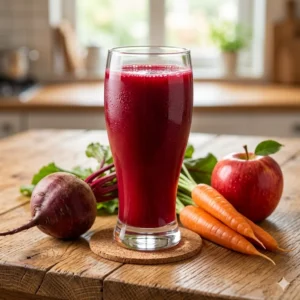
The name is wonderfully uncomplicated: Apple, Beetroot and Carrot. Three everyday ingredients, one vibrant red-orange drink, and a recipe that doesn’t require a nutrition degree.
ABC Juice won’t magically “reset” your body overnight, melt away toxins or transform your skin in a few mornings. Your liver and kidneys already handle your body’s natural detoxification processes. What this colorful drink can do is provide a convenient combination of fruits and vegetables containing vitamins, minerals, antioxidants and plant compounds.
And honestly, that’s impressive enough.
What Exactly Is ABC Juice?
ABC Juice is a homemade juice or smoothie made primarily from:
- Apple
- Beetroot
- Carrot
The combination works beautifully because each ingredient brings something different to the glass.
Apple contributes natural sweetness and some vitamin C and polyphenols. Beetroot provides dietary nitrates and colorful betalain compounds. Carrots are especially rich in beta-carotene, which the body can convert into vitamin A.
Together, they create a naturally sweet, earthy and refreshing drink.
Think of it as the colorful cousin of your ordinary morning juice.
And unlike complicated wellness recipes with twelve ingredients and seventeen instructions, ABC Juice is extremely forgiving.
Too earthy?
Add more apple.
Too sweet?
Add lemon.
Need some zing?
Throw in ginger.
Want more fiber?
Don’t strain it.
That’s basically the whole philosophy.
The ABC of This Colorful Drink
Let’s look at what each ingredient actually brings to the table.
A Is for Apple
Apples are doing more work here than simply making beetroot taste less like… well, beetroot.
They contain pectin, a type of soluble dietary fiber, along with vitamin C and various plant compounds.
However, there’s an important difference between eating an apple and drinking apple juice.
When you blend the whole apple, much of its fiber remains in the drink. When you juice and discard the pulp, you lose a significant amount of that fiber.
So if you’re making ABC Juice in a blender, keeping the pulp can turn your drink into something closer to a whole-food smoothie.
And let’s be honest: apples also have an important job here.
They make the whole thing taste much better.
B Is for Beetroot
Now we arrive at the dramatic ingredient.
Beetroot doesn’t exactly enter a recipe quietly.
It brings an intense ruby-red color, an earthy flavor and naturally occurring dietary nitrates.
These nitrates can contribute to the body’s production of nitric oxide, a compound involved in blood-vessel dilation and blood flow.
Research on dietary nitrate has found potential benefits for exercise performance and cardiovascular function, although the effects vary depending on the person, amount consumed and circumstances.
So yes, beetroot has legitimate nutritional credentials.
But no, drinking one glass of beetroot juice doesn’t turn you into a human sports car.
Think of it as one useful food within an overall healthy diet—not a magical performance potion.
Beetroot also contains betalains, the pigments responsible for its spectacular color. These compounds have antioxidant properties, which is another reason this little root vegetable has earned its place in the wellness world.
C Is for Carrot
If ABC Juice had a skincare ingredient, carrot would probably volunteer immediately.
Carrots are famous for beta-carotene, a carotenoid that the body can convert into vitamin A.
Vitamin A plays several important roles in the body, including supporting normal vision, immune function and healthy skin.
But here’s where we need to ditch the beauty-marketing exaggeration.
Drinking carrot juice won’t work like prescription retinoids or suddenly erase wrinkles. Food-based beta-carotene is simply one source of a nutrient your body needs.
Still, getting colorful vegetables into your diet is a very good habit.
And carrots make ABC Juice naturally sweeter and more approachable.
The Simple ABC Juice Recipe
You don’t need a fancy kitchen.
You need three main ingredients and approximately five minutes.
Ingredients
- 1 medium apple
- 1 small beetroot
- 2 medium carrots
- ½ inch fresh ginger, optional
- Juice of ½ lemon, optional
- ½–1 cup cold water if using a blender
Choose a sweeter apple such as Gala or Fuji if you prefer a naturally sweet drink.
If you like something sharper, Granny Smith works beautifully.
For the beetroot, start small if you’re new to its earthy flavor.
And don’t worry about making the proportions mathematically perfect.
ABC Juice isn’t a chemistry exam.
How to Make ABC Juice With a Juicer
Start by washing all your produce thoroughly.
Trim the beetroot and carrots. You can peel them if you prefer, although thoroughly washed produce doesn’t necessarily need peeling.
Cut the ingredients into pieces that fit comfortably into your juicer.
Then alternate apple, beetroot and carrot as you feed them through.
If you’re using ginger, add a small piece toward the end.
Once your juice is collected, squeeze in some fresh lemon.
Give it a stir, pour it over ice and enjoy.
That’s it.
You have officially survived another complicated wellness trend without buying a $90 powder.
How to Make ABC Juice Without a Juicer
No juicer?
No problem.
Your blender can absolutely handle the job.
Chop the apple, beetroot and carrots into smaller pieces.
Add them to the blender with about ½ to 1 cup of cold water.
Add ginger if you’re using it.
Blend until smooth.
Now you have two choices.
Option 1: Keep the Pulp
Drink it as a thick smoothie.
This keeps more of the fiber from the whole ingredients and can make the drink more filling.
You may need a little extra water to reach your preferred consistency.
Option 2: Strain It
If you’re craving traditional juice, pour the blended mixture through a fine-mesh strainer or nut-milk bag.
Press gently to extract the liquid.
The result will be smoother and lighter.
Just remember that straining removes much of the fiber.
Neither option is automatically “better.”
It simply depends on what you want from your drink.
Should You Drink ABC Juice Every Morning?
You certainly can include ABC Juice in a balanced diet if you enjoy it and it agrees with you.
But there’s no nutritional rule saying you must drink it every morning.
In fact, variety is a better long-term strategy.
Your body doesn’t need the same red drink every single day to remain healthy.
Rotate different fruits and vegetables throughout the week. Eat whole fruit, vegetables, beans, grains, nuts and other nutrient-rich foods.
Think of ABC Juice as one convenient way to add produce—not as your entire nutritional strategy.
And please don’t replace a balanced breakfast with a glass of juice if you’re still hungry afterward.
A juice containing fruit and vegetables isn’t necessarily a complete meal.
Is ABC Juice Good for Skin?
This is probably one of the biggest reasons ABC Juice has become popular.
And there is a sensible nutritional connection—but it needs a little perspective.
Your skin requires adequate nutrients, hydration and overall good health to function normally.
Carrots provide beta-carotene, apples provide vitamin C and various plant compounds, and beetroot contributes betalains and other nutrients.
But glowing skin isn’t created by one magical ingredient.
Your skin is influenced by genetics, sun exposure, sleep, stress, hormones, nutrition and skincare habits.
So instead of thinking:
“ABC Juice will give me perfect skin.”
Think:
“ABC Juice can be one small, nutritious habit within a lifestyle that supports healthy skin.”
That’s much less glamorous—but considerably more realistic.
What About Energy?
This is another area where social media sometimes gets carried away.
ABC Juice doesn’t contain caffeine, so it won’t produce the same stimulant effect as coffee.
However, its carbohydrate content can provide energy, while beetroot’s dietary nitrates may support blood-flow-related processes.
If you’re feeling exhausted every morning, though, don’t assume you simply need more juice.
Persistent fatigue can have many causes, including inadequate sleep, stress, insufficient food intake and various medical conditions.
A colorful drink is not a substitute for addressing the underlying issue.
Sometimes the most powerful “energy hack” is annoyingly boring:
Sleep. Eat enough. Move your body. Stay hydrated.
Yes, wellness can be deeply unexciting.
Make ABC Juice Taste Amazing
Beetroot has a personality.
Some people taste it and think, “Wow, earthy and delicious.”
Others take one sip and immediately wonder whether they’ve accidentally swallowed a garden.
Fortunately, you can adjust the recipe.
Add Lemon
Fresh lemon cuts through the earthy flavor and makes the drink taste brighter.
Add Ginger
Ginger gives the juice a warm, spicy kick and pairs surprisingly well with beetroot and carrot.
Use a Sweeter Apple
A naturally sweet apple can make a huge difference.
Serve It Cold
Cold juice generally tastes fresher and more refreshing.
Start With Less Beetroot
You don’t need to prove your toughness.
If you’re new to beetroot, start with a smaller amount and gradually increase it if you enjoy the flavor.
Can You Prepare ABC Juice Ahead of Time?
Fresh is generally best for flavor and some nutrients that are sensitive to storage and oxygen exposure.
But real life exists.
If preparing it immediately every morning isn’t realistic, make a small batch and refrigerate it in a tightly sealed container.
Fill the container reasonably full to reduce excess air space and keep it chilled.
For the best quality, drink it as soon as practical rather than treating homemade juice like a long-term refrigerator resident.
And if it smells strange, tastes spoiled or has clearly deteriorated, don’t drink it.
Your wellness journey does not require drinking suspicious red liquid.
A Few Things to Know Before Drinking ABC Juice
ABC Juice is made from nutritious foods, but “natural” doesn’t automatically mean “perfect for everyone.”
Beets Can Change Urine or Stool Color
Seeing a pink or reddish tint after eating beetroot can happen and is often harmless.
It’s commonly known as beeturia.
However, if you see unexplained blood or persistent unusual discoloration and you’re unsure whether beetroot is responsible, speak with a healthcare professional rather than automatically blaming your juice.
It Isn’t a Medical Detox
Your body already has sophisticated systems for processing and eliminating waste.
ABC Juice can contribute nutrients to your diet, but calling it a liver “cleanse” or toxin-removing miracle drink goes beyond what the evidence supports.
Watch Your Overall Sugar Intake
Fruit contains naturally occurring sugars.
Whole fruit generally provides more fiber and tends to be more filling than juice.
If you’re managing blood glucose, have diabetes or have been advised to monitor carbohydrate intake, consider keeping portions moderate and favoring the blended, fiber-containing version.
Certain Medical Conditions May Require Extra Care
Beetroot is relatively high in dietary nitrates and can be high in oxalates. People with particular kidney-related conditions, kidney stones or medication considerations may need individualized dietary advice.
If you have a medical condition or take medications that affect blood pressure or kidney function, check with your healthcare professional before making large dietary changes.
The Best Part of ABC Juice? Keep It Simple
We don’t need another wellness routine that makes us feel like we’re failing at life because we forgot to soak twelve different seeds overnight.
Healthy habits have to survive real life.
That’s why ABC Juice is appealing.
You can make it before work.
You can adjust it to your taste.
You can blend it instead of buying a juicer.
You can keep the pulp.
You can add ginger.
You can skip ginger.
You can drink it alongside breakfast.
There are no complicated rules.
And that’s exactly the kind of routine that has a chance of becoming a habit.
The real “inner glow” isn’t about discovering one magical beverage.
It’s about consistently giving your body nourishing foods, enough water, adequate sleep, regular movement and the care it needs.
ABC Juice simply happens to be a deliciously colorful way to participate.
So wash the apple.
Grab the beetroot.
Pull those carrots out of the refrigerator.
Blend, juice or experiment until you find your favorite combination.
Just don’t feel pressured to wake up at 5 a.m. and drink it while doing yoga beside a perfectly organized indoor lemon tree.
You have permission to drink your ABC Juice at 9 a.m. in yesterday’s pajamas.
That’s still wellness.
Frequently Asked Questions
Can I drink ABC Juice on an empty stomach?
You can if it feels comfortable for you, but there’s no strong evidence that drinking it on an empty stomach makes its nutrients magically more effective. If it causes stomach discomfort, have it with or alongside food.
How often can I drink ABC Juice?
For most healthy people, it can be included as part of a varied diet. You don’t need it every day to benefit from eating apples, carrots and beetroot.
Is ABC Juice better than eating the ingredients whole?
Not necessarily. Whole fruits and vegetables provide fiber and are generally more filling. Juice is simply a convenient way to consume some of the nutrients and compounds found in the ingredients.
Why does my ABC Juice taste earthy?
That’s primarily the beetroot. Try using less beetroot, a sweeter apple, fresh lemon or ginger to balance the flavor.
Why did my urine turn pink after drinking it?
Beetroot can cause a harmless reddish or pinkish urine color in some people. If you’re unsure whether the color is related to beetroot or you notice other concerning symptoms, seek medical advice.
Can ABC Juice make my skin glow?
A nutritious diet can support normal skin health, but ABC Juice isn’t a guaranteed skin-transforming treatment. Think of it as one small part of an overall healthy lifestyle.
Final Sip
ABC Juice isn’t magic—and that’s actually the good news.
You don’t need magic.
You need habits you can realistically repeat.
A combination of apple, beetroot and carrot gives you a colorful drink packed with naturally occurring nutrients and plant compounds. Add lemon or ginger if you like, keep the pulp if you want more fiber, and adjust the recipe until it tastes like something you’ll genuinely look forward to drinking.
No expensive powders.
No complicated wellness rituals.
No pretending that drinking vegetables at sunrise automatically makes you a new person.
Just three humble ingredients, a few minutes and a delicious reminder that healthy eating can be wonderfully simple.
References
BBC Good Food — Beetroot, apple and carrot juice