
Have you ever bent forward to touch your toes, only to discover that your fingers are nowhere near your feet? You stretch a little harder, hold your breath, and negotiate with your hamstrings like you’re trying to convince a stubborn toddler to put on shoes.
Nothing.
Your legs feel tight, your lower back refuses to cooperate, and your flexibility seems to have disappeared on vacation without telling you.
Then, later in the day, another unwanted visitor arrives: a headache. Your neck feels stiff, your shoulders creep toward your ears, and a dull ache begins spreading across your forehead.
What if you could add a simple foot massage to your stretching routine and potentially make your legs feel more comfortable and mobile?
It sounds surprising, but there is a fascinating connection between your feet, muscles, connective tissues, and movement. A technique called self-myofascial release uses gentle pressure from tools such as massage balls or foam rollers to help people manage muscle tightness and improve their range of motion.
However, let’s clear up one important misconception before we begin: rolling your foot cannot be guaranteed to release every tight muscle from your heel to your eyebrows, and it isn’t a proven cure for headaches. Still, it can be a useful addition to a thoughtful mobility routine.
Let’s explore how it works, how to try it safely, and what you can realistically expect.
1. Meet Fascia: Your Body’s Connective Tissue Network
For years, many people have thought about muscles as separate pieces of equipment. Tight hamstrings? Stretch your legs. Sore shoulders? Massage your shoulders. Aching feet? Buy more comfortable shoes.
Although treating the affected area can be helpful, the human body is more interconnected than this simple approach suggests.
One important part of that connection is fascia, a network of connective tissue that surrounds and separates muscles and other structures. It helps organize tissues, supports movement, and transmits mechanical forces throughout the body.
Imagine a soft, flexible fabric wrapping around different parts of your body. The fabric isn’t one magical rubber band running uninterrupted from your toes to your forehead, but its connected layers help different regions work together.
This is one reason movement in one area can sometimes influence how another area feels or functions.
For example, your ankle movement can affect how you perform a squat. Your hip position can influence the sensation you experience during a hamstring stretch. And the way you hold your head throughout a long working day can contribute to neck discomfort.
The interesting part is that mobility doesn’t always depend on stretching one muscle harder. Sometimes, changing the movement, position, or sensation of another body region can make an exercise feel easier.
2. What Is the Superficial Back Line?
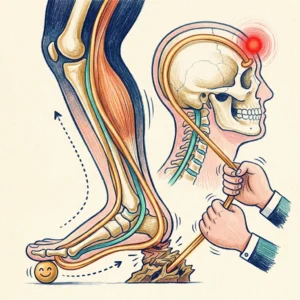
In some movement and manual-therapy approaches, practitioners use the concept of the Superficial Back Line to describe a series of connected tissues along the back of the body.
The proposed pathway includes the plantar fascia beneath your feet, tissues around the calves, the hamstrings, connective tissues along the back, and structures around the head.
It’s an interesting model for thinking about whole-body movement.
However, the model should not be confused with proof that every part of this pathway behaves like one continuous cable that can be loosened from a single point.
Your body contains many overlapping connective-tissue structures, and the relationship between them is more complicated than a simple line of tension.
So, what does this mean for your stretching routine?
It means that experimenting with gentle foot rolling may be worthwhile if it helps you feel more comfortable during movement. But if your hamstrings remain tight, you may also need to work directly on hamstring mobility, hip movement, strength, or other contributing factors.
There is no need to choose between whole-body movement and local treatment. Both can have a place in a sensible routine.
3. Why Do Your Hamstrings Feel So Tight?
Your hamstrings are a group of muscles located along the back of your thighs. They help bend your knees and extend your hips, making them important for walking, running, climbing stairs, and many everyday activities.
When these muscles feel tight, it’s tempting to assume they must be physically shortened.
But the sensation of tightness doesn’t always mean a muscle is too short.
Several factors can contribute to restricted movement, including:
Spending long periods sitting in one position.
Limited familiarity with a particular stretch.
Reduced hip or knee mobility.
Muscle fatigue after exercise.
Sensitivity to stretching or discomfort.
Differences in strength, coordination, and movement habits.
For example, imagine sitting at a desk for most of the day. When you finally stand up and try to touch your toes, your body may feel stiff simply because you haven’t moved through that range recently.
That doesn’t automatically mean your muscles are damaged or that you need to force them into a deeper stretch.
Research suggests that both stretching and self-myofascial release can improve flexibility in some circumstances. A 2024 systematic review and meta-analysis comparing these approaches found that their overall effects on hamstring flexibility were broadly similar, although results varied according to the type of flexibility test used. <Entity value=”Minerva Medica” category=”organization” disambig=”Medical and scientific publishing organization”/> published the review.
The practical takeaway? Foot rolling may be worth trying, but it isn’t a guaranteed shortcut around regular mobility work.
4. Can Rolling Your Feet Improve Hamstring Flexibility?
Potentially, yes—but the results vary from person to person.
Self-myofascial release involves applying controlled pressure to soft tissues using your hands, a massage ball, or a foam roller. Some people find that it temporarily improves their range of motion or makes stretching feel more comfortable.
A massage ball beneath your foot offers a convenient way to experiment with this technique.
Why might it help?
The pressure provides sensory input, and the experience may influence how your nervous system responds to movement and stretching. Changes in discomfort or stretch tolerance can sometimes allow you to move farther without feeling as restricted.
That doesn’t necessarily mean the ball has physically broken up knots, restored dehydrated fascia, or lengthened a continuous tissue chain.
Think of it as giving your body a gentle mobility warm-up rather than repairing a mechanical fault.
If rolling your foot makes a hamstring stretch feel more comfortable, that’s useful information. If it makes no difference, you haven’t failed. You may simply respond better to direct stretching, dynamic movement, or another approach.
5. The Three-Minute Foot-Rolling Routine
Ready to try it? You only need a tennis ball or a soft massage ball to get started.
A hard lacrosse ball can provide more concentrated pressure, but beginners often find a softer ball more comfortable.
Step 1: Check Your Starting Point
Stand upright with your feet about hip-width apart.
Keeping your knees slightly bent if necessary, hinge gently forward at your hips and reach toward your toes.
Don’t bounce or force yourself downward.
Notice where you feel the stretch and how far you can comfortably reach. You can also perform a seated hamstring stretch if standing forward bends are uncomfortable.
This is your starting point—not a test of your worth as a flexible human being.
Step 2: Position the Ball
Sit in a chair and place the ball beneath one foot.
Starting seated makes it easier to control the pressure than standing with your full body weight on the ball.
Begin near the ball of your foot, just behind your toes, and slowly roll toward the arch.
Use gentle pressure. You should feel a manageable massage sensation, not sharp pain.
Step 3: Explore the Arch
Move the ball slowly along the arch for approximately 30–45 seconds.
Pause briefly over areas that feel mildly tender, breathing normally and allowing your foot to relax.
Avoid aggressively grinding into one spot. More pressure doesn’t automatically mean better results.
If the ball causes burning, tingling, numbness, or sharp pain, stop.
Step 4: Roll Toward the Heel
Continue toward the heel, using comfortable pressure for another 30–45 seconds.
Don’t force the ball directly into a painful heel or an inflamed area.
If you have persistent heel pain, a known foot injury, reduced sensation, or a medical condition affecting circulation, ask a qualified healthcare professional whether this technique is appropriate for you.
Step 5: Retest Your Movement
Set the ball aside and stand up carefully.
Repeat your original forward bend under the same conditions.
Does the movement feel easier? Is the stretch less intense? Is there no noticeable change?
All three outcomes are possible.
If you feel more comfortable, enjoy that improvement—but remember that an immediate change in range of motion doesn’t prove that your fascia has been permanently released or that your hamstrings have physically lengthened.
You can repeat the process on the other foot if it feels comfortable.
A useful tip: Three minutes is a convenient starting point, not a scientifically established magic duration. You can begin with a shorter session and adjust according to your comfort.
6. What About Foot Rolling and Tension Headaches?
Here’s where we need to separate a promising wellness idea from a medical claim.
Tension-type headaches often cause dull, aching discomfort or a feeling of pressure around the forehead, sides of the head, or back of the neck. Stress, poor sleep, sustained working positions, and tenderness around the head and neck can be relevant factors.
However, headaches have different causes, and the exact mechanisms behind tension-type headaches are not fully understood.
Could relaxing your feet help you feel more relaxed overall? Possibly.
Could foot massage form part of a pleasant relaxation routine? Absolutely.
But there is insufficient evidence to claim that a tight plantar fascia pulls on your neck, compresses nerves at the base of your skull, and directly causes tension headaches.
Likewise, rolling a massage ball under your foot has not been established as a reliable headache treatment.
If you experience frequent headaches, it’s more useful to examine the factors that commonly contribute to them.
Consider whether you spend hours looking down at a screen, clench your jaw when stressed, skip meals, sleep poorly, or remain in one position for too long.
Taking regular movement breaks, adjusting your workstation, practicing relaxation techniques, and maintaining consistent sleep habits may help you manage relevant triggers.
If your headaches recur, worsen, or interfere with everyday life, seek medical advice rather than relying on foot massage alone.
7. A Better Routine for Hamstring Flexibility and Headache Prevention
Instead of searching for one trick that fixes everything, build a routine that addresses several useful areas.
Start With Gentle Movement
Before stretching, spend a few minutes walking around, marching in place, or performing comfortable leg movements.
A brief warm-up can help prepare you for exercise and make movement feel less abrupt.
Add a Comfortable Hamstring Stretch
Sit on a chair with one foot slightly forward and the heel resting on the floor.
Keep your back relatively neutral and hinge forward gently from your hips until you feel a mild stretch along the back of your thigh.
Hold for approximately 20–30 seconds while breathing normally. Repeat two or three times if comfortable.
Avoid bouncing or pushing into sharp pain.
Consistency matters more than winning a daily competition against your toes.
Include Foot Rolling if It Helps
Use your massage ball for a short, comfortable session.
You can do this before stretching if it makes movement feel easier, or afterward as a relaxation technique.
You don’t have to use it every day, and you shouldn’t feel obligated to continue if it causes discomfort.
Move Throughout the Day
If you work at a desk, try changing positions regularly. Stand up, walk around, roll your shoulders, and move your neck gently within a comfortable range.
Your body generally benefits from varied movement more than hours spent in one rigid position.
Make Space for Relaxation
Stress management can also be helpful when headaches are associated with tension or stressful periods.
Try slow breathing, a short walk, gentle shoulder movements, or a quiet break away from your screen.
These strategies aren’t guaranteed to prevent every headache, but they may help you manage some common triggers.
8. Common Foot-Rolling Mistakes to Avoid
A simple technique can become uncomfortable when you approach it too aggressively.
Watch out for these mistakes.
Using too much pressure: You don’t need to crush your foot into the floor. Start gently and increase pressure only if it remains comfortable.
Expecting an instant cure: A change in flexibility after rolling is possible, but it may be temporary. It doesn’t guarantee lasting improvements or headache relief.
Ignoring persistent pain: Foot rolling shouldn’t replace an assessment of ongoing heel pain, numbness, tingling, or unexplained symptoms.
Stretching through sharp pain: A mild pulling sensation can be normal during a stretch. Sharp, shooting, or worsening pain is a reason to stop.
Treating every headache the same way: Headaches can have very different causes. A technique that feels relaxing for one person may be ineffective for another.
The aim is to support comfortable movement, not to force your body into submission.
9. When Should You Seek Professional Advice?
If hamstring tightness persists despite gentle mobility work, a physiotherapist can assess your range of motion, strength, movement patterns, and possible contributing factors.
Similarly, recurring headaches deserve attention if they are becoming more frequent, more severe, or harder to manage.
Seek emergency medical care for a sudden, extremely severe headache, a headache accompanied by new weakness or difficulty speaking, or a headache with other concerning neurological symptoms. A severe headache with fever and a stiff neck also requires urgent assessment.
Don’t assume that a headache is caused by posture or muscle tension without considering other possibilities.
Your feet and muscles are important parts of your movement system, but they don’t explain every symptom occurring elsewhere in your body.
Final Thoughts: Small Habits, Better Movement
Your body is an interconnected system, and improving mobility doesn’t always require complicated equipment or expensive recovery treatments.
A simple massage ball, a comfortable hamstring stretch, regular movement breaks, and a little patience can be useful additions to your routine.
Foot rolling may help some people feel more comfortable and may temporarily improve flexibility. Stretching and other forms of mobility work can also help, particularly when practiced consistently.
But there is no hidden cable under your heel that guarantees a shortcut to permanently flexible legs and headache-free days.
The more useful lesson is to stay curious about your body, experiment with gentle techniques, and pay attention to what genuinely helps.
So the next time your hamstrings feel tight, try a short foot massage if it feels appropriate, follow it with comfortable movement, and see how your body responds.
You might discover a helpful new addition to your routine—and if you don’t, that’s perfectly fine too.
Better flexibility is built through consistent, comfortable movement, not through pain, pressure, or miracle promises.