
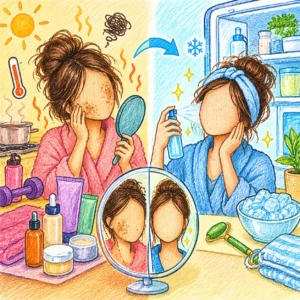
Have you ever done everything right for your skin, only to look in the mirror and discover that those stubborn brown patches have apparently decided to become permanent residents on your cheeks?
You wear your SPF 50 sunscreen. You invest in brightening serums. You carry a sun hat around like it’s your most precious accessory. You even avoid standing near windows during the afternoon because, apparently, the sun has become your personal nemesis.
And yet, those frustrating dark patches remain.
If you’ve struggled with hyperpigmentation or melasma, you know how exhausting the cycle can be. You buy a new serum, wait patiently for results, introduce another brightening ingredient, and eventually find yourself staring at your reflection, wondering whether your skin has received the memo.
Here’s the thing: pigmentation is complicated. Sun exposure isn’t the only factor involved, and some people find that warmth, hormonal changes, or skin irritation can make their pigmentation more noticeable.
That brings us to an interesting part of skincare that doesn’t receive enough attention: managing heat, avoiding unnecessary inflammation, and keeping your skin comfortable.
But before you start storing your entire skincare collection in the refrigerator, let’s separate useful skin-care habits from internet beauty myths.
Cooling your face may help relieve temporary warmth and flushing, but there is no strong clinical evidence that cold facial mists or ice globes erase melasma or switch off pigment production.
The good news? There are practical ways to protect your skin, reduce common triggers, and approach stubborn pigmentation without turning your bathroom into a chemical laboratory.
Let’s explore them.
What Exactly Are Hyperpigmentation and Melasma?
Before discussing cooling strategies, it helps to understand what you’re actually dealing with.
Hyperpigmentation is an umbrella term for areas of skin that appear darker than the surrounding skin because of increased or unevenly distributed pigment.
It can develop for several reasons, including sun exposure, hormonal changes, inflammation, acne, and certain skin conditions.
Melasma is one specific type of pigmentation. It typically appears as flat, brown or gray-brown patches on the cheeks, forehead, nose, or upper lip.
Melasma is particularly common in women and can be associated with hormonal changes, including pregnancy and the use of certain hormonal medications.
Unlike a temporary tan, melasma can be persistent and may return even after successful treatment.
And here’s an important distinction: not every dark patch is melasma. Post-acne marks, sunspots, and other pigmentary conditions can look similar but may require different treatments.
If you’re uncertain about the cause of your pigmentation, a dermatologist can help identify it and recommend an appropriate plan.
Meet the Melanocytes: Your Skin’s Tiny Color Factories
Your skin contains specialized cells called melanocytes. Their job is to produce melanin, the pigment that contributes to your natural skin color and helps protect skin cells from some of the harmful effects of ultraviolet radiation.
Think of melanocytes as tiny color factories.
Under normal circumstances, these factories produce and distribute pigment as part of your skin’s natural biology.
However, certain triggers can increase pigment production or change how pigment is distributed.
Ultraviolet radiation is one of the most important triggers. Visible light can also contribute to pigmentation, particularly in people with darker skin tones.
Hormones, inflammation, and individual genetic factors may also influence melasma.
This explains why pigmentation isn’t always as simple as applying sunscreen and hoping for the best.
It also explains why irritating your skin with overly aggressive treatments can sometimes make matters worse. Inflammation can trigger post-inflammatory hyperpigmentation, especially in skin that’s prone to developing dark marks.
Your skin isn’t deliberately sabotaging your beauty routine. It’s responding to a complicated set of biological signals.
Can Heat Really Make Melasma Worse?
This is where things become interesting.
Some people notice that their facial pigmentation seems more noticeable after spending time in hot environments, exercising, taking hot showers, or cooking over a steaming stove.
Heat can certainly make your face look temporarily red or flushed because blood vessels near the skin’s surface widen. When the flushing settles, your usual pigmentation may become more noticeable by contrast.
Heat and inflammation may also influence certain skin conditions, and some people identify warmth as a personal melasma trigger.
However, the relationship between heat and melasma is more complicated than the claim that a warm face automatically activates melanocytes.
Heat is not the same as ultraviolet radiation, and the evidence does not establish that a brief temperature increase directly causes every melasma flare.
Likewise, cooling your face does not reliably stop melanin production or remove pigment already present in the skin.
So, should you pay attention to heat?
Yes, particularly if you’ve noticed a consistent connection between hot environments and your symptoms.
But think of cooling as a comfort measure and a way to manage flushing—not as a replacement for proven pigmentation care.
The Cool-Down Routine: A Simple Way to Soothe Warm, Flushed Skin
You don’t need expensive cryotherapy treatments or a refrigerator full of beauty gadgets to make your skin feel more comfortable.
A few simple habits can help you cool down after exercise, hot showers, or time spent in a warm environment.
Step 1: Identify Your Personal Heat Triggers
Start by noticing when your face becomes unusually warm or flushed.
Common situations include:
Taking long, hot showers or baths.
Exercising in a hot, poorly ventilated room.
Spending time outdoors in hot weather.
Standing over a steaming cooking pot.
Sitting in a hot car.
Using skincare products that cause persistent stinging or irritation.
You don’t need to avoid every warm environment forever. The goal is to identify patterns rather than become frightened of ordinary daily activities.
Consider keeping a simple skincare diary for a few weeks.
Record when your skin feels warm, what products you used, how much sun exposure you had, and whether your pigmentation seemed to change afterward.
This won’t diagnose melasma, but it may help you identify patterns worth discussing with a dermatologist.
Step 2: Use Cool or Lukewarm Water
If your face feels hot after a workout or shower, rinse it gently with cool or lukewarm water.
Avoid extreme temperatures.
You don’t need to splash freezing water onto your face until your teeth start chattering. The objective is comfort, not a personal endurance challenge.
Pat your skin dry with a clean, soft towel rather than rubbing it aggressively.
If your face is particularly sensitive, keep the rest of your routine simple until the flushing settles.
Step 3: Try a Cool Compress
A clean, cool, damp washcloth can help soothe temporary facial warmth.
Gently place it over the affected area for a short period, then remove it.
Avoid pressing hard, rubbing the skin, or using frozen objects directly against your face.
Direct ice contact can injure skin, and excessive cold may worsen discomfort or irritation.
Also, remember that a cool compress is not a pigment-removing treatment. It simply helps make warm skin feel more comfortable.
Step 4: Apply a Gentle Moisturizer
After cooling your face, apply a moisturizer that suits your skin type.
Look for straightforward formulas containing ingredients such as glycerin, ceramides, or other moisturizing agents.
If your skin is already irritated, temporarily avoid adding multiple new products or strong exfoliants.
A healthy, comfortable skin barrier can help reduce irritation, which is especially useful if inflammation tends to leave dark marks on your skin.
And no, your moisturizer doesn’t have to cost the equivalent of a weekend vacation.
Step 5: Return to Your Sun-Protection Routine
Once your skin feels comfortable, continue protecting it from sunlight.
Cooling your face does not cancel out the effects of UV exposure, and a cold facial mist cannot replace sunscreen.
Your long-term goal should be reducing known pigmentation triggers while maintaining a gentle, consistent skincare routine.
The Real Heavyweight Champion: Sun and Visible-Light Protection
If there’s one part of pigmentation care that deserves your attention, it’s photoprotection.
Sunlight can darken existing pigmentation and contribute to new pigment formation. Visible light can also worsen some pigmentary conditions, including melasma.
That’s why sunscreen remains important even if you’re already using brightening ingredients.
Choose Broad-Spectrum Sunscreen
Look for a broad-spectrum sunscreen with SPF 30 or higher. If you spend considerable time outdoors, SPF 50 may be a practical choice.
Apply it generously and reapply according to the product’s directions, particularly after sweating, swimming, or extended outdoor exposure.
Don’t forget the sides of your face, forehead, ears, and neck.
A wide-brimmed hat, sunglasses, shade, and protective clothing can provide additional support.
Consider a Tinted Sunscreen
For people dealing with melasma, a tinted sunscreen containing iron oxides may offer an additional benefit.
Iron oxides help protect against certain wavelengths of visible light that can contribute to pigmentation.
A tinted formula can be especially useful if you find that ordinary sunscreen leaves a white cast or doesn’t blend comfortably with your skin tone.
Choose a product you enjoy wearing consistently. The fanciest sunscreen in your drawer won’t help much if you never want to apply it.
Which Ingredients Can Actually Help Hyperpigmentation?
Cooling may soothe your skin, but treating existing pigmentation generally requires a more targeted approach.
Depending on your skin and the type of pigmentation you have, certain topical ingredients may help improve uneven skin tone.
Vitamin C
Vitamin C is an antioxidant used in skincare products that target uneven tone and the visible effects of sun exposure.
However, some formulations can irritate sensitive skin.
If a product repeatedly causes burning, redness, or peeling, don’t assume that the discomfort means it’s working. Consider stopping it and discussing alternatives with a dermatologist if irritation persists.
Azelaic Acid
Azelaic acid is used to treat several skin concerns, including acne-related inflammation and certain forms of pigmentation.
It may be particularly useful for people who experience both acne and dark marks.
As with any active ingredient, introduce it carefully and choose a formulation appropriate for your skin.
Niacinamide
Niacinamide can support the skin barrier and may help improve the appearance of uneven skin tone.
It’s often included in moisturizers and brightening serums, making it a convenient option for people who prefer multipurpose products.
Retinoids and Prescription Treatments
Retinoids and prescription treatments such as hydroquinone may be appropriate for some cases of melasma or other pigmentary conditions.
However, these treatments are not suitable for everyone, and irritation can sometimes worsen pigmentation.
A dermatologist can help you choose the right option, particularly if you have persistent melasma, sensitive skin, or a history of post-inflammatory hyperpigmentation.
Avoid combining several strong actives without a clear plan.
Your face is not a testing ground for every trending serum on the internet.
Why Aggressive Skincare Can Backfire
When pigmentation refuses to fade, it’s tempting to respond by increasing the strength of your products.
You use a stronger exfoliant. Then you add a retinoid. Next comes a brightening mask that promises to transform your complexion overnight.
Before long, your skin is red, tight, and peeling.
Unfortunately, irritation can trigger inflammation, and inflammation may lead to additional pigmentation in susceptible skin.
That doesn’t mean all exfoliants, retinoids, or brightening ingredients are harmful. Many have useful roles in dermatology.
The problem is using products that are too strong, too frequently, or in combinations your skin cannot tolerate.
A more sensible strategy is to introduce one active ingredient at a time, follow its directions, and give your skin time to respond.
If you experience persistent burning, swelling, or severe irritation, stop the suspected product and seek medical advice.
The Funny Reality of a Low-Drama Skincare Routine
Let’s be honest: skincare marketing has convinced many of us that effective products must tingle, peel, or produce a dramatic before-and-after transformation.
A gentle moisturizer can feel almost disappointingly ordinary.
A sunscreen doesn’t give you a cinematic glow-up in ten minutes.
And a cool washcloth is not exactly the glamorous centerpiece of a luxury skincare advertisement.
But real skincare isn’t a competition to see who can tolerate the strongest product.
Sometimes the smartest routine is the least dramatic one.
Imagine spending months buying expensive products, only to discover that your skin feels happier when you stop layering everything at once.
It’s the skincare equivalent of buying a complicated kitchen appliance and eventually realizing that a simple saucepan was perfectly capable of doing the job.
So, by all means, enjoy your chilled facial mist if it feels refreshing. Keep a clean washcloth handy. Take a break from excessive heat when you notice it triggers flushing.
Just don’t expect your refrigerator to replace your dermatologist.
Common Mistakes to Avoid
If you’re trying to manage melasma or hyperpigmentation, keep these mistakes off your skincare checklist.
Relying on cooling alone: Cool compresses may soothe discomfort, but they aren’t proven treatments for established pigmentation.
Skipping sunscreen indoors or outdoors without considering exposure: Your exposure patterns matter. Sunlight through windows and time outdoors can contribute to pigmentation, so choose protection appropriate for your daily routine.
Scrubbing dark patches: Aggressive scrubbing can irritate the skin and potentially worsen post-inflammatory pigmentation.
Trying several new actives at once: If irritation develops, you’ll have difficulty identifying the cause.
Expecting overnight results: Pigmentation often takes weeks to months to improve, and melasma may recur even after successful treatment.
Self-prescribing strong bleaching products: Incorrect use of potent lightening agents can cause irritation and other unwanted effects. Seek professional guidance before using prescription-strength treatments.
When Should You See a Dermatologist?
If your dark patches persist despite careful sun protection, or if you aren’t sure what is causing them, consider booking a dermatology appointment.
A dermatologist can distinguish melasma from other conditions and recommend treatment based on your skin type, medical history, and pigmentation pattern.
Seek assessment sooner if a spot is new or changing, has irregular borders, bleeds, or looks different from your other marks. Not every dark spot is a cosmetic pigmentation problem.
Remember that melasma is often a chronic condition. Treatment may improve its appearance, but maintenance and ongoing sun protection are frequently needed to reduce recurrence.
There is no guaranteed method to erase every dark spot permanently.
Your Journey Toward More Even-Looking Skin
Living with hyperpigmentation or melasma can be frustrating, particularly when you’re already making an effort to protect your skin.
But you don’t need to wage war on your face.
Start with consistent sun protection, consider tinted sunscreen with iron oxides if appropriate, keep your routine gentle, and avoid products that repeatedly cause irritation.
If heat makes your skin uncomfortable or visibly flushed, a cool compress or a rinse with cool water may help you feel better. Treat this as a comfort measure rather than a way to switch off pigment production.
For persistent pigmentation, evidence-based topical treatments and professional guidance offer a more reliable path than extreme cooling or aggressive home remedies.
Your goal isn’t to make your skin endure more. It’s to find an approach that supports its health while addressing the pigmentation you want to improve.
And if that means fewer products, more consistency, and a little less bathroom-counter chaos, that’s a pretty good beauty upgrade.
Remember: calm, protected skin is a worthwhile goal—but lasting pigmentation improvement comes from understanding the cause and choosing the right treatment, not from freezing your face.
References
American Academy of Dermatology — Melasma: Diagnosis and Treatment — Information on sun protection, tinted sunscreen, topical treatments, and professional care.
British Association of Dermatologists — Melasma — An overview of melasma triggers, treatment options, and why the condition may recur.
Journal of the American Academy of Dermatology — Photoprotection for Skin of All Color — Expert guidance on UV and visible-light protection, including the role of visible light in pigmentation.