
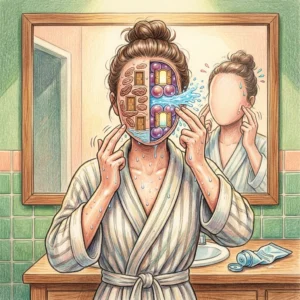
Everyone dreams of having soft, beautifully hydrated, naturally glowing skin. You know the kind of complexion that looks fresh even when you haven’t spent an entire paycheck on luxury skincare products. Unfortunately, maintaining that healthy-looking glow becomes a little more challenging as we get older.
You might notice that your skin feels tighter than usual, your cheeks look dull, or those tiny fine lines around your eyes suddenly seem more noticeable. Sometimes, even after splashing water on your face, your complexion still feels like a dry piece of paper.
And then comes the ultimate skincare disaster!
Imagine walking into your bathroom late at night after a ridiculously exhausting day. You reach for your favorite moisturizer, squeeze the tube, roll it, squeeze again, and even consider cutting it open. Nothing. Absolutely nothing!
Your expensive moisturizer has officially retired without giving you a farewell speech.
The shops are closed, your backup products have mysteriously disappeared, and your face feels as though it desperately needs a glass of water.
Before you start panicking, here’s something interesting: your skin has its own microscopic water-transport system. These tiny structures are called aquaporins, and they play an important role in maintaining skin hydration.
Understanding how they work can help you make smarter skincare decisions, especially when you’re trying to maintain moisture without depending on thick, greasy creams.
So, let’s explore the science behind these fascinating water channels, discover what actually helps your skin retain moisture, and learn a simple facial tapping ritual that can make your skincare routine feel a little more relaxing.
1. Meet Your Skin’s Hidden Water Channels: Aquaporins
Your skin isn’t simply a protective covering sitting on top of your muscles. It’s a living, active organ made up of different layers, each performing important functions to keep your body protected and balanced.
One of its most interesting features is a group of microscopic proteins known as aquaporins.
Think of aquaporins as tiny water passageways built into the membranes of certain cells. Their job is to help transport water across cellular membranes, allowing cells to maintain the water balance they need to function properly.
One particular type, called Aquaporin-3 (AQP3), is especially important in the epidermis, which is the outer layer of your skin.
Interestingly, AQP3 doesn’t transport water alone. It also helps move glycerol, a substance that plays an important role in maintaining skin hydration and supporting normal skin functions.
Think of your skin as a neighborhood with thousands of little houses. Each house needs a steady supply of water to keep everything running smoothly. Aquaporins act like small passageways that help move water where it’s needed.
Without properly functioning cellular water channels, normal skin processes can become disrupted.
However, there’s an important distinction: aquaporins aren’t taps that you can physically switch on by tapping your cheeks. Their activity is controlled by biological processes inside your cells.
Research continues to explore how these channels influence skin hydration, aging, and barrier health.
2. Why Does Your Skin Lose Its Natural Moisture?
Have you ever noticed that your skin looks perfectly comfortable one day and suddenly feels tight, rough, and thirsty the next?
There are several reasons this happens.
As we age, our skin gradually experiences changes in its natural moisturizing capacity, barrier function, collagen structure, and ability to retain water.
Environmental conditions can make matters worse.
For example:
Hot showers: Excessively hot water can strip away some of the natural oils that protect your skin.
Cold weather: Low humidity can increase water loss from the skin’s surface.
Harsh cleansers: Strong soaps and cleansers can disturb the protective skin barrier.
Over-exfoliation: Using too many exfoliating products can leave your skin irritated and uncomfortable.
Insufficient moisturizing: Washing your face without following up with an appropriate moisturizer can leave your skin feeling dry.
Another important factor is transepidermal water loss (TEWL).
Don’t worry; it’s not another complicated skincare term you need a university degree to understand!
It simply refers to the natural process through which water escapes from your skin into the surrounding environment.
Your skin barrier helps slow down this process. When that barrier becomes weakened, moisture escapes more easily, potentially leaving your complexion dry, flaky, and irritated.
This is why hydration isn’t simply about putting water on your face. It’s also about helping your skin hold on to that water.
3. The Real Connection Between Aquaporins and Skin Moisture
Now that we’ve met aquaporins, let’s understand why skincare researchers are so interested in them.
Aquaporin-3 is involved in transporting water and glycerol through epidermal cells. These functions contribute to normal skin hydration, cellular activity, and barrier maintenance.
Glycerol is particularly interesting because it also acts as a humectant.
A humectant is an ingredient that attracts and helps retain water. It’s one of the reasons glycerin is such a popular ingredient in moisturizers, hydrating serums, and skincare lotions.
Some cosmetic ingredients are also being investigated for their potential to influence aquaporin expression.
However, this area of research is still developing. Many findings come from laboratory studies, and more human clinical research is needed before we can confidently claim that particular products activate aquaporins and produce dramatic improvements in skin hydration.
So, while aquaporins are genuinely fascinating, we shouldn’t confuse their biological function with a quick facial massage trick.
The good news? You don’t need to manipulate your cellular water channels to improve your skin’s moisture levels.
There are already practical, dermatologist-supported ways to help your complexion stay hydrated.
4. Why Water Alone Isn’t Enough to Keep Your Skin Hydrated
Let’s address one of the biggest skincare misunderstandings.
If water hydrates your skin, why can’t you simply splash your face several times a day and forget about moisturizers altogether?
Well, here’s the catch.
Water can temporarily hydrate the outermost surface of your skin, but it doesn’t necessarily stay there.
When water evaporates, your skin can feel dry again, especially if its protective barrier isn’t functioning properly.
This is where moisturizers become important.
A good moisturizer generally contains ingredients that perform three different functions.
Humectants: The Water Attractors
Humectants help attract and retain water in the outer layers of the skin.
Popular examples include:
Glycerin
Hyaluronic acid
Urea
Panthenol
These ingredients are particularly useful when your skin feels dehydrated and needs additional water-binding support.
Emollients: The Skin Softeners
Emollients help smooth rough skin by filling spaces between surface skin cells.
Examples include:
Squalane
Ceramides
Fatty acids
Shea butter
They help improve the appearance and feel of dry, rough skin.
Occlusives: The Moisture Protectors
Occlusive ingredients create a protective layer that reduces water loss from the skin.
Some examples include:
Petrolatum
Mineral oil
Dimethicone
Certain plant oils
Think of humectants as bringing water into the picture, emollients as smoothing the surface, and occlusives as helping prevent that water from escaping too quickly.
You don’t necessarily need an expensive product containing twenty-five ingredients. A simple moisturizer with suitable hydrating and barrier-supporting ingredients can do a wonderful job.
5. The 60-Second Piano-Finger Tapping Ritual
Now let’s get to the fun part!
Although facial tapping cannot scientifically activate aquaporins or force water into deeper skin layers, gentle tapping can be a relaxing addition to your skincare routine.
It may also help you distribute a lightweight hydrating product without pulling or rubbing your skin excessively.
And honestly, it gives you an excuse to spend an extra minute taking care of yourself.
Here’s how to do it.
Step 1: Start With a Clean Face
Wash your face using a gentle cleanser and lukewarm water.
Avoid aggressive scrubbing, especially if your complexion is already feeling tight or sensitive.
Pat your face gently with a clean towel, leaving it slightly damp.
Step 2: Apply Something Hydrating
If you have a lightweight hydrating serum or toner, apply a small amount.
Look for ingredients such as glycerin, hyaluronic acid, or panthenol.
If your favorite moisturizer is still available, use that too.
Remember, the purpose is to support hydration, not to replace your moisturizer with plain water.
Step 3: Get Your Piano Fingers Ready
Relax your wrists and gently separate your fingers.
Imagine you’re about to play a beautiful melody on an imaginary piano.
Your fingertips should feel relaxed, not stiff or aggressive.
Step 4: Begin Gentle Tapping
Start at your forehead and lightly tap your fingertips across the surface of your skin.
Move slowly toward your temples, cheeks, and jawline.
Use the soft pads of your fingers rather than your nails.
Keep the movements gentle and comfortable.
Step 5: Finish With a Moisturizer
Once you’ve finished your little facial piano performance, apply your regular moisturizer while your skin is still slightly damp.
This is the most important part of the routine because moisturizer helps reduce water loss and supports your skin barrier.
If you have oily or acne-prone skin, choose a lightweight, non-comedogenic formula that feels comfortable on your complexion.
And there you have it! A simple, relaxing skincare ritual without aggressive rubbing or complicated equipment.
6. What If You’ve Completely Run Out of Moisturizer?
Let’s return to our original bathroom disaster.
Your moisturizer is empty, your skincare cabinet looks like a deserted supermarket, and you’re wondering what to do until morning.
First, don’t panic.
Missing one application of moisturizer isn’t going to suddenly create wrinkles overnight. Skin aging is a gradual process influenced by genetics, sun exposure, environmental conditions, and other factors.
Here are a few sensible things you can do.
Keep Your Face Clean and Comfortable
If you’ve already washed your face, avoid repeatedly cleansing it just because you feel dry.
Too much washing can make dryness worse.
Avoid Hot Water
Use lukewarm water instead of extremely hot water. Hot water can strip away protective skin oils and aggravate dryness.
Don’t Experiment With Random Kitchen Ingredients
This is particularly important.
You might be tempted to apply lemon juice, baking soda, toothpaste, or whatever mysterious ingredient someone recommends on social media.
Please don’t turn your bathroom into a chemistry laboratory!
These ingredients can irritate your skin, disturb its natural barrier, or cause unwanted reactions.
Use a Suitable Product If You Have One
If you have a fragrance-free aloe-based product or a simple hydrating serum that your skin already tolerates, you may use it according to its instructions.
However, remember that lightweight water-based products don’t necessarily provide the same protection against moisture loss as a proper moisturizer.
If your skin is very dry, irritated, or prone to eczema, replacing your moisturizer as soon as possible is a better option.
7. Three Simple Habits That Help Your Skin Hold on to Moisture
You don’t need a complicated twelve-step skincare routine to maintain comfortable, healthy-looking skin.
Sometimes, a few consistent habits make a much bigger difference.
1. Moisturize While Your Skin Is Slightly Damp
This is one of the simplest and most useful skincare habits.
After washing your face, gently pat away excess water and apply your moisturizer while your skin is still slightly damp.
This helps your moisturizer trap existing water and reduce evaporation.
You don’t need to leave your face dripping wet. A little dampness is enough.
2. Stop Overdoing Your Skincare Routine
Using multiple exfoliating acids, retinoids, strong cleansers, and fragranced products simultaneously can irritate your skin.
If your complexion feels tight, uncomfortable, or unusually sensitive, consider simplifying your routine.
A gentle cleanser, suitable moisturizer, and daily sunscreen are excellent foundations.
3. Protect Your Skin From Sun Exposure
Sun exposure contributes to premature skin aging, including fine lines, wrinkles, uneven pigmentation, and changes in skin texture.
Use a broad-spectrum sunscreen with SPF 30 or higher during the day.
Wear a hat, seek shade when appropriate, and remember that sunscreen is not just a summer accessory.
Your skin deserves protection throughout the year.
8. The Hilarious Reality of Your Little Facial Workout
Let’s be honest.
The first time you stand in front of the bathroom mirror, gently drumming your fingertips across your forehead and cheeks, you might look a little ridiculous.
Your partner might wonder whether you’re trying to communicate with aliens.
Your dog might stare at you as though you’ve finally lost your mind.
And if someone walks into the bathroom unexpectedly, explaining your new piano-face routine could become an interesting conversation!
But that’s perfectly fine.
Skincare doesn’t always need to look like a luxurious commercial featuring a model staring peacefully into the distance while expensive water droplets fall in slow motion.
Sometimes it’s simply you, standing in your bathroom, wearing an old T-shirt, trying to remember whether you applied your serum before or after your imaginary piano concert.
The important thing is to keep the routine gentle, enjoyable, and suitable for your skin.
Just remember that the tapping is a relaxation ritual, not a scientifically established aquaporin activation treatment.
9. Important Rules for Keeping Your Tapping Routine Skin-Friendly
Although gentle facial tapping is generally straightforward, a few precautions can make the experience more comfortable.
Keep the pressure light: Never slap, punch, or aggressively hit your face. Your skin doesn’t need a disciplinary meeting!
Avoid irritated areas: Don’t tap over broken skin, active infections, painful acne, or inflamed patches.
Keep your hands clean: Wash your hands before touching your face to reduce the transfer of dirt and bacteria.
Don’t drag your fingers: Use gentle movements rather than pulling or stretching your skin.
Stop if irritation develops: If you experience discomfort, redness, or burning, discontinue the routine.
Be careful around your eyes: The skin around your eyes is delicate, so avoid applying pressure to the eyeballs or repeatedly pulling the surrounding tissue.
Remember, more stimulation doesn’t mean better hydration.
Your skin needs consistency and protection, not a daily boxing championship!
10. Your Skin’s Natural Hydration System Deserves Support
At the end of the day, beautiful-looking skin isn’t about owning every expensive product advertised on social media.
It’s about understanding what your skin actually needs and choosing habits that support its natural functions.
Aquaporins are fascinating little structures that help transport water through skin cells. They remind us that hydration is not simply about splashing water onto our faces but involves several interconnected biological processes.
However, no amount of fingertip tapping can replace the work of a healthy skin barrier.
If you want to maintain soft, comfortable, and hydrated skin, focus on gentle cleansing, suitable moisturizers, barrier-supporting ingredients, and daily sun protection.
And the next time you run out of your favorite cream, don’t panic or assume your complexion is about to fall apart overnight.
Give your skin a gentle rinse, avoid harsh experiments, and pick up a suitable moisturizer when you can.
Your face doesn’t need a luxury shopping spree every time your skincare cabinet runs empty.
Sometimes, the smartest beauty secret is simply understanding your skin, treating it gently, and giving it the moisture and protection it needs.
Because healthy-looking skin isn’t about doing the most. It’s about doing what actually works!
References
Dermatologists’ Top Tips for Relieving Dry Skin – American Academy of Dermatology
Aquaporin-3 in the Epidermis: More Than Skin Deep – American Journal of Physiology