
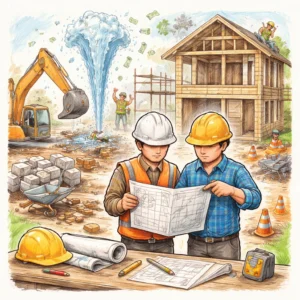
We’ve all laughed at those “You Had One Job” moments—the staircase that leads nowhere, the balcony with no door, or the tilted beam that looks like it’s questioning its life choices.
Funny? Yes.
Harmless? Not even close.
Because when those mistakes show up in your own home, they stop being memes—and start becoming expensive, dangerous problems.
Let’s be real: building a home isn’t just about aesthetics. It’s not about picking the perfect tiles or choosing between matte and glossy finishes. It’s about creating a structure that stands strong for decades.
And that strength comes down to avoiding one critical thing: site mistakes.
These are the hidden errors—the ones buried beneath paint, plaster, and polish—that can quietly destroy your home over time.
Whether you’re building from scratch, renovating, or just curious, understanding these mistakes could save you thousands—and possibly protect lives.
So let’s break it down in a way that actually makes sense.
1. The Foundation Fiasco: “Let’s Just Eyeball It”
Every solid structure begins with one thing: a strong foundation.
But here’s where one of the most dangerous site mistakes happens—skipping soil testing.
Think of soil like personality types. Some are stable and dependable. Others? Moody, unpredictable, and prone to shifting under pressure.
Building without testing the soil is like trusting a stranger with your life savings.
What Goes Wrong?
- Uneven settling (called differential settlement)
- Cracks in walls and floors
- Doors and windows refusing to close
- Long-term structural instability
Why It Matters
In places where soil expands (like clay-heavy regions), your house can literally shift over time. One side sinks, the other stays put—and suddenly your home looks like it’s leaning.
The Smart Fix
- Always get a soil investigation report
- Follow proper foundation depth and footing design
- Never rush this stage—it’s your building’s backbone
Skipping this step isn’t saving money—it’s postponing a much bigger bill.
2. Load-Bearing Nightmares: When Walls Aren’t Just Walls
We all love open spaces. Bright, airy, Instagram-worthy layouts.
But here’s the catch—not every wall is meant to be removed.
One of the riskiest site mistakes is tampering with load-bearing walls without proper support.
The Simple Truth
Your house works like a system. Some walls carry weight from the roof and upper floors. Remove one carelessly, and you’re basically removing a pillar from under a bridge.
Common Mistakes
- Knocking down structural walls during renovation
- Cutting large holes in beams for pipes
- Weakening floor joists
The Consequences
- Sagging ceilings
- Bouncy floors
- Cracks that keep coming back
- In extreme cases—collapse
The Smart Fix
- Always consult a structural expert
- Use proper reinforcements like steel beams
- Never assume—verify
Open space is beautiful. But structural failure? Not so much.
3. Water Trouble: The Silent Destroyer
Water doesn’t break your house overnight. It destroys it slowly, quietly, and thoroughly.
Poor drainage is one of the most underestimated site mistakes—and one of the most damaging.
What Happens?
If your site isn’t graded properly, water flows toward your house instead of away from it.
That means:
- Water collects around your foundation
- Pressure builds (called hydrostatic pressure)
- Cracks begin forming
- Moisture seeps in
Long-Term Damage
- Mold growth
- Rusting steel
- Wood rot
- Weak foundation walls
The Smart Fix
- Ensure the ground slopes away from your home
- Install proper drainage systems
- Keep gutters functional and clean
Water should pass by your home—not move in permanently.
4. The “Close Enough” Catastrophe: Wrong Fasteners
You could have the best materials in the world—but if they’re not held together properly, none of it matters.
This is where another classic site mistake comes in: using the wrong fasteners.
What People Get Wrong
- Using indoor screws outdoors
- Not using enough nails
- Ignoring corrosion-resistant materials
Why It’s Dangerous
Fasteners are what hold everything together—literally.
Use the wrong ones, and:
- Decks weaken over time
- Structures loosen
- Critical connections fail
In storm-prone areas, skipping proper connectors (like hurricane straps) can mean your roof doesn’t stay put.
The Smart Fix
- Use materials suited for the environment
- Follow construction codes strictly
- Never compromise on small components—they matter most
“Close enough” is not a construction strategy.
5. Concrete Chaos: Mixing It Wrong
Concrete might look simple, but it’s actually a science.
And one of the most common site mistakes? Adding too much water.
Why This Happens
Workers often add extra water to make concrete easier to pour and spread.
It looks smooth. It feels manageable. It seems harmless.
But it’s not.
The Problem
Excess water creates tiny air pockets when it evaporates. These weaken the structure from within.
The Result
- Cracks
- Reduced strength
- Structural failure over time
The Smart Fix
- Stick to proper mix ratios
- Follow engineering guidelines
- Don’t improvise
Concrete isn’t cake batter. Precision matters.
6. Ignoring the Weather: A Risk You Can’t Afford
Construction doesn’t happen in a vacuum. Weather plays a huge role.
And ignoring it is one of the most avoidable site mistakes.
What Can Go Wrong?
- Pouring concrete in cold temperatures → weak curing
- Painting wet surfaces → peeling and mold
- Installing materials in rain → trapped moisture
Why It Matters
Materials behave differently under different conditions. Rushing work during bad weather can compromise quality instantly.
The Smart Fix
- Plan work around weather forecasts
- Protect materials on-site
- Delay when necessary—quality over speed
Deadlines matter. But durability matters more.
7. Communication Breakdown: The Hidden Danger
Not all site mistakes are physical. Some are human.
Miscommunication is one of the biggest reasons projects fail.
The Typical Scenario
- Architect designs one thing
- Contractor interprets it differently
- Workers follow assumptions
And suddenly, things don’t match.
What This Leads To
- Wrong materials used
- Structural elements altered
- Safety compromised
The Smart Fix
- Clear, documented communication
- Regular site inspections
- Asking questions—constantly
Never assume. Always confirm.
Why Avoiding Site Mistakes Is About More Than Construction
Let’s shift perspective for a moment.
This isn’t just about buildings.
It’s about people.
A home is where life happens. Where families grow. Where memories are built.
When you avoid site mistakes, you’re not just following technical rules—you’re protecting that life.
You’re ensuring:
- Safety during storms
- Comfort during seasons
- Stability for years to come
A well-built home doesn’t complain. It doesn’t creak, leak, or worry you.
It just… stands.
Quietly, confidently, reliably.
The Real Takeaway: Small Decisions, Big Impact
Here’s the truth most people overlook:
Big construction failures rarely come from one huge mistake.
They come from many small ones.
- One skipped test
- One wrong screw
- One rushed decision
Individually, they seem harmless.
Together? They become disasters.
So What Should You Do?
- Stay informed
- Ask questions
- Don’t cut corners
- Trust experts—but verify
Because at the end of the day, your home is too important to leave to chance.
Final Thoughts: Build Something That Lasts
Building isn’t just about today—it’s about the next 10, 20, even 50 years.
When you avoid site mistakes, you’re not just saving money.
You’re building peace of mind.
So whether you’re starting your dream home or just learning the basics, remember this:
👉 Strong homes aren’t built by accident.
👉 They’re built by intention.
Let’s Talk 👇
What’s the wildest construction fail you’ve ever seen?
A tilted wall? A cracked building? A staircase to nowhere?
Share your story—because sometimes, the best lessons come from the worst mistakes.
References
American Society of Civil Engineers