
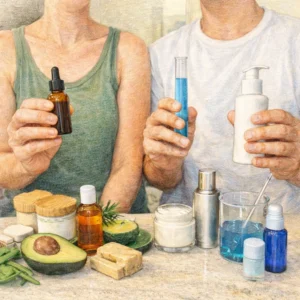
Have you ever stood in the skincare aisle, holding two serums—one with a name that sounds like rocket fuel and another that smells like a garden salad—and wondered which one deserves a place on your face?
Welcome to the world of Chemical vs Natural Beauty Products, where marketing buzzwords fly around like confetti and everyone seems to have a strong opinion. One side says chemicals are toxic. The other says natural products are ineffective. Somewhere in between, you’re just trying to get clear, glowing skin without emptying your wallet or damaging the planet.
Let’s strip away the fear tactics, the greenwashing, and the science snobbery. This is your no-drama, human guide to what actually works—for your skin, your lifestyle, and your peace of mind.
1. First Things First: What Do “Chemical” and “Natural” Even Mean?
Before choosing sides, let’s clear up the biggest myth.
Everything is a chemical.
Water? Chemical (H₂O).
Oxygen? Chemical.
That organic, farm-grown aloe vera gel? Still made of chemicals.
So when we talk about Chemical vs Natural Beauty Products, we’re usually comparing:
- Synthetic (Chemical): Ingredients created or modified in a lab for precision, stability, and performance.
- Natural: Ingredients sourced from plants, minerals, or animal byproducts with minimal processing.
The confusion happens because “chemical” has become synonymous with “toxic,” and “natural” has become shorthand for “safe.” But nature can irritate your skin just as easily as a lab formula can.
Poison ivy is natural. So is lavender oil—which can trigger allergic reactions for some people. On the flip side, lab-created ingredients like hyaluronic acid can be incredibly gentle and hydrating.
The real question isn’t chemical or natural.
The real question is: What does your skin actually need?
2. Team Natural: The Garden Glow Lovers
There’s something comforting about reading a label and recognizing the ingredients. Rosehip oil. Shea butter. Aloe vera. It feels wholesome. Clean. Earth-approved.
And sometimes, it truly is.
Why People Love Natural Beauty Products
1. Nutrient-Rich Goodness
Plant-based ingredients are packed with antioxidants, vitamins, and essential fatty acids. Rosehip oil, for example, is rich in vitamin A and C, helping improve skin texture and brightness.
Green tea extract? Powerful antioxidants.
Aloe vera? Soothing and calming.
Shea butter? Deeply moisturizing.
These ingredients have been used for centuries across cultures. That history builds trust.
2. Eco-Friendly Appeal
Many natural beauty brands emphasize sustainable sourcing, biodegradable packaging, and cruelty-free production. If you care about reducing your environmental footprint, this can feel like a win.
3. Fewer Synthetic Preservatives
Natural formulations often avoid parabens and certain synthetic additives, which appeals to people aiming for “clean beauty.”
The Reality Check
Natural doesn’t automatically mean gentle or safe.
1. Shorter Shelf Life
Without strong synthetic preservatives, natural creams and serums can spoil faster—especially in humid bathrooms. That organic face cream might expire in 3–6 months.
2. Higher Allergy Risk
Essential oils (like lavender, citrus, peppermint) are common in natural products—and they’re also common allergens. According to the American Academy of Dermatology, fragrance is one of the most frequent causes of contact dermatitis.
3. Inconsistent Batches
Plants vary depending on climate, soil, and harvest timing. That means one batch of botanical oil may differ slightly from the next.
Nature is powerful—but she’s not always predictable.
3. Team Chemical: The Lab-Engineered Legends
Synthetic skincare has a reputation problem. It’s often painted as artificial, harsh, or harmful. But modern cosmetic science is far more sophisticated than the “neon green goo” stereotype.
Why Synthetic Beauty Wins for Many
1. Precision & Potency
If you’re targeting acne, hyperpigmentation, or deep wrinkles, lab-engineered actives can deliver measurable results.
- Retinol (a vitamin A derivative) boosts collagen and cell turnover.
- Salicylic acid penetrates pores and treats acne.
- Niacinamide improves skin barrier function and reduces redness.
These ingredients are studied, standardized, and carefully dosed.
2. Stability
Synthetic preservatives help products stay effective from first pump to last drop. This reduces contamination risk and waste.
3. Hypoallergenic Formulations
Ironically, lab-made ingredients can sometimes be safer for sensitive skin because they eliminate the unpredictable compounds found in plants.
For example, synthetic fragrance-free moisturizers may cause fewer reactions than essential oil-based creams.
The Downsides of Synthetic Products
1. “Filler” Ingredients
Not every synthetic ingredient is beneficial. Some are added for texture or shelf life rather than skin improvement.
2. Environmental Concerns
Certain synthetic compounds and microplastics have raised sustainability issues. While regulations have improved in many countries, concerns remain.
3. Harsh Formulas (Sometimes)
Overuse of strong acids or exfoliants can damage the skin barrier. Sulfates in cleansers, for example, can strip natural oils if not balanced properly.
Science is powerful—but it needs thoughtful formulation.
4. The Truth: Your Skin Doesn’t Care About Labels
Here’s the secret in the Chemical vs Natural Beauty Products debate:
Your skin doesn’t know where an ingredient came from.
It only knows:
- Is it hydrated?
- Is it protected?
- Is it irritated?
Vitamin C is vitamin C, whether synthesized in a lab or extracted from fruit. Hyaluronic acid exists naturally in your body, yet most skincare versions are lab-produced—and incredibly effective.
The source matters less than:
- Concentration
- Stability
- Formulation
- Compatibility with your skin
5. How to Choose Without Losing Your Mind
Let’s make this practical.
Step 1: Identify Your Skin Goal
Maintenance & glow?
Gentle natural oils, hydrating creams, and antioxidant-rich botanical products may be enough.
Acne, pigmentation, wrinkles?
You’ll likely benefit from synthetic actives like retinol, salicylic acid, or chemical exfoliants.
Step 2: Understand Your Sensitivity Level
If your skin reacts easily:
- Avoid heavy essential oils.
- Look for fragrance-free options.
- Patch test everything.
If your skin is resilient:
- You can experiment with stronger active ingredients.
- Introduce acids slowly to avoid irritation.
Step 3: Consider Your Lifestyle
- Minimalist? Go for stable synthetic essentials.
- Eco-conscious? Choose sustainably sourced brands.
- Budget-conscious? Drugstore synthetic brands often offer powerful actives at lower prices.
6. The Hybrid Routine: The Best of Both Worlds
You don’t have to choose sides.
In fact, the smartest skincare routines often blend both.
Example Hybrid Routine:
- Cleanser: Gentle synthetic formula for stability.
- Toner: Aloe-based natural soothing mist.
- Treatment: Retinol or niacinamide serum.
- Moisturizer: Shea butter-based cream.
- Sunscreen: Lab-tested chemical or mineral SPF.
This balanced approach allows you to enjoy the nourishing benefits of nature and the precision of science.
7. Beware of Greenwashing & Fear Marketing
Some brands use “chemical-free” as a selling point. That phrase is scientifically impossible. Everything is made of chemicals.
Others use “medical-grade” to imply superiority without clear standards.
Instead of trusting buzzwords, look for:
- Transparent ingredient lists
- Evidence-backed claims
- Dermatologist testing
- Clear concentration percentages
Apps like Think Dirty and EWG’s Healthy Living database can help decode labels—but always cross-reference with reputable dermatology sources.
8. Sustainability: A Deeper Conversation
When comparing Chemical vs Natural Beauty Products, sustainability matters.
Natural farming can be eco-friendly—but overharvesting rare plants can harm ecosystems.
Synthetic production may reduce land use—but manufacturing processes can produce waste.
The most sustainable option is often:
- Products you actually finish.
- Multi-use items.
- Brands with refill systems.
Waste reduction matters more than perfection.
9. The Emotional Side of Beauty
Skincare isn’t just chemistry. It’s ritual. Identity. Self-care.
If applying rose oil makes you feel grounded and calm, that emotional benefit counts.
If using a dermatologist-recommended retinol makes you feel empowered and confident, that matters too.
The goal isn’t ideological purity.
The goal is healthy, happy skin.
10. Final Thoughts: Be Your Own Glow Expert
The Chemical vs Natural Beauty Products debate doesn’t need a winner.
It needs awareness.
Your skin thrives on:
- Consistency
- Sun protection
- Gentle cleansing
- Smart active use
- Listening to how it reacts
Don’t let fear-based marketing dictate your routine. Don’t let trends shame you for using what works.
The most natural thing you can do is pay attention to your skin’s response.
If it’s glowing, calm, and comfortable—you’re doing it right.
Now go forth and glow—with confidence, not confusion.
References
Environmental Working Group (EWG) Skin Deep Database
U.S. Food & Drug Administration (FDA) – Cosmetics Overview
National Center for Biotechnology Information – Retinol in Skin Aging