
There’s a sound that truly belongs to Ramadan.
No, not just the soulful call to prayer.
Not even the clink of glasses filled with chilled Rooh Afza.
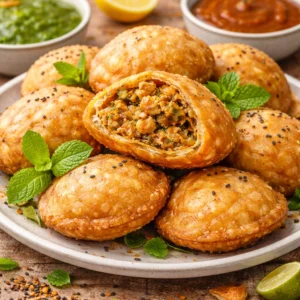
It’s that deep, satisfying CRUNCH when you bite into a perfectly fried Chicken Kachori.
That crunch? It’s not just food—it’s emotion.
If you’ve ever watched a plate of kachoris vanish from the Iftar table faster than free Wi-Fi at a wedding, you already know their power. One minute they’re stacked like golden coins of joy, the next minute… gone. Reduced to crumbs and happy sighs.
And yet, despite loving them with our whole heart, many of us treat homemade Chicken Kachori like an impossible dream.
Too technical. Too risky. Too… oily.
What if the dough gets tough?
What if the filling tastes flat?
What if the kachori explodes in oil like a dramatic soap opera scene?
Take a breath. Wipe your hands on your dupatta.
Today, we’re ending the fear.
By the end of this guide, you won’t just make Chicken Kachori—you’ll own it. No culinary degree. No fancy gadgets. Just pantry staples, patience, and a little Ramadan magic.
Why Chicken Kachori Is the King of Iftar
Every Ramadan snack has a personality.
- Samosas are the dependable elders—always there, always solid.
- Pakoras are the fun cousins—crispy, chaotic, impossible to stop eating.
- Chicken Kachori? That’s royalty.
Chicken Kachori is refined.
It’s flaky yet crisp.
Spiced but balanced.
Comforting, yet indulgent.
It’s the snack that makes guests ask, “Did you make these yourself?”—and that question alone is worth the effort.
Making Chicken Kachori at home isn’t just about food. It’s about slowing down in a month that teaches patience. Watching dough transform into golden perfection is oddly therapeutic—proof that good things really do come to those who wait (and control oil temperature).
The Ingredient Line-Up: Simple, Honest, No Drama
Let’s clear one myth right now:
Great Chicken Kachori does not require exotic ingredients.
If it sounds like something gathered during a full moon on a mountain, you don’t need it.
The “Flaky AF” Dough
All-Purpose Flour (Maida) – 2 cups
The backbone of every great kachori.Ghee or Oil – 4 tablespoons
Ghee = flaky, rich, indulgent
Oil = crisp, light, classic
Choose your personality.
Salt – To taste
Ajwain (Carom Seeds) – A pinch
Flavor + digestion hero during Ramadan.Chilled Water – As needed
The “Spicy & Saucy” Chicken Filling
Chicken Mince (Keema) – 500 grams
Onions – Finely chopped
No chunky interruptions, please.Ginger-Garlic Paste – 1–2 tablespoons
Spices:
Turmeric
Red chili flakes
Cumin powder
Garam masala (be generous)
Fresh Coriander & Mint – Finely chopped
Simple ingredients. Big flavor. Zero stress.
Step-by-Step: Your Road to Iftar Glory
1. The Dough: Enter Your Zen Era
In a large bowl, mix flour, salt, ajwain, and ghee.
Now comes the most important part—rubbing the fat into the flour. Use your fingertips and keep going until the mixture looks like breadcrumbs.
The Dough Test (Don’t Skip This):
Take a handful and squeeze.
If it holds its shape → perfect.
If it crumbles → add a little more ghee.
Slowly add chilled water and bring the dough together.
It should be firm, not soft.
Cover with a damp cloth and let it rest for 30 minutes.
This rest is non-negotiable. The dough needs time to relax—and honestly, so do you.
2. The Filling: Flavor Without Moisture
Heat a pan with a little oil.
Add onions and sauté until translucent.
Add ginger-garlic paste and chicken mince. Cook on medium-high heat.
Now the rule that separates good kachori from legendary kachori:
Your filling must be DRY.
No water. No gravy. No shortcuts.
Once moisture evaporates, add spices, salt, coriander, and mint. Mix well.
Turn off the heat and let the filling cool completely.
Hot filling + cold dough = broken kachori and heartbreak.
3. Stuffing Without Fear
Divide rested dough into small balls.
Roll one ball slightly—edges thinner than the center.
Place one spoon of filling in the middle.
Bring edges together, pinch, twist, and seal like a little pouch.
Gently flatten with your palm.
Pro tip:
Your first one might look like a confused bun. That’s okay.
By the fifth, you’ll feel confident.
By the tenth, you’ll feel unstoppable.
4. The Deep-Fry Dance (Where Legends Are Made)
Heat oil on low to medium-low heat.
This is the secret most people ignore.
Drop kachoris into lukewarm oil.
Let them cook slowly. They’ll sink, then rise—this is exactly what you want.
Once they float, increase heat slightly and fry until evenly golden and crisp.
That gentle crackle? That’s success.
Why Homemade Chicken Kachori Is Worth It
In a world of shortcuts and takeout boxes, homemade Ramadan snacks hit different.
You know:
- What oil you used
- How fresh the chicken is
- That nothing shady went into your food
It’s also a bonding ritual.
Kids love shaping dough.
Spouses suddenly become “frying experts.”
Conversations flow easier when hands are busy.
Research published in the American Journal of Lifestyle Medicine shows that cooking together reduces stress and improves emotional well-being. During Ramadan, that peace matters just as much as taste.
Pro Tips for Maximum Crunch
Double-Fry Method
Fry once on low heat until pale golden.
Cool.
Flash-fry before Iftar for ultra crispiness.
Freezer Friendly
Shape kachoris, freeze on a tray, then store in bags.
Fry directly from frozen—no thawing needed.
Dips Matter
Chicken Kachori without chutney is incomplete.
Pair with:
- Tamarind chutney
- Mint chutney
- Spicy yogurt dip
Choose wisely.
Final Thoughts: Claim Your Iftar MVP Status
Placing a plate of homemade Chicken Kachori on the Iftar table feels powerful.
It’s love.
It’s effort.
It’s the kind of food people remember.
So turn on your favorite Ramadan playlist, accept that flour will end up everywhere, and enjoy the process.
Because every crispy bite is proof that you didn’t just survive fasting—you celebrated it.
Now be honest…
Are you a “Ketchup Dip” person or “Green Chutney Only” loyalist?
Let the friendly debate begin 👀✨
References
American Journal of Lifestyle Medicine – Cooking, Stress Reduction, and Family Well-Being