
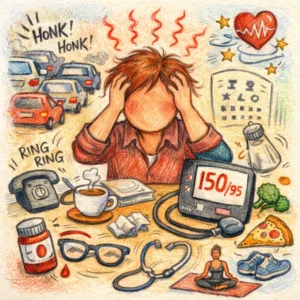
Have you ever had one of those days where you feel like a human tea kettle left on the stove a little too long? Your face feels warm, your jaw is clenched, your ears are ringing, and your patience is hanging on by a very thin thread. Someone casually asks, “How’s your day going?” and suddenly you’re one inconvenience away from whistling like a pressure valve.
We joke about our “blood boiling” all the time—traffic jams, work deadlines, family drama, that one unread email haunting your inbox. Stress has become so normal that we wear it like a badge of honor.
But here’s the uncomfortable truth no one really talks about:
Sometimes that boiling feeling isn’t just emotional.
Sometimes, it’s your blood pressure quietly waving a red flag.
Before you panic or swear off salt forever, take a breath. High blood pressure—also known as hypertension—is incredibly common, surprisingly sneaky, and very manageable when you know what you’re dealing with.
Think of this as your friendly, no-judgment, slightly humorous guide to understanding your blood pressure, spotting the warning signs, and turning down the heat before things boil over.
Why High Blood Pressure Is Called the “Silent Killer”
Here’s the plot twist that catches most people off guard:
High blood pressure usually doesn’t hurt.
No dramatic symptoms. No loud alarms. No obvious pain.
You can feel totally fine—energized, productive, even happy—while your blood pressure numbers are quietly climbing behind the scenes. That’s why doctors call it the silent killer. It does its damage slowly and silently, increasing the risk of heart disease, stroke, kidney problems, and vision loss without asking for attention.
We like to believe our bodies would warn us clearly if something was wrong. Unfortunately, blood pressure prefers subtlety.
That said, sometimes your body does whisper. The problem is, most of us are too busy to listen.
“Wait… Is That a Blood Pressure Symptom?”
While many people with high blood pressure feel nothing at all, some experience vague, easily ignored signs. You might shrug them off as stress, lack of sleep, or just “one of those days.”
Here are a few signals worth paying attention to:
1. Dull, Persistent Headaches
Especially morning headaches that feel like unwanted house guests. They’re not sharp or dramatic—just heavy and annoying.
2. Dizziness or Lightheadedness
That brief moment when you stand up and the room spins a little longer than it should.
3. Nosebleeds
Occasional nosebleeds can be harmless, but frequent, unexplained ones deserve attention.
4. Blurry or Distorted Vision
If the world suddenly looks like it’s being viewed through a smudged camera lens, your blood pressure may be affecting the tiny blood vessels in your eyes.
5. That “Boiling” or Pressure Sensation
If you genuinely feel flushed, overheated, or internally tense for no clear reason, it could be your blood pressure spiking—especially during extreme stress.
If symptoms feel intense or sudden, it could be hypertensive urgency, which is your body’s way of pulling the fire alarm. That’s not something to ignore.
Blood Pressure Numbers—Without the Confusion
Let’s decode those two mysterious numbers without turning this into a math class.
When your blood pressure is measured, you’ll see something like 120/80 mmHg.
The Top Number: Systolic
This measures the pressure in your arteries when your heart beats.
Think of it as the “action” number—your heart pushing blood out.
The Bottom Number: Diastolic
This measures pressure when your heart is resting between beats.
This is the “chill” number.
What’s Normal?
Normal: Around 120/80
Elevated: 120–129 / under 80
High Blood Pressure: 130/80 or higher (consistently)
If your blood pressure stays high over time, your heart has to work harder than it should. That extra strain damages arteries, makes them stiff, and raises your risk of serious health issues.
Your heart wasn’t designed to run a marathon 24/7.
Common Myths That Keep Blood Pressure Undetected
Let’s bust a few myths that stop people from taking blood pressure seriously.
Myth #1: “I’d Feel It If My Blood Pressure Was High”
Nope. Many people feel perfectly fine—until complications appear. Waiting for symptoms is like waiting for smoke instead of checking faulty wiring.
Myth #2: “I Don’t Add Salt, So I’m Safe”
The salt shaker isn’t the main culprit. Most sodium hides in processed foods—bread, sauces, canned soups, deli meats, frozen meals, and snacks marketed as “healthy.”
Myth #3: “It’s Just Stress”
Stress can cause short-term spikes, but chronic high blood pressure doesn’t magically disappear when you relax. Stress management helps, but it’s not the whole solution.
Myth #4: “I’m Too Young for This”
High blood pressure is showing up earlier than ever, thanks to sedentary lifestyles, poor diets, and constant digital stress. Age is no longer a guarantee.
How to Turn Down the Heat: A Realistic Action Plan
The good news? You have more control over your blood pressure than you think. No extreme diets. No monk-level discipline. Just consistent, doable changes.
1. Become a Salt Detective
Start reading food labels—especially on foods you eat daily. Aim for less than 2,300 mg of sodium per day, and ideally closer to 1,500 mg.
Swap salt for:
- Garlic, ginger, turmeric
- Lemon juice or vinegar
- Fresh herbs and spices
Your taste buds will adapt—and processed foods will suddenly taste aggressively salty.
2. Move Your Body (Without Hating It)
You don’t need to become a gym rat.
- Brisk walking
- Dancing at home
- Cycling
- Gardening
- Yoga
Just 30 minutes most days can significantly lower blood pressure. Movement helps blood vessels relax and improves heart efficiency.
3. Follow the DASH Diet (Without Starving)
The DASH diet—Dietary Approaches to Stop Hypertension—is consistently ranked as one of the best diets for heart health.
It focuses on:
- Fruits and vegetables
- Whole grains
- Lean proteins
- Low-fat dairy
- Reduced sodium and sugar
This isn’t about restriction—it’s about fueling your body properly.
4. Learn to Actually Relax
Stress isn’t optional—but managing it is essential.
Try:
- Deep breathing
- Meditation or prayer
- Journaling
- Listening to calming music
- Spending time with pets or loved ones
Even 5–10 minutes a day can help reset your nervous system and support healthy blood pressure.
5. Know Your Numbers
A home blood pressure monitor is one of the best investments you can make.
- Measure at the same time daily
- Sit calmly for 5 minutes first
- Track trends, not single readings
This removes the mystery and helps you see how lifestyle changes actually work. It also avoids “white coat hypertension,” where readings spike just because you’re at the doctor’s office.
You’re Not Failing—You’re Learning
Managing blood pressure isn’t about perfection.
It’s about awareness.
It’s about small, consistent choices.
It’s about listening to your body before it has to scream.
Every walk you take, every salty snack you skip, every deep breath you choose over panic—it all counts.
So the next time you feel like your blood is boiling, don’t ignore it. Pause. Check in. Give your heart the backup it deserves.
You’re not just surviving—you’re taking charge of your health.
And that? That’s powerful.
References
Centers for Disease Control and Prevention (CDC) – Hypertension Facts
National Heart, Lung, and Blood Institute – DASH Eating Plan