
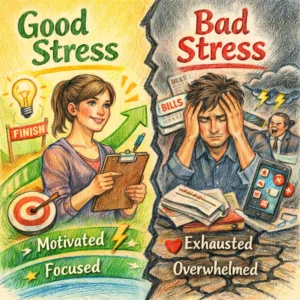
Stress has become so normal in modern life that many of us barely question it anymore. We wake up stressed, work while stressed, and fall asleep scrolling through things that somehow make us even more stressed. In 2026, stress isn’t just an occasional response to challenges—it’s practically woven into daily routines.
But here’s the part most people get wrong: stress itself isn’t the problem.
Not all of it is harmful. In fact, some it can improve your focus, boost motivation, and help you grow. Its other types, however, quietly drain your energy, damage your health, and push you toward burnout.
Understanding the difference between good stress vs bad stress can change how you work, rest, and live. This article breaks it down in simple language—so you can tell what kind of stress you’re dealing with and what to do about it.
Why We’re More Stressed Than Ever
Life today moves fast. Notifications never stop. Work follows us home. Social media keeps us comparing our behind-the-scenes with everyone else’s highlight reel. Even rest feels “unproductive,” which adds guilt to exhaustion.
Stress used to come in short bursts—escaping danger, solving immediate problems, surviving tough moments. Now, it often lingers without relief.
The problem isn’t that it exists.
The problem is that our nervous systems were never designed to stay activated all the time.
That’s why learning the difference between healthy and unhealthy stress matters more than ever.
What Is Stress, Really?
This invisible thing is your body’s natural response to pressure or demand. When your brain senses a challenge, it releases hormones like cortisol and adrenaline to help you react.
In small doses, this response is helpful. It sharpens attention, increases energy, and prepares you to act. But when it becomes constant, the same system meant to protect you starts to wear you down.
This is where the difference between eustress vs distress comes in.
Good Stress (Eustress): The Kind That Helps You Grow
Good stress, also called eustress, is short-term, manageable, and often tied to meaningful goals. It pushes you slightly outside your comfort zone—but not so far that you feel overwhelmed.
You’ve likely experienced it during:
- Preparing for an important presentation
- Starting a new job or project
- Training for a fitness goal
- Anticipating a big life event
This type feels uncomfortable—but exciting.
How Good Stress Supports You
Good stress works with your body instead of against it.
1. Improves focus and performance
It helps your brain prioritize what matters. Distractions fade, and you feel more present.
2. Builds confidence and resilience
Each time you handle a challenge successfully, your brain learns: I can handle hard things.
3. Is temporary
Once the situation ends, your body returns to a calm state. You may feel tired—but satisfied.
4. Encourages growth
Without some pressure, growth rarely happens. This kind helps you adapt and evolve.
What Good Stress Feels Like
Alert but not panicked
Nervous yet capable
Motivated rather than frozen
Energized, even if slightly uncomfortable
Good stress says: This matters—and I can rise to it.
Bad Stress (Distress): The Kind That Drains You
Bad stress, known as distress, occurs when pressure exceeds your ability to cope—or when it never seems to end. Instead of motivating you, it leaves you feeling trapped, exhausted, and overwhelmed.
Distress often comes from:
Chronic work pressure
Financial insecurity
Toxic environments or relationships
Constant digital overload
Lack of rest or boundaries
Unlike good one, distress doesn’t resolve on its own.
Signs of Chronic Stress You Shouldn’t Ignore
Bad stress doesn’t always announce itself loudly. Often, it shows up quietly—through your body, mood, and daily habits.
Mental and Emotional Signs
Constant worry or overthinking
Brain fog and poor concentration
Irritability or emotional numbness
Feeling behind no matter how much you do
Physical Signs
Headaches or muscle tension
Digestive issues
Fatigue that doesn’t improve with rest
Trouble sleeping or waking up exhausted
Behavioral Signs
Procrastination or avoidance
Withdrawing from others
Overworking without feeling productive
Using screens, food, or substances to numb stress
If stress makes you feel smaller instead of stronger, it’s likely the bad type.
Good Stress vs Bad Stress: Key Differences
| Good Stress (Eustress) | Bad Stress (Distress) |
|---|---|
| Short-term | Long-lasting |
| Motivating | Draining |
| Improves focus | Causes brain fog |
| Builds resilience | Leads to burnout |
| Ends with relief | Lingers without relief |
A Simple 2-Question Stress Check-In
If you’re unsure what kind of stress you’re experiencing, ask yourself:
1. Does this stress motivate me or drain me?
Motivation points to eustress. Exhaustion points to distress.
2. Does the stress fade once the situation ends?
Relief afterward is healthy. Lingering tension is a warning sign.
Your body often answers before your mind catches up.
Why Ignoring Bad Stress Is So Harmful
Many people push through distress because they believe it’s normal—or temporary. But chronic type doesn’t simply disappear. Over time, it increases the risk of:
Anxiety and depression
Burnout
Heart disease
Weakened immune function
Hormonal imbalance
Ignoring it doesn’t make you stronger.
Listening to it does.
How to Manage Stress Without Eliminating It
You don’t need a stress-free life to feel better. You need better stress management.
Here are realistic, sustainable ways to reduce bad stress while keeping the good kind.
1. Do the Most Difficult Task First
Avoidance increases stress. The task you keep postponing often consumes more mental energy than actually doing it.
Completing your hardest task early:
Reduces background anxiety
Restores a sense of control
Frees up mental space for the rest of the day
This technique is often called “eating the frog”—and it works.
2. Create Daily Calm Anchors
Your nervous system needs regular signals that it’s safe to relax.
A calm anchor can be:
Morning coffee without your phone
A short walk in silence
Deep breathing for five minutes
Stretching before bed
Even 10 minutes a day can lower cortisol and improve emotional balance.
3. Set Boundaries With Digital Stress
Constant notifications keep your brain in a state of alertness. Over time, this becomes exhausting.
Try:
Turning off non-essential notifications
Creating screen-free times
Avoiding doomscrolling before bed
Your brain needs downtime to recover.
4. Make Space for Play and Rest
Rest isn’t laziness—it’s recovery.
Activities without productivity goals help regulate stress:
Dancing
Drawing
Playing games
Being creative without outcomes
Play interrupts chronic stress cycles and restores mental flexibility.
5. Change Your Inner Dialogue
How you talk to yourself affects your stress response.
Compare:
“I’m failing at everything.”
“I’m under a lot of pressure right now.”
The second statement creates space for self-compassion—and lowers stress hormones.
Your inner voice should support you, not bully you.
When to Seek Extra Support
If stress feels unmanageable despite lifestyle changes, professional support can help. Therapy, coaching, or medical guidance doesn’t mean something is wrong with you—it means you’re taking your well-being seriously.
Chronic stress is not a personal failure. It’s a nervous system asking for care.
Final Thoughts: Stress Is Information, Not a Life Sentence
Stress isn’t the enemy. It’s a signal.
Good stress pushes you to grow, focus, and perform.
Bad stress warns you that something needs attention.
When you learn to tell the difference, you stop fighting your body—and start working with it.
Slow down when needed. Push forward when it’s healthy. Rest without guilt.
You are not your productivity, your deadlines, or your to-do list.
You’re a human being navigating a demanding world—and that deserves compassion.
References
American Institute of Stress — Eustre
Calm Blog — Good Stress vs Bad Stress
SageMED — Eustress vs Distress Guide
Summa Health — Stress Management Differences
International Journal for Multidisciplinary Research (IJFMR)