
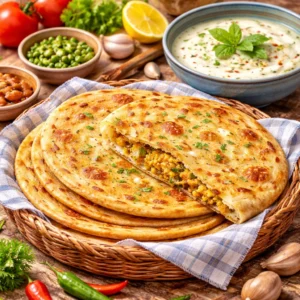
If comfort had a flavor, it would taste like Aloo ka Paratha fresh off the tawa.
There’s something magical about that first bite—the crisp golden surface giving way to a soft, spiced potato center. It’s warm. It’s grounding. It feels like home, even if you’re miles away from it.
In a world where breakfast is often rushed—protein bars in one hand, phone in the other—Aloo ka Paratha refuses to be eaten in a hurry. It asks you to sit down. To breathe. To savor.
But somewhere along the way, this beloved flatbread got labeled as “too heavy,” “too oily,” or worse—“a cheat meal.”
Let’s change that story.
Today, we’re reclaiming the paratha. We’re making it wholesome, balanced, and paired with cooling mint raita that turns this simple meal into a nourishing ritual. No guilt. No food drama. Just honest, vibrant flavors made with intention.
Why Aloo ka Paratha Deserves Respect
Traditional Aloo ka Paratha is one of the most iconic North Indian breakfasts, deeply rooted in Punjabi kitchens and celebrated across South Asia. At its heart, it’s beautifully simple:
- Whole wheat dough
- Spiced mashed potatoes
- Cooked on a hot griddle
That’s it.
When made thoughtfully, it’s not indulgence—it’s nourishment.
Potatoes bring potassium, fiber, and complex carbohydrates. Whole wheat flour adds sustained energy and digestive support. And when cooked with minimal, high-quality fat, it becomes a balanced, satisfying meal that keeps you full for hours.
It’s not the paratha that’s the problem.
It’s the excessive oil and oversized portions that sometimes sneak in.
So let’s build a version that honors tradition—and supports modern wellness.
Phase 1: The Filling – Where the Soul Lives
A good paratha lives or dies by its filling.
If the potato mixture is bland, no amount of butter will save it. We want flavor that feels alive—fresh herbs, warming spices, and a subtle tang that keeps each bite exciting.
Ingredients
- 3–4 medium potatoes, boiled until fork-tender
- 1 handful fresh coriander, finely chopped
- 2 green chilies, minced (adjust to heat preference)
- ½ teaspoon roasted cumin powder
- ½ teaspoon red chili flakes
- ½ teaspoon salt (or to taste)
- ½ teaspoon amchur (dry mango powder) or crushed anardana
- ½ teaspoon finely chopped fresh ginger
The Secret to Perfect Filling
Mash the potatoes while they’re still warm—but not steaming hot. Warm potatoes absorb spices better and create a smoother texture.
Now here’s the important part: mix with your hands.
Yes, really.
There’s something grounding about combining ingredients with your hands. You feel the texture. You adjust instinctively. You connect.
Taste it.
It should be slightly tangy, mildly spicy, and fragrant with cumin and coriander. If you’re tempted to eat it straight from the bowl, you’re doing it right.
Phase 2: The Dough – Your Foundation
The dough determines texture. For a healthier twist, skip refined flour and use whole wheat atta.
Whole wheat offers fiber, supports digestion, and provides steady energy instead of a quick spike and crash.
Ingredients
- 2 cups whole wheat flour (atta)
- ½ teaspoon salt
- Water (as needed)
Method
- Combine flour and salt.
- Gradually add water while mixing.
- Knead until soft and elastic—about 8–10 minutes.
The dough should feel smooth and slightly springy, not sticky.
Now let it rest for 15 minutes.
This “resting phase” allows gluten to relax, making rolling easier and preventing tears when stuffing.
A rested dough is cooperative dough.
Phase 3: Assembly – Where Confidence Matters
This is the part that intimidates people.
“What if it bursts?”
“What if it leaks?”
“What if it looks funny?”
Relax.
Even an oddly shaped paratha tastes divine.
The Double Disc Method (Beginner-Friendly)
- Divide dough into equal balls.
- Roll out two thin circles.
- Place a generous mound of potato filling in the center of one circle.
- Leave about half an inch around the edges.
- Place the second circle on top.
- Seal the edges gently but firmly.
- Lightly roll again to even it out.
Be gentle. The goal isn’t perfection—it’s comfort.
Phase 4: The Healthy Sizzle
Traditionally, parathas are cooked with generous ghee. And while ghee has its place, we’re using it wisely.
What You’ll Need
- Cast-iron tawa or heavy skillet
- ½ teaspoon ghee or olive oil per paratha
Heat the pan until hot but not smoking.
Place the paratha down. When bubbles form, flip.
Brush lightly with ghee. Press gently with a spatula.
Flip again and repeat on the other side.
You’re aiming for golden-brown spots and crisp edges—not an oil bath.
The aroma of cumin hitting the heat will wake up everyone in the house. It’s inevitable.
The Mint Raita – The Cooling Companion
No Aloo ka Paratha is complete without mint raita.
It’s the balance to the warmth. The calm to the spice. The refreshing contrast that makes every bite better.
Ingredients
- 1 cup Greek yogurt or plain curd
- A handful of fresh mint leaves
- ¼ teaspoon roasted cumin powder
- A pinch of kala namak (black salt)
- Optional: grated cucumber
Method
Whisk the yogurt until silky smooth.
Crush mint leaves into a paste (or finely chop).
Mix everything together.
Taste. Adjust salt.
That’s it.
Why Mint Raita Works
Mint has traditionally been used to soothe digestion, and yogurt provides probiotics that support gut health. According to Healthline, mint may help ease indigestion and bloating, while probiotic-rich yogurt contributes to a balanced gut microbiome.
Pairing warm paratha with cooling mint raita isn’t just culinary genius—it’s digestive wisdom passed down through generations.
The Emotional Side of Aloo ka Paratha
Food is memory.
It’s Sunday mornings.
It’s school holidays.
It’s a parent calling you to the table.
When you cook Aloo ka Paratha, you’re not just feeding yourself—you’re recreating a ritual.
And rituals matter.
In a fast-moving world, cooking something from scratch anchors you. Rolling dough slows your breathing. The sizzle pulls you into the present moment.
It becomes mindfulness disguised as breakfast.
Real-Life Paratha Truths (Because We’re Honest Here)
- The first paratha is always experimental. Eat it proudly.
- Flour will cover your counter. Consider it culinary confetti.
- Someone will appear when they smell it cooking.
- You will make “just one more.”
And that’s okay.
Making It Even Healthier (If You Want To)
If you’d like to boost nutrition further:
- Add grated carrots or spinach to the filling.
- Use low-fat yogurt for mint raita.
- Serve with fresh salad.
- Practice portion awareness (one or two is plenty).
Balance is the goal—not restriction.
Why This Breakfast Is Motivational
You turned:
- Flour
- Water
- Potatoes
Into something extraordinary.
That’s powerful.
It’s proof that simple ingredients, handled with care, create beauty.
When you choose homemade Aloo ka Paratha with mint raita, you choose nourishment over convenience. Intention over impulse.
That’s not just breakfast.
That’s self-respect.
Final Thoughts: Take Back Your Paratha
Healthy eating doesn’t mean abandoning tradition.
It means understanding it.
It means adjusting it thoughtfully.
It means enjoying it without guilt.
This weekend, skip the cereal aisle. Boil some potatoes. Put on music. Roll out dough with confidence.
Make breakfast an experience again.
And when you dip that crispy edge into cool mint raita—pause.
That’s not just food.
That’s comfort, balance, and joy on a plate.
References