
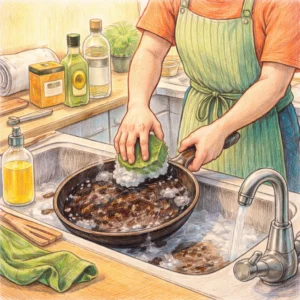
Hey there, kitchen warrior. Let’s have an honest moment.
Open your cupboard. Pull out that flat skillet pan.
Yes… that one.
The one that looks like it survived a minor house fire. The one with stubborn black patches that laugh in the face of dish soap. The pan that once gleamed proudly under your kitchen lights but now resembles a charcoal briquette with a handle.
Maybe it all started innocently—with pancakes. Or eggs. Or The Great Grilled Cheese Incident that went from “golden brown” to “carbonized tragedy” in under 30 seconds.
You scrubbed.
You soaked.
You questioned your life choices at the sink.
But here’s the good news: your flat skillet pan is not ruined.
It’s just misunderstood.
In this guide, we’re going to clean it, rescue it, and—most importantly—stop it from turning black ever again. No complicated chemistry degree required. No fancy products. Just real, practical kitchen wisdom delivered with a little humor and a lot of empathy.
By the end of this post, you’ll officially be a Flat Skillet Pan Whisperer.
Why Does a Flat Skillet Pan Turn Black Anyway?
Before we jump into cleaning mode, let’s understand the villain of this story.
That black, crusty layer on your flat skillet pan isn’t just “burnt food.” It’s a stubborn mix of:
- Carbonized proteins (from food)
- Polymerized oils (oil that overheated and chemically bonded to the pan)
In simpler terms:
Your cooking oil got too hot, panicked, and turned into a plastic-like coating that fused itself onto the surface.
This usually happens because of:
- Using high heat too often
- Cooking with low smoke-point oils
- Leaving the pan unattended (hello, phone scrolling)
- Uneven heat or hot spots on burners
And don’t worry—this happens to beginners and experienced cooks alike. Flat skillet pans are especially vulnerable because they’re designed for even, direct contact with heat.
Step 1: The Baking Soda & Vinegar Rescue Mission
When your flat skillet pan looks like it belongs in a museum of kitchen disasters, it’s time to bring out the classics.
How to Do It
- Sprinkle a thick layer of baking soda over the burnt areas.
- Add white vinegar slowly.
- Watch the fizzing magic happen.
- Let it sit for 15–20 minutes.
- Scrub gently with a non-abrasive sponge.
- Rinse and dry thoroughly.
Why This Works
That fizzy reaction breaks the bond between the pan and the burnt residue—without damaging the surface. It’s effective, affordable, and oddly satisfying.
Bonus: Your kitchen will smell fresh instead of smoky regret.
Step 2: Deglazing—Clean While You Cook
Professional chefs don’t wait until disaster strikes. They clean as they go—and you can too.
How to Deglaze a Flat Skillet Pan
- Turn off the heat while the pan is still hot.
- Pour in a small amount of room-temperature water or broth.
- Use a wooden spatula to gently scrape the bottom.
- Watch burnt bits lift off instantly.
Why It Works
Steam is nature’s pressure washer. Deglazing loosens food before it hardens into that dreaded black layer.
Bonus tip: Those loosened bits can become the base of a delicious sauce. Cleaning and flavor? Win-win.
Step 3: Respect the Smoke Point (This Is Huge)
This step alone can save your flat skillet pan from a lifetime of black scars.
The Big Mistake
Using extra virgin olive oil on high heat.
Olive oil has a low smoke point, which means it burns fast—and burnt oil is the main cause of blackened pans.
Best Oils for a Flat Skillet Pan
For high-heat cooking, use:
- Avocado oil
- Grapeseed oil
- Canola oil
- Peanut oil
These oils stay stable at higher temperatures and won’t turn into carbon monsters.
Think of it like choosing the right shoes for the job—you wouldn’t run a marathon in flip-flops.
Step 4: The Salt Scrub (Especially for Cast Iron)
If your flat skillet pan is cast iron, step away from harsh soaps and steel wool.
How to Do a Salt Scrub
- Warm the pan slightly.
- Add coarse kosher salt.
- Scrub gently using a folded paper towel.
- Rinse lightly and dry immediately.
- Add a thin layer of oil if needed.
Why It Works
Salt is abrasive enough to remove burnt residue but gentle enough to protect seasoning. It’s like exfoliation for your cookware.
Your pan will thank you with better non-stick performance next time.
Step 5: Heat Control—The Secret Nobody Tells You
Let’s be honest: most of us turn the heat up way too high because we’re hungry and impatient.
But here’s the truth:
👉 Most flat skillet pans work best on medium or medium-low heat.
What to Do Instead
- Preheat slowly.
- If oil starts smoking, it’s already too hot.
- Remove the pan from heat for a few seconds if needed.
- Let the pan do the work—it’s designed to.
According to cookware experts, consistent moderate heat prevents food from bonding to the surface and dramatically extends pan life.
Daily Habits That Keep Your Flat Skillet Pan Clean
If you want long-term success, these small habits make a big difference:
- Never heat an empty pan on high
- Wipe excess oil after each use
- Avoid metal utensils on non-stick pans
- Wash and dry immediately after cooking
- Store pans with soft liners between them
A little care goes a long way.
When Is a Flat Skillet Pan Truly Done?
Here’s the honest answer:
If the pan is warped, peeling, or releasing flakes into food—it’s time to let go.
But discoloration alone?
Totally fixable.
A dark pan doesn’t mean a bad pan. Many seasoned pans actually perform better with age—when cared for properly.
Final Thoughts: You’ve Got This
Cleaning a flat skillet pan shouldn’t feel like punishment for wanting breakfast.
With:
- The right oil
- Better heat control
- Simple cleaning techniques
…you can keep your pan looking great and cooking beautifully for years.
So go ahead—flip those pancakes, sear those veggies, make that grilled cheese (but maybe don’t scroll TikTok at the same time).
Your flat skillet pan is ready for redemption.
References
Cast Iron Care Guide – Lodge Cast Iron
How to Clean a Burnt Pan (Bosch UK)
How to Clean a Burnt Pot or Pan (Arm & Hammer)