
The wellness world moves faster than a toddler who just discovered sugar.
One week, we’re told to eat six small meals a day to “keep the metabolism firing.” The next week, everyone is skipping breakfast and praising Intermittent Fasting like it’s the holy grail of health (ironically, while pushing away the very toast that made sliced bread famous).
Scroll through social media and you’ll see glowing testimonials. People claim they’ve lost weight, cleared brain fog, boosted energy, improved blood work, and basically unlocked superhero mode — all by changing when they eat.
It sounds almost too simple.
But before you lock your pantry and dramatically throw away your cereal bowls, let’s slow down and ask the real question:
Is Intermittent Fasting safe for everyone?
Pour yourself a glass of water (zero calories — you’re safe), and let’s have an honest, human conversation.
What Is Intermittent Fasting, Really?
First things first: Intermittent Fasting (IF) is not a traditional “diet.”
It doesn’t tell you to avoid carbs, worship kale, or survive on smoothies. Instead, it’s an eating pattern. You rotate between periods of eating and periods of not eating.
That’s it.
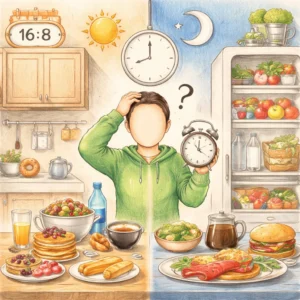
The most popular method is 16/8:
- Fast for 16 hours
- Eat during an 8-hour window
For example:
- Finish dinner at 8 PM
- Eat your first meal at 12 PM the next day
Other common styles include:
- 14/10 (a gentler version)
- 5:2 method (eat normally 5 days, reduce calories 2 days)
- Alternate-day fasting
When you fast, your body shifts gears. Instead of constantly digesting food, it starts using stored energy (glycogen and fat). Some research suggests this may improve insulin sensitivity, support weight loss, and even trigger cellular repair processes.
On paper, it sounds impressive.
But biology is rarely one-size-fits-all.
Why So Many People Love Intermittent Fasting
Let’s start with the upside — because yes, for many people, Intermittent Fasting works beautifully.
1. Weight Loss Without Constant Calorie Counting
When your eating window shrinks, it often becomes harder to overeat.
No late-night snacking.
No grazing all day.
No “just one more handful.”
For some people, this naturally lowers calorie intake without obsessively tracking every bite.
And that mental relief? That’s powerful.
2. Improved Focus and Mental Clarity
Many people report feeling sharper during fasting hours.
Instead of the post-lunch slump, they experience steady energy. Some researchers believe this may be linked to stable blood sugar levels and mild increases in ketone production.
In simpler terms: fewer energy crashes, more steady momentum.
3. Simplicity
There’s something oddly freeing about not planning five meals and three snacks.
No constant meal prep.
No hauling Tupperware everywhere.
No obsessing over timing every 2–3 hours.
For busy professionals, entrepreneurs, or minimalists, Intermittent Fasting can feel like mental decluttering.
4. Possible Metabolic Benefits
Research suggests Intermittent Fasting may:
- Improve insulin sensitivity
- Reduce inflammation markers
- Support heart health indicators
- Help regulate blood sugar in some individuals
But here’s the key word: may.
Human bodies are wonderfully complicated.
Now Let’s Talk About Reality
Here’s where the glossy Instagram stories fade.
Intermittent Fasting is not automatically safe or ideal for everyone.
Your body is not a trend.
It’s not an experiment.
It’s not a hashtag.
It’s a living, breathing system influenced by hormones, stress, sleep, genetics, and life stage.
Let’s look at who needs extra caution.
1. People Living Under High Stress
Stress is not just emotional — it’s hormonal.
When you’re overwhelmed:
- Work pressure
- Parenting chaos
- Financial stress
- Poor sleep
Your body produces cortisol (the stress hormone).
Fasting itself is a mild stressor. For some people, that’s beneficial. For others — especially those already maxed out — it adds fuel to the fire.
Signs fasting might not suit you:
- Feeling wired but exhausted
- Poor sleep
- Increased irritability
- Anxiety spikes
- Extreme fatigue
If your nervous system is already overwhelmed, adding food restriction may not help.
Sometimes your body needs nourishment — not another challenge.
2. Women and Hormonal Sensitivity
This deserves special attention.
Women’s bodies are biologically designed to detect energy availability. When food intake feels scarce, the body may interpret it as an unsafe environment for reproduction.
For some women, aggressive Intermittent Fasting can lead to:
- Irregular periods
- Hormonal imbalances
- Sleep disturbances
- Increased cravings
- Thyroid changes
Not every woman will experience this — but many do.
Women who should avoid or only attempt IF under medical supervision:
- Pregnant women
- Breastfeeding mothers
- Women trying to conceive
- Women with irregular cycles
- Women with a history of hormonal issues
Your hormones are not something to gamble with for faster fat loss.
3. Anyone With a History of Disordered Eating
This is critical.
Intermittent Fasting introduces rules.
Start time.
Stop time.
Restriction window.
For someone who has struggled with:
- Binge eating
- Anorexia
- Bulimia
- Obsessive calorie control
Those rules can quickly become triggers.
Health includes mental freedom.
If skipping breakfast makes you anxious…
If you feel guilt around eating outside your window…
If fasting turns into extreme restriction…
Then Intermittent Fasting may not be a healthy tool for you.
Your relationship with food matters more than a trending method.
4. People With Medical Conditions
Intermittent Fasting can significantly affect blood sugar and medication timing.
Extra caution is needed for:
- Type 1 diabetics
- Type 2 diabetics on medication
- People with low blood pressure
- Individuals taking insulin
- Those on medications requiring food intake
- Individuals with a history of fainting
In these cases, fasting should only be done with medical supervision.
TikTok is not your doctor.
5. Athletes and Highly Active Individuals
Athletes can absolutely practice Intermittent Fasting — but timing matters.
If you train intensely:
- Lifting heavy weights
- Long-distance running
- High-intensity sports
You need adequate fuel.
Poorly timed fasting may cause:
- Reduced performance
- Slower recovery
- Hormonal disruption
- Muscle loss
Strategic timing around workouts becomes essential.
Signs Intermittent Fasting May Not Be Working for You
Listen to your body. It speaks clearly — if you’re willing to hear it.
Red flags include:
- Constant fatigue
- Dizziness
- Hair thinning
- Missed menstrual cycles
- Irritability
- Obsession with food
- Declining workout performance
- Poor sleep
Feeling slightly hungry before your first meal? Normal.
Feeling like you might pass out? Not normal.
How to Try Intermittent Fasting Safely
If you’re healthy, curious, and still interested — good news.
You can try Intermittent Fasting intelligently.
1. Start With 12 Hours
Eat dinner at 7 PM.
Eat breakfast at 7 AM.
That’s already a fast.
Let your body adapt slowly before stretching it longer.
2. Progress Gradually
Move to:
- 13 hours
- 14 hours
- 15 hours
No need to jump into 18 or 20-hour fasts immediately.
Sustainability beats extremism.
3. Prioritize Nutrient Density
Fasting is not permission to eat ultra-processed food.
Break your fast with:
- Protein (eggs, fish, chicken, tofu)
- Healthy fats (avocado, nuts, olive oil)
- Fiber (vegetables, legumes, whole grains)
Your eating window should support your body — not sabotage it.
4. Hydrate Consistently
During fasting:
- Water
- Black coffee
- Unsweetened tea
Many hunger signals are actually dehydration.
5. Pay Attention to Biofeedback
Ask yourself:
- Do I feel energized?
- Am I sleeping well?
- Is my mood stable?
- Is my menstrual cycle regular?
If the answer is no — adjust or stop.
Health is not suffering.
The Psychological Side of Intermittent Fasting
There’s something empowering about self-discipline.
But there’s a thin line between discipline and punishment.
Intermittent Fasting should:
- Simplify your life
- Improve your energy
- Support your goals
It should not:
- Create anxiety
- Trigger guilt
- Control your social life
- Make you fear food
If fasting prevents you from enjoying dinner with your family or celebrating birthdays without stress, it may not be serving you.
Health includes joy.
The Science So Far
Research shows promising benefits, particularly for:
- Weight loss
- Insulin sensitivity
- Blood sugar regulation
- Cardiovascular risk markers
However, long-term studies are still developing. Most research focuses on overweight adults, not all populations.
So while Intermittent Fasting has evidence behind it, it’s not a universal prescription.
The Verdict: Is Intermittent Fasting Safe for Everyone?
No.
And that’s okay.
It’s a tool — not a religion.
For:
✔ Generally healthy adults
✔ Those seeking structure
✔ People who prefer fewer meals
It may be helpful.
For:
✘ Pregnant or breastfeeding women
✘ People with eating disorder history
✘ Individuals with certain medical conditions
✘ Chronically stressed individuals
It may not be appropriate.
The safest approach is the one that makes you feel strong, balanced, and mentally peaceful.
Summary Table: Is Intermittent Fasting Right for You?
| Category | Is It Safe? | Recommendation |
|---|---|---|
| Healthy Adults | Generally Yes | Start with 14/10 or 16/8 |
| Pregnant/Nursing | Generally No | Focus on steady meals |
| Type 1 Diabetics | Caution | Medical supervision required |
| High Stress | Maybe | Begin conservatively |
| Athletes | Yes (with care) | Time around workouts |
Final Thoughts
Intermittent Fasting is neither magic nor madness.
It’s simply one approach among many.
Your health journey is personal. It should feel sustainable — not like punishment.
Some people thrive on a hearty breakfast at dawn.
Others thrive skipping it.
The right answer isn’t found in a trend.
It’s found in how your body responds.
And that response deserves respect.
References
Harvard T.H. Chan School of Public Health – The Nutrition Source
Johns Hopkins Medicine – Intermittent Fasting: What is it?
National Institute on Aging – Calorie Restriction and Fasting Diets