
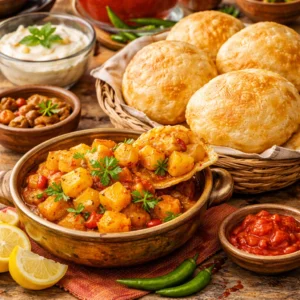
It’s Sunday morning.
The sunlight sneaks through your curtains. The world is quieter than usual. And somewhere deep in your soul, a craving begins to whisper…
Not for cereal.
Not for toast.
Not for a sad, rushed weekday breakfast.
You want something legendary.
You want Air Fried Poori and Aloo ki Tarkari.
That golden, puffed-up bread. That spicy, tangy potato curry. That nostalgic aroma that instantly transports you to childhood Sundays, family brunches, and roadside halwa-poori stalls buzzing with life.
But then… the inner “Health Police” clears its throat.
You remember the deep frying.
You remember the oil splatters.
You remember the heavy, post-breakfast food coma that makes you question every life decision.
And suddenly, your craving is fighting your conscience.
Here’s the good news: you don’t have to choose anymore.
Welcome to the era of Air Fried Poori—where tradition meets smart cooking, and indulgence meets balance.
Why Air Fried Poori Is a Game-Changer
Traditionally, Poori is deep-fried at very high heat. That intense oil temperature causes moisture in the dough to turn into steam, which creates that magical puff.
Now imagine recreating that puff—without submerging your bread in a pool of oil.
That’s exactly what an air fryer does.
By circulating hot air rapidly at high temperatures, it mimics the crisping effect of deep frying. The result?
- Crispy exterior
- Soft interior
- Beautiful puff
- Minimal oil
- Zero greasy fingers
And no, it’s not a compromise. It’s an upgrade.
According to the British Heart Foundation, reducing saturated fat intake—especially from deep-fried foods—can significantly improve long-term heart health and energy levels. That doesn’t mean you stop eating your favorite foods. It means you learn how to cook them smarter.
And that’s exactly what we’re doing today.
Phase 1: Aloo ki Tarkari – The Soulmate
Let’s be honest.
Poori without Aloo ki Tarkari is like tea without biscuits. Technically possible. Emotionally disappointing.
Aloo ki Tarkari is the bold, spicy, saucy potato curry that makes Poori unforgettable. It’s the hug to the crisp. The fire to the fluff.
Ingredients You’ll Need
- 3 medium potatoes (boiled and roughly smashed)
- 2 tomatoes (finely chopped)
- 1 tsp cumin seeds
- ½ tsp nigella seeds (kalonji)
- ½ tsp turmeric powder
- ½–1 tsp red chili flakes
- Salt to taste
- 1 tsp oil
- 1 cup water
- Fresh coriander for garnish
- Green chilies (optional)
The Secret Weapon:
A spoonful of pickle masala (achaar ka masala). That’s what gives it that authentic halwa-poori stall vibe.
Cooking the Tarkari (The Right Way)
- Heat a teaspoon of oil in a pan.
- Add cumin and kalonji. Let them crackle.
- Add chopped tomatoes and cook until they soften and turn into a thick paste.
- Add turmeric, red chili flakes, and salt.
- Stir until fragrant.
- Add your roughly smashed potatoes.
- Pour in one cup of water and let it simmer.
The goal? A thick, slightly saucy consistency that clings lovingly to your Poori.
Finish with fresh coriander and sliced green chilies.
Take a deep breath.
That smell?
That’s childhood.
Phase 2: Air Fried Poori – The Star of the Show
Now comes the exciting part.
Making Air Fried Poori is slightly different from deep frying—but not complicated.
You just need to adjust your mindset and technique.
The Perfect Dough
- 2 cups whole wheat flour (atta) or all-purpose flour
- 2 tbsp semolina (suji)
- 1 tbsp oil
- Warm water (as needed)
Why Semolina?
Semolina is the secret to keeping your Air Fried Poori crispy. It adds structure and prevents sogginess.
Step-by-Step: Air Frying Magic
1. Knead Firmly
Poori dough should be firmer than roti dough.
Knead it well for 6–8 minutes. It should feel tight and smooth. Cover and let it rest for 15 minutes.
Resting relaxes gluten and improves puffing.
2. Roll with Confidence
Divide into small balls.
Roll evenly—not too thin (it’ll become a cracker), not too thick (it’ll stay raw).
Aim for the Goldilocks zone: just right.
3. Preheat Like You Mean It
Preheat your air fryer to 200°C (400°F).
This step is non-negotiable.
If it’s not hot enough, your Poori won’t puff.
4. The Oil Mist
Lightly brush or spray both sides with a small amount of oil.
Not soaking. Just a gentle mist.
5. The Puff Moment
Place one or two Pooris in the basket—don’t overcrowd.
Cook 2–3 minutes per side.
And then… magic.
You’ll see it rise like a proud little balloon.
That moment? Pure joy.
The Honest Truth About Your First Attempt
Let’s keep it real.
Your first Air Fried Poori might:
- Refuse to puff
- Turn slightly crispier than expected
- Look like a dramatic frisbee
And that’s okay.
Cooking is science mixed with intuition.
If it doesn’t puff:
- Roll slightly thicker
- Ensure proper preheating
- Avoid overcrowding
- Make sure dough isn’t too soft
Even a flat Poori dipped in spicy Aloo ki Tarkari tastes incredible.
Perfection comes with practice.
Why This Recipe Feels So Empowering
This isn’t just about food.
It’s about evolving tradition.
Food culture isn’t static—it adapts.
Centuries ago, cooking methods changed with the invention of stoves. Later, pressure cookers transformed kitchens. Today, the air fryer is simply another chapter in culinary evolution.
You’re not disrespecting tradition.
You’re modernizing it.
And that’s powerful.
You get:
- Familiar flavors
- Cultural connection
- Less oil
- Better digestion
- No post-breakfast crash
That heavy “oil coma” after deep-fried breakfast? Gone.
Instead, you feel satisfied—not sluggish.
Pro Tips for Perfect Air Fried Poori
1. Don’t Crowd the Basket
Air needs space to circulate.
2. Wrap Them Warm
Keep cooked Pooris in a clean kitchen towel or hot pot.
3. Add Yogurt on the Side
Sweetened yogurt (dahi) balances the spice beautifully.
4. Serve Immediately
Air Fried Poori is best fresh.
5. Control the Temperature
If it browns too quickly, reduce temperature slightly.
Air Fried Poori vs Deep Fried Poori
| Deep Fried | Air Fried |
|---|---|
| High oil absorption | Minimal oil |
| Heavy feeling | Light and digestible |
| Messy kitchen | Clean cooking |
| Longer cleanup | Quick cleanup |
| Traditional method | Modern adaptation |
Both taste amazing.
But one makes you feel better after eating it.
The Emotional Side of Sunday Breakfast
Food is memory.
It’s comfort.
It’s identity.
When you make Air Fried Poori and Aloo ki Tarkari, you’re not just cooking—you’re recreating moments.
You’re preserving culture in a way that fits your lifestyle.
You’re telling yourself:
“I can enjoy what I love without compromising my health.”
That’s balance.
And balance is sustainable.
Final Thoughts: A Sunday Upgrade
You did it.
You cracked the code.
You made Air Fried Poori and Aloo ki Tarkari with less oil and full flavor.
This isn’t just breakfast.
It’s proof that you can:
- Adapt
- Improve
- Experiment
- Keep tradition alive
So go ahead.
Tear that crispy Poori.
Scoop up that spicy Tarkari.
Close your eyes.
And enjoy a Sunday morning that feels indulgent—but smart.
Now let’s settle this classic debate:
Are you Poori with Halwa team…
or Poori with Aloo ki Tarkari team?
👀✨
References
Saturated fat and heart health