
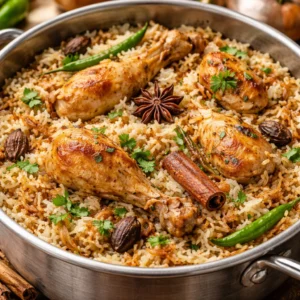
There are few dishes in the world that feel like home the way Palao does.
It’s the aroma that fills the kitchen before anyone even asks what’s cooking. It’s the fluffy rice that falls apart like silk. It’s that first spoonful that tastes like comfort, celebration, and quiet pride all at once. Palao doesn’t just feed you—it reassures you.
But then…
There’s the yakhni.
Traditionally, making Palao means simmering bones and meat with whole spices for what feels like three business days. You boil. You strain. You pray you didn’t overcook the meat. You fish out peppercorns like you’re on a culinary treasure hunt. And in 2026—when most of us barely have the patience to wait for a 10-second ad to skip—who honestly has that kind of time?
Here’s the good news: you can make a deeply flavorful, aromatic, perfectly fluffy Palao without the yakhni drama.
No second pot.
No straining ceremony.
No kitchen chaos.
Just one pot. One method. One delicious victory.
Welcome to the “Sizzle and Soak” revolution.
Why Skip Yakhni? (And Why It Still Works)
Let’s understand something important: yakhni exists to extract flavor from spices and bones into water. That flavorful broth then cooks the rice.
But here’s the twist.
If you sauté (bhuno) your spices and meat properly in the same pot before adding water, you’re building flavor directly at the source. Instead of flavor moving from pot A to pot B, you’re concentrating it right where the rice will cook.
This is essentially the pilaf method, a technique widely recognized in professional cooking for producing fluffy, separate grains. According to Serious Eats, sautéing rice or aromatics before simmering enhances both flavor and grain separation.
So no—you’re not cheating.
You’re being efficient.
The Ingredients: Keep It Simple, Keep It Smart
Before we start, gather your ingredients. Think of them as your supporting cast. Each one plays a role in building the flavor story of your Palao.
The Fluffy Foundation
Basmati Rice – 2 cups
Wash it until the water runs clear. Then soak for 20 minutes.
Non-negotiable.
According to guidance from USA Rice Federation, rinsing removes excess surface starch, and soaking improves grain elongation and texture. That’s how you get those elegant, long, separate grains.
Chicken (Bone-In) – ½ kilo
Bone-in chicken is essential here. As it cooks, the bones release collagen and flavor—your “on-the-go yakhni.”
Boneless works, but bone-in gives soul.
The Flavor Bombs (Whole Spices)
- 1 cinnamon stick
- 2–3 black cardamoms
- 4 cloves
- 1 star anise
- 1 tablespoon cumin seeds
- A few black peppercorns
Whole spices infuse slowly and gently. They don’t shout. They whisper depth into the rice.
The Soul Builders
Onions – 2 large, thinly sliced
Onions are not just an ingredient. They’re the architects of your Palao’s color and sweetness.
Ginger-Garlic Paste – 2 tablespoons
This is your aromatic backbone.
Yogurt – ½ cup (whisked)
Yogurt tenderizes the chicken and gives a glossy finish to the rice.
The 5-Step No-Yakhni Revolution
Let’s cook.
Step 1: The Browning Ritual
Heat oil or ghee in a heavy-bottomed pot.
Add whole spices. Let them crackle. When the cumin seeds start dancing, you’re on the right track.
Now add your sliced onions.
Here’s the golden rule:
We want golden brown. Not pale. Not burnt.
The deeper the onion color, the richer your Palao.
But watch closely—onions go from “perfect” to “fire hazard” in about six seconds.
Take your time here. This step builds 60% of your flavor.
Step 2: The Meat Sizzle
Add chicken and ginger-garlic paste.
Turn the heat high.
You want to sear the chicken, not steam it. Let it develop slight brown spots. That caramelization equals flavor.
This locks in juices and prevents rubbery chicken.
Cook until the pink disappears and the chicken turns opaque.
Step 3: The Instant Broth
Now add:
- Whisked yogurt
- Salt
- Optional pinch of garam masala
Stir and cook until the oil separates slightly. This is your flavor base forming.
Instead of preparing yakhni separately, add 3½ cups hot water directly to the pot.
That’s it.
If you’re feeling extra clever, crumble in a chicken bouillon cube or add a splash of stock. It enhances umami without adding cooking time.
You’ve just created a shortcut broth.
Step 4: The Rice Arrival
Drain your soaked rice gently.
Add it to the pot.
Do not stir aggressively. You’re not excavating an archaeological site. Just gently nudge so the rice spreads evenly and stays submerged.
Bring it to a boil.
Step 5: The Dam (The Magic Steam)
Let the water cook down until you see little steam holes forming on the surface.
That’s your cue.
Lower the heat to the absolute minimum. Cover with a tight lid. For extra sealing power, wrap the lid in a kitchen towel.
Steam for 12–15 minutes.
No peeking.
During these 15 minutes, you can:
- Scroll 400 memes
- Do a mini workout
- Or simply stand in the kitchen inhaling your success
When you open the lid, the rice should be fluffy, separate, and standing tall like it’s saluting you.
That’s victory.
Why This Method Actually Wins
We live in a culture that glorifies struggle.
Three-hour recipes.
Complex steps.
“Authentic” methods that require emotional endurance.
But here’s the truth:
Ease does not reduce quality.
This one-pot Palao works because:
- Sautéing builds direct flavor.
- Bone-in chicken releases natural stock.
- Soaked rice ensures elongation.
- Steam cooking finishes gently.
It’s efficient cooking—not lazy cooking.
And honestly? Choosing simplicity in a chaotic world is a form of rebellion.
Troubleshooting (Because Real Kitchens Are Real)
Let’s be honest. Sometimes things go sideways.
“My rice is sticking together!”
Congratulations. You’ve invented “Palao-Risotto Fusion.”
But seriously:
- You may have added too much water.
- Or stirred too aggressively.
- Or skipped rinsing/soaking.
Next time, measure carefully and handle gently.
“It’s too salty!”
Serve with plain yogurt.
Yogurt is the Ctrl+Z of cooking.
It balances salt instantly.
“The chicken feels slightly tough!”
No drama.
Sprinkle 1–2 tablespoons of water, cover, and steam 5 more minutes on low heat.
Done.
The Emotional Side of Palao
There’s something deeply satisfying about cooking rice perfectly.
When you lift the lid and steam rises in soft waves… when each grain is separate… when the aroma fills the room…
You feel capable.
You feel grounded.
You feel like maybe—just maybe—you’ve got this adulting thing under control.
And that feeling? It’s worth more than a complicated recipe.
Quick Recap (Because You’re Busy)
- Brown onions deeply.
- Sear chicken properly.
- Add yogurt and water directly.
- Add soaked rice gently.
- Steam on low for 15 minutes.
That’s it.
No yakhni pot.
No straining.
No spice fishing expedition.
Just flavorful, fluffy Palao in under 30 minutes.
Final Thoughts: You Are the Chef Now
You don’t need:
- A culinary degree.
- A three-hour window.
- A kitchen full of gadgets.
You need:
- One pot.
- Balanced heat.
- And the courage to skip the yakhni.
The best meals in life shouldn’t require exhaustion.
They should feel accessible.
Comfort should be easy.
So go ahead—ignore the traditionalists (with love), embrace the shortcut, and make a Palao that tastes like celebration but fits into real life.
Because sometimes, the smartest kitchen hack is simply trusting yourself.
👀✨
References
Food Fusion – Pakistani Chicken Pulao Recipe