
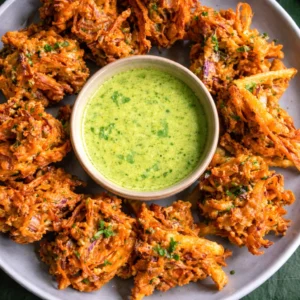
It starts innocently enough.
A soft drizzle taps against the window. The air smells like wet soil and nostalgia. Your productivity quietly packs its bags and leaves. Suddenly, nothing—nothing—sounds better than hot tea and a plate of vegetable pakoras.
This isn’t a craving.
It’s a natural phenomenon.
Rain + Chai = Vegetable Pakoras.
Science hasn’t officially confirmed it, but South Asian households worldwide agree.
Yet here’s the heartbreak: not all pakoras are created equal.
Some are limp.
Some are greasy.
Some lose their crunch before they even hit the plate.
And if you’re gluten-free, you may have been led to believe pakoras are off-limits altogether.
Friend—let me stop you right there.
Today, we’re making vegetable pakoras that are naturally gluten-free, outrageously crispy, and loud enough to announce their presence when you bite into them. The kind of crunch that turns heads. The kind that makes people ask, “Wait… HOW are these still crispy?”
Pull up a chair. Let’s talk pakoras.
The Gluten-Free Truth No One Tells You
Here’s the plot twist no one warned you about:
👉 Traditional vegetable pakoras are already gluten-free.
The original, authentic version doesn’t use wheat flour at all. It uses besan—also known as gram flour or chickpea flour.
Some modern recipes sneak in all-purpose flour for convenience. But the OG method? Pure besan magic.
Besan is earthy, nutty, protein-rich, and when it hits hot oil, it forms a crispy shell that hugs vegetables like it was born for the job.
So if you’re gluten-free, you’re not missing out.
You’re actually eating pakoras the way they were meant to be eaten.
Very traditional. Very iconic. Very crunchy.
Why Most Vegetable Pakoras Go Wrong
Before we cook, let’s address the elephant in the frying pan.
Most soggy pakoras fail because of:
- Too much water in the batter
- Oil that isn’t hot enough
- Overcrowding the pan
- No contrast in flours
Crunch doesn’t happen by accident.
Crunch is engineered.
And today, you’re learning the blueprint.
Meet the Ingredient Squad (Everyone’s Invited)
Vegetable pakoras are wonderfully democratic. If it’s chilling in your fridge, it probably belongs here.
The Base (The Crunch Foundation)
Besan (Chickpea Flour) – 1½ cups
- Naturally gluten-free
- High in protein and fiber
- Flavorful and sturdy
👉 Pro tip: Sieve it. Flour clumps are villains.
Rice Flour – 2 tablespoons
This is the secret weapon.
Besan gives structure. Rice flour gives that glass-shattering crunch that lasts.
The Veggie Party (Mix & Match)
- Onions – thinly sliced (sweet + crispy edges)
- Potatoes – matchsticks (tiny fries energy)
- Spinach – roughly chopped (leafy crunch)
- Green chilies – finely sliced (optional chaos)
You can also add:
- Cauliflower florets
- Zucchini
- Cabbage
- Eggplant (controversial but elite)
The Flavor Boosters (Non-Negotiable)
- Ajwain (Carom Seeds) – digestion + iconic pakora aroma
- Cumin Seeds – warmth and depth
- Turmeric – golden glow
- Red chili flakes – heat control
- Salt – the unsung hero
Optional glow-ups:
- Crushed coriander seeds
- Chaat masala (post-fry sprinkle = chef’s kiss)
Step-by-Step: The Road to Crunch-Town
Step 1: The Dry Mix (Trust the Process)
Add all sliced vegetables to a large bowl.
Sprinkle salt, turmeric, cumin, ajwain, and chili flakes directly over them.
Now stop.
Wait 5 minutes.
Why?
Salt draws moisture out of vegetables. That natural water is exactly what we want. Adding water too early = soggy sadness.
Let the veggies sweat a little. Growth happens here.
Step 2: The Coating (Hands Involved)
Sprinkle besan and rice flour over the vegetables.
Use your hands. Yes—hands.
Mix gently. Add water one tablespoon at a time until the vegetables are lightly coated.
The texture you want:
Not pancake batter.
Not paste soup.
Think: sticky, clingy, fashionable jacket.
Each vegetable should be coated, not drowned.
Step 3: Oil Temperature = Destiny
Heat oil in a deep pan.
Drop a tiny bit of batter in:
Sinks? Too cold
Burns instantly? Too hot
Floats + bubbles happily? You’re ready
Pakoras demand respect. Hot oil is non-negotiable.
Step 4: The Cluster Drop (Mess = Crunch)
Do not form perfect balls.
Drop rough spoonfuls or hand-clumps into the oil. Those uneven edges? That’s where the crunch lives.
Fry in batches. Pakoras hate crowding.
Step 5: The Double-Fry (Legend Status)
Want pakoras that stay crunchy longer than your willpower?
- Fry until light golden
- Remove and rest for 1–2 minutes
- Fry again on higher heat for 60 seconds
This drives out moisture and locks in crunch.
Professional move. No shortcuts.
Why Vegetable Pakoras Are Weirdly Motivational
Pause for a second.
You took:
- Onions that made you cry
- Potatoes covered in dirt
- Spinach that wilts under pressure
And turned them into something golden, crispy, and wildly loved.
That’s not just cooking.
That’s life.
Vegetable pakoras remind us that with a little spice, a little heat, and the right timing, transformation is always possible.
Also—besan is packed with protein and fiber. According to Healthline, chickpea flour is more nutritious than refined wheat flour.
So yes, this is basically a protein-rich vegetable situation.
Let’s not call it a salad—but let’s also not feel guilty.
Pro Tips for Maximum Pakora Joy
- Don’t overcrowd the pan – space = crisp
- Drain immediately on paper towels or a wire rack
- Serve hot – pakoras wait for no one
- Finish with chaat masala for instant street-food vibes
The Perfect Dips (Mandatory)
- Mint Chutney – fresh, sharp, cooling
- Tamarind Chutney – sweet + tangy contrast
- Spicy Yogurt Dip – balances the crunch
(P.S. I can teach you a 5-minute yogurt dip next 😉)
Final Thoughts: Crunch Loud, Live Happy
Life is too short for boring snacks.
Whether you’re gluten-free, crunch-obsessed, or just answering the call of the rain, vegetable pakoras are always the right choice.
They’re quick.
They’re comforting.
They make people hover around the kitchen asking, “Are they ready yet?”
So open your fridge. Rescue those lonely vegetables. Give them the golden glow-up they deserve.
And tell me—
what’s your must-have pakora vegetable?
Potato? Onion? Spinach? Eggplant (be brave)?
Let the debate begin. ☕🔥
References
Healthline – Chickpea Flour Nutrition & Benefits
BBC Good Food – Pakora Cooking Basics