
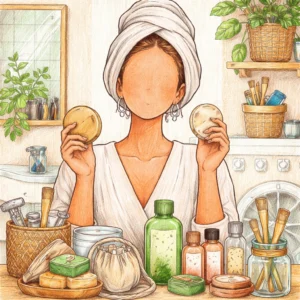
Sustainable beauty isn’t just about saving polar bears, hugging trees, or switching to beige packaging with a leaf printed on it. It’s about something far more personal—your skin, your health, your wallet, and the small daily choices that quietly shape the planet.
Take a moment to look around your bathroom. Plastic bottles lined up like soldiers. Half-used products you forgot you even owned. Cotton pads, wipes, tubes, pumps, jars—most of them destined for landfill. Now here’s the good news: sustainable beauty tips aren’t about perfection or sacrifice. They’re about smarter, simpler habits that make beauty routines lighter, cleaner, and honestly… more enjoyable.
This guide isn’t here to shame your current routine. It’s here to help you glow—without the guilt. You don’t need to overhaul everything overnight or spend a fortune on “eco-luxury” brands. Small swaps add up, and you can start today, right after reading this.
Let’s dive into realistic, human, doable Sustainable Beauty Tips that actually fit into real life.
1. Use What You Already Have (Shop Your Shelf)
The most sustainable beauty product isn’t new, organic, or trending on social media—it’s the one you already own.
Before buying another “holy grail” serum, take a minute to open your cabinets. Chances are, there’s a half-used moisturizer hiding behind your hair spray or a cleanser you stopped using because something shinier caught your eye.
Using what you already have:
- Prevents waste
- Saves money
- Reduces impulse buying
- Stops products from expiring unused
Pro Tip
If a product doesn’t suit your face, don’t throw it away:
- Heavy face cream? Use it on elbows, heels, or hands
- Cleanser too drying? Use it to clean makeup brushes
- Serum too strong? Apply it to your neck or body
Your skin doesn’t need more. It needs consistency.
2. Ditch Single-Use Beauty “Trash-Sicles”
Disposable cotton pads, makeup wipes, and tissues might feel convenient—but they’re one of the biggest hidden contributors to beauty waste. Most wipes are plastic-based, meaning they don’t fully decompose, even if the label claims they’re “flushable” (they’re not).
The Sustainable Swap
Reusable makeup remover pads made from:
- Bamboo
- Organic cotton
- Microfiber
They work better, last for years, and feel gentler on the skin.
Zero-Waste Hack
Cut an old 100% cotton T-shirt or towel into squares. Boom—free reusable pads. Toss them in a mesh laundry bag and wash with your regular towels.
Better for your skin. Better for the planet. Zero extra cost.
3. Fall in Love With Beauty Bars
Here’s a not-so-secret secret: liquid beauty products are mostly water—packaged in plastic. Shampoo, conditioner, body wash, face cleanser… all diluted and bottled.
The Smarter Choice
Solid beauty bars:
- Shampoo bars
- Conditioner bars
- Cleansing bars
One bar can replace 2–3 plastic bottles, lasts longer, and often comes in recyclable or compostable packaging.
Bonus Benefits
- Travel-friendly (no leaks!)
- Less clutter in your shower
- Highly concentrated formulas
Once you find the right bar for your hair or skin type, it’s hard to go back.
4. Simplify With Multi-Tasking Products
Sustainable beauty isn’t about adding eco-products—it’s about buying less overall. Multi-use products are the backbone of smart, minimal routines.
Easy Multi-Tasking Swaps
- Lip & cheek tint instead of two products
- Face oil as cleanser, moisturizer, and hair serum
- Eyebrow pencil doubled as eyeliner
- Aloe vera gel for skin, hair, and after-sun care
Fewer products = less packaging, less clutter, and less decision fatigue.
Your routine becomes simpler—and your skin often thanks you for it.
5. Master the 3 R’s of Bathroom Bliss
When buying new products is unavoidable, think beyond the purchase. What happens after it’s empty?
Refill
Many brands now offer:
- Refillable compacts
- Shampoo refill pouches
- Magnetic makeup palettes
You keep the outer packaging and replace only the inside—less waste, lower cost long-term.
Reuse
Empty glass jars can become:
- Hair tie storage
- Cotton swab holders
- Travel containers
- Mini planters
Recycle (Correctly)
Not all plastic is recyclable. Look for:
- #1 (PET)
- #2 (HDPE)
Always rinse containers before recycling—dirty packaging often ends up in landfill anyway.
6. Learn to Spot Greenwashing
One of the biggest challenges in sustainable beauty is greenwashing—when brands appear eco-friendly without actually being responsible.
Words like “natural,” “clean,” “green,” or “eco” are often unregulated and meaningless on their own.
What to Look For Instead
Trusted third-party certifications:
- Leaping Bunny – cruelty-free
- EWG Verified – ingredient transparency
- B Corp – ethical and environmental responsibility
- COSMOS Organic – certified organic standards
If a brand is truly sustainable, it will show receipts, not just pretty packaging.
7. Turn Off the Tap (Seriously)
Sustainable beauty isn’t just about products—it’s about habits.
Leaving water running while cleansing your face or brushing your teeth can waste up to 6 liters per minute.
Easy Habit Shift
- Wet your face
- Turn off the tap
- Cleanse or scrub
- Turn it back on to rinse
It takes zero money and barely any effort—but saves thousands of liters annually.
8. DIY Glow-Ups From Your Kitchen
You don’t need a lab or luxury brand to nourish your skin. Some of the most effective treatments are already in your kitchen.
Simple DIY Body Scrub
Ingredients:
- Used coffee grounds
- Coconut or olive oil
Mix, massage, rinse.
It exfoliates, boosts circulation, smells amazing—and repurposes waste.
Other Easy Ideas
- Honey as a face mask
- Oatmeal for soothing irritated skin
- Rice water for hair shine
DIY doesn’t mean complicated—it means intentional.
9. Choose Quality Over Quantity
Fast beauty trends encourage overbuying. Sustainable beauty encourages long-term relationships with products.
Instead of:
5 cheap moisturizers
Choose:
1 high-quality formula that actually works
Better ingredients, fewer reactions, less waste.
10. Sustainable Beauty Is a Journey, Not a Test
You don’t need to be perfect. You don’t need a zero-waste bathroom tomorrow. Sustainable beauty is about progress, not pressure.
Start with one change:
- A reusable pad
- Turning off the tap
- Finishing what you own
- Buying a refill instead of a new bottle
Each small step compounds into a routine that feels lighter, cleaner, and more aligned with your values.
Because real beauty?
It’s thoughtful. It’s conscious. And it doesn’t cost the earth.
References