
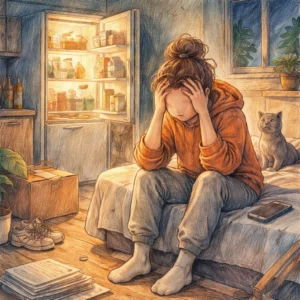
 At some point in life, you’ve probably stood in your kitchen at an unreasonable hour—maybe 2 AM—staring into the fridge like it holds answers to questions you’re too tired to articulate.
You’re not hungry.
You’re thinking.
Maybe it’s about quitting the job that pays your bills but drains your spirit.
Maybe it’s about telling your “outdoorsy” friend that you absolutely despise hiking.
Maybe it’s about ending a relationship that feels less like love and more like emotional furniture—heavy, familiar, and hard to move.
Here’s the uncomfortable truth about adulthood:
The Right Decision rarely feels easy. It feels necessary.
And necessary decisions don’t come wrapped in comfort. They come wrapped in tension, doubt, and that weird stomach flip that makes you question everything.
If you’re waiting for clarity to feel peaceful, cinematic, and glowing with divine approval… you might be waiting forever.
The Right Decision doesn’t arrive like a Disney soundtrack.
It arrives like a deep breath before a hard conversation.
The Great Decision Delusion
We’ve been sold a lie.
Somewhere along the way, we started believing that if a choice is “right,” it should feel calm, obvious, and instantly relieving.
But real life doesn’t work like that.
Often, when you’re about to make the Right Decision, your brain reacts like you’re being chased by a tiger. Your palms sweat. Your chest tightens. Your thoughts spiral into:
- “What if I regret this?”
- “What if this backfires?”
- “What if I’m overreacting?”
Discomfort doesn’t mean you’re wrong.
It often means you’re about to grow.
And growth is rarely cozy.
Necessary vs. Easy: The Shoe Analogy
Imagine you own the most beautiful pair of shoes.
They’re expensive. Stylish. Instagram-perfect.
There’s just one small issue.
They give you blisters the size of silver dollars every time you wear them.
Now you have two options:
- Easy Decision: Keep wearing them because they look good.
- Right Decision: Donate them and buy sensible shoes that don’t destroy your feet.
Letting go of something that looks good on the outside can feel tragic. Dramatic, even.
But necessity eventually outruns aesthetics.
In life, we do this constantly. We cling to:
- Jobs that look impressive
- Relationships that look stable
- Habits that look harmless
- Identities that look successful
But internally? We’re limping.
The Right Decision is the one that protects your ability to walk forward—even if it costs you something shiny.
Why the Right Decision Feels So Uncomfortable
Let’s talk science for a moment.
Your brain is wired to prefer familiarity over happiness.
The amygdala—the fear center of your brain—reacts strongly to uncertainty. It doesn’t care whether your current situation is fulfilling. It only cares that it’s known.
Change equals threat.
Even good change.
Psychologists refer to this discomfort as cognitive dissonance—the mental tension you feel when your actions no longer align with your current identity or environment.
If you’ve been “the dependable one” for years, setting boundaries feels wrong.
If you’ve been “the practical one,” chasing a creative dream feels reckless.
If you’ve been “the loyal one,” walking away feels like betrayal.
But you’re not betraying your past self.
You’re evolving beyond them.
The Right Decision often feels uncomfortable because you’re stepping into a new version of yourself—and your brain hasn’t caught up yet.
The Gym Test: A Simple Truth
Let’s simplify this.
Has anyone in the history of humankind joyfully leaped out of a warm bed at 6 AM thinking:
“Yes. Squats. This is bliss.”
Unlikely.
The bed whispers:
“Stay. You are safe here. You are soft. You are cinnamon roll.”
But your back hurts from sitting all day. You’re tired of feeling weak. You want more energy.
The decision to go to the gym is rarely easy.
But once you’re done? There’s relief. Pride. Momentum.
The discomfort was temporary. The benefit was lasting.
The Right Decision works the same way.
It costs you comfort in the moment.
It rewards you with alignment in the long term.
When Relationships Stop Feeling Like Home
Ending a relationship is rarely dramatic fireworks.
Sometimes it’s quieter.
It’s the slow realization that you’re carrying emotional weight alone.
That conversations feel forced.
That you’re shrinking to keep the peace.
Walking away feels brutal.
You’ll replay the good memories. The shared jokes. The inside references. The history.
But staying out of nostalgia is not loyalty—it’s fear.
The Right Decision in relationships often feels like grief. Because you’re not just losing a person. You’re losing a future you imagined.
But here’s the truth:
You don’t leave because you don’t care.
You leave because you care about your sanity.
And sanity is necessary.
The “Good Enough” Job Trap
This one is sneaky.
You’re not miserable.
You’re just… numb.
The pay is decent. The coworkers are fine. The routine is predictable.
But something inside you feels dormant.
Quitting a stable job for a dream? Terrifying.
You’ll question yourself. Others will question you. Your bank account will question you.
But if every Sunday night fills you with dread, your body is telling you something.
The Right Decision is not always the safest paycheck.
Sometimes it’s the choice that prevents you from waking up decades later wondering where your ambition went.
Security matters.
But so does aliveness.
How to Recognize the Right Decision
Since “easy” is not a reliable signal, how do you know?
Here are three powerful indicators:
1. Relief Beneath the Fear
Imagine the decision is already made.
Beneath the panic… is there a subtle sense of relief?
Even a tiny one?
That quiet exhale is often intuition speaking.
2. Alignment With Your Values
Ask yourself:
Does this choice align with who I want to become?
Not who you’ve been.
Not who others expect.
Not who feels safest.
But who you genuinely want to be.
The Right Decision aligns with your values—even if it disrupts your routine.
3. The Persistent Thought
Some ideas don’t leave you alone.
You push them aside. Distract yourself. Rationalize.
But they return.
Persistent thoughts are often necessities knocking at your door.
Comfort whispers once.
Necessity keeps knocking.
The Aftermath No One Talks About
Once you make the Right Decision, don’t expect fireworks.
Expect exhaustion.
There’s often a strange “mourning period” after choosing growth. You might:
- Second-guess yourself
- Feel lonely
- Miss what you left
- Wonder if you overreacted
This doesn’t mean you were wrong.
It means you were attached.
Detaching from comfort—even unhealthy comfort—requires adjustment.
You’re not failing.
You’re detoxing from the easy path.
Why Easy Isn’t Always Better
We glorify ease.
Easy job.
Easy relationship.
Easy life.
But easy can quietly become stagnant.
The Right Decision asks more of you. It stretches you. It confronts you. It exposes fears you didn’t know you had.
But it also builds something powerful:
Self-trust.
Every time you choose necessity over comfort, you prove to yourself that you can handle discomfort.
And that changes everything.
Because once you trust yourself, decisions become clearer—even when they’re hard.
Making the Right Decision Is a Skill
It’s not about being fearless.
It’s about choosing despite fear.
Like a muscle, decision-making strengthens with practice.
The first time you set a boundary, you’ll shake.
The first time you quit something stable, you’ll panic.
The first time you walk away from something familiar, you’ll grieve.
But each time, you grow stronger.
Eventually, discomfort stops feeling like danger.
It starts feeling like expansion.
The Question That Changes Everything
Next time you’re stuck between staying comfortable and stepping forward, don’t ask:
“Is this easy?”
Ask instead:
“Is this necessary for the person I’m becoming?”
That question cuts through fear.
Because becoming requires movement.
And movement requires choice.
The Right Decision may not feel warm.
It may not feel calm.
It may not feel obvious.
But it will feel aligned.
And alignment lasts longer than comfort ever could.
Final Thoughts: You Can Do Hard Things
If you’re standing at a crossroads right now, heart racing, palms sweating—breathe.
Discomfort does not mean disaster.
Sometimes, it means transformation.
The Right Decision is rarely the path of least resistance.
It’s the path of growth.
The water might be cold when you jump.
The splash might be loud.
The doubt might echo.
But on the other side?
There’s clarity.
There’s self-respect.
There’s momentum.
And there’s a version of you who is grateful you chose necessity over ease.
You’ve got this.
References
American Psychological Association – Cognitive Dissonance
Harvard Health Publishing – The Stress Response (Amygdala and Fear)