
 Imagine this.
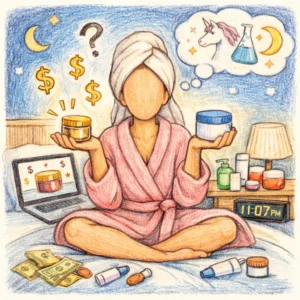
It’s late. Like 11:07 p.m. late — the most dangerous hour for your bank account. You’re lying in bed, phone inches from your face, scrolling through a luxury skincare website like it’s social media. Then you see it.
A face cream.
Tiny jar.
Gold lid.
$250.
The description reads like poetry written by a wizard:
“Infused with rare alpine botanicals, hand-harvested under a full moon, blended with proprietary youth-renewing technology.”
You pause.
You glance at the $12 drugstore moisturizer on your nightstand.
Then back at the luxury jar.
A voice whispers inside your head:
“If it costs this much… it has to work, right?”
Welcome to the great skincare dilemma of our time.
Today, we’re pulling back the velvet curtain on skincare products, price tags, and the uncomfortable truth beauty brands don’t love advertising:
👉 Your skin does not know how much money you spent.
👉 But it absolutely knows what ingredients you’re using.
Let’s talk about what you’re really paying for — and whether expensive skincare products actually deserve their godlike reputation.
Why We Believe Expensive Skincare Products Must Work
Let’s start with psychology, because skincare is as much a mind game as it is chemistry.
There’s a well-documented phenomenon called the price placebo effect. In simple terms: when something costs more, our brain expects it to perform better — so sometimes, we perceive better results even if the formula isn’t superior.
It’s the same reason:
- Wine tastes “better” when you think it’s expensive
- A luxury hotel bed feels softer
- A $150 serum feels more “powerful” than a $15 one
Luxury skincare brands understand this very well. They sell hope in a jar, not just cream.
But here’s the grounding truth:
🧪 Skincare products are chemistry.
Not magic.
Not manifestation.
Not vibes.
No matter how chic the boutique or dramatic the ad campaign, ingredients still have to follow the laws of biology.
What You’re Actually Paying For (Spoiler: Not Just Skincare)
When you buy expensive skincare products, most of your money is not going toward miracle ingredients. You’re paying for a bundle of invisible extras.
1. Packaging That Belongs in a Museum
That heavy glass jar with the magnetic lid?
The embossed logo?
The box inside a box inside another box?
It looks stunning on your vanity — but it does nothing for your pores.
In fact, jars can actually reduce product effectiveness by exposing ingredients to air and light every time you open them.
Pretty? Yes.
Practical? Not always.
2. Marketing That Could Fund a Small Country
Luxury skincare advertising is cinematic:
- Celebrities with genetically blessed skin
- Perfect lighting
- Soft-focus filters
- “Dermatologist tested” labels (which don’t mean much, legally)
You’re not paying for better skincare products — you’re paying for the fantasy that you’ll look like the model in the ad.
3. Fragrance (Your Skin Didn’t Ask for This)
Many high-end skincare products include elaborate fragrance blends designed to create a “spa-like experience.”
Smells divine.
Feels luxurious.
But fragrance is one of the most common skin irritants, especially for sensitive or acne-prone skin.
The American Academy of Dermatology consistently recommends fragrance-free formulas for skin health — even though fragrance makes products feel more “expensive.”
4. The Luxury Experience
Let’s be honest: using luxury skincare feels good.
It’s self-care.
It’s ritual.
It’s “main character energy.”
And that emotional boost? Totally valid.
But mental satisfaction ≠ biological effectiveness.
Your skin cells don’t care about vibes. They care about molecules.
The Ingredient Truth: Skincare Products Don’t Have Egos
Here’s the part that changes everything:
The most effective skincare ingredients are not rare or expensive.
They’re widely studied, widely available, and shockingly affordable.
Meet the Real MVPs of Skincare Products
- Retinol – The gold standard for aging
- Vitamin C – Brightens and evens tone
- Hyaluronic Acid – Hydration hero
- Niacinamide – Barrier repair and oil control
- Salicylic Acid – Acne’s worst enemy
- Sunscreen (SPF) – The ultimate anti-aging product
These ingredients are backed by decades of clinical research.
And here’s the kicker:
💡 They cost pennies to manufacture.
According to dermatology experts and institutions like the Cleveland Clinic, what matters is:
- Ingredient concentration
- Stability
- Proper formulation
Not the brand name.
That’s why some budget skincare products outperform luxury ones — they focus on actives instead of aesthetics.
When Expensive Skincare Products Might Be Worth It
Okay — pause.
This isn’t an “all expensive skincare is bad” rant.
There are moments when paying more makes sense.
1. Ingredient Stability
Some ingredients (hello, Vitamin C) are notoriously unstable.
Higher-end brands may invest in:
- Airless pumps
- Encapsulation technology
- Patented stabilization methods
This can extend shelf life and effectiveness.
2. Cosmetic Elegance
Budget skincare products sometimes:
- Feel sticky
- Pill under makeup
- Take forever to absorb
Luxury brands often excel at texture, making products feel silky, lightweight, and makeup-friendly.
That comfort can improve consistency — and consistency matters.
3. Legitimate Research & Innovation
Some heritage brands invest heavily in long-term research and proprietary molecules.
You’re paying for:
- R&D
- Clinical testing
- Years of formulation refinement
Not unicorn tears. Actual science.
The Lazy Girl’s Guide to Smart Skincare Spending
Want glowing skin without financial regret? Here’s how to spend strategically.
💸 Splurge On: Serums
Serums contain concentrated actives and stay on your skin the longest.
This is where quality formulation matters most.
💧 Save On: Cleansers
You wash them off.
As long as they’re:
- Gentle
- pH-balanced
- Non-stripping
A $10–$15 cleanser from CeraVe or Cetaphil works just as well as a $60 one.
🧴 Save On: Moisturizers
A moisturizer’s job is simple:
✔ Seal hydration
✔ Support your barrier
Once you find the right base (gel, cream, lotion), price doesn’t equal performance.
Gold flakes are optional. Hydration is not.
☀️ Never Skimp On: Sunscreen
If skincare products had a hierarchy, SPF would sit on the throne.
The Skin Cancer Foundation confirms:
👉 Daily sunscreen use prevents premature aging better than any serum.
Use one you actually like, so you’ll wear it every single day.
The Real Verdict: Price vs Performance
So — do expensive skincare products work better?
Usually? No.
They may:
- Feel better
- Smell better
- Look better on your shelf
But your skin is looking for ingredients, not aesthetics.
Consistency beats luxury every time.
A $200 cream used once a week won’t outperform a $15 moisturizer used daily and generously.
You Are the Expert on Your Own Skin
Here’s the truth no sales associate will tell you:
✨ Great skin doesn’t come from the most expensive skincare products.
✨ It comes from habits, patience, and knowing what works for you.
Don’t let marketing make you feel “behind” or “cheap.”
Your glow is built with:
- Consistency
- Hydration
- Sun protection
- Confidence
The next time you’re tempted by a miracle cream that costs as much as a weekend trip, ask yourself:
Am I buying ingredients… or a dream?
Buy the ingredients.
Take the trip.
Wear SPF.
Your skin — and your wallet — will thank you.
References
Daily skincare basics and expert tips from board-certified dermatologists
Fragrance in skincare can be a common irritant — especially for sensitive skin