
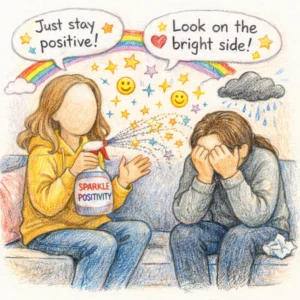
The Day My “Positive Attitude” Made Everything Worse
We’ve all been there.
A friend is struggling—really struggling. Maybe they lost their job, ended a long relationship, or had one of those days where everything feels heavy for no clear reason. You care deeply. You want to help. You want to be good.
So you smile, lean in, and say something like:
“Hey, stay positive! Everything happens for a reason.”
You expect comfort to land.
Instead, you’re met with silence… or a tight smile… or a look that says, Please stop.
That’s the moment many of us realize something uncomfortable:
Our idea of being positive isn’t always helpful—and sometimes, it’s stressful.
In today’s world, being an optimist is praised, encouraged, and expected. But when positivity is forced, rushed, or disconnected from reality, it can create emotional distance instead of support.
This article explores why being positive isn’t always the same as being supportive, how forced positivity affects relationships, and how to offer a healthier, more human kind of optimistic energy.
The Culture of Being Positive at All Costs
Being positive has become a lifestyle.
We’re told:
- Think positive.
- Speak positive.
- Avoid negative energy.
- Choose positive vibes only.
On the surface, this sounds empowering. Positivity can motivate us, inspire growth, and help us survive difficult seasons. An optimist mindset can absolutely improve mental health and resilience.
But here’s the problem:
When being positive becomes a rule instead of a tool, it stops being healthy.
People begin to feel pressure to hide emotions that aren’t cheerful. Sadness, anger, grief, and frustration become things to fix quickly—or worse, things to feel ashamed of.
That’s when positivity turns into something else entirely.
When Positive Becomes Toxic
Toxic positivity is the belief that people should remain optimist no matter how painful, unfair, or overwhelming a situation is.
It sounds like:
- “Just stay positive.”
- “Everything will work out.”
- “Others have it worse.”
- “Don’t focus on the negative.”
These statements are usually well-intended. But what they often communicate is:
Your feelings are uncomfortable. Please replace them with something more positive.
Instead of helping, this version of thinking can make people feel unseen, dismissed, or emotionally alone.
Why Forced Positive Thinking Feels Invalidating
When someone shares something painful, they’re not asking for instant positivity. They’re asking for understanding.
Validation tells someone:
- Your feelings make sense.
- You’re allowed to feel this way.
- You’re not broken.
Forced positivity skips that step.
It jumps straight to optimism without acknowledging pain. And when people don’t feel heard, even the most inspiring message can feel empty.
True positivity doesn’t erase emotions—it makes space for them.
Not Everyone Needs the Same Kind of Support
One reason positivity often backfires is because people process emotions differently.
The Processor
This person needs time to feel, talk, and reflect. Too much talk mostly feels like pressure in this kind of situation.
The Realist
They value honesty over reassurance. For them, unrealistic positivity feels fake or dismissive.
The Distractor
They genuinely want cheering up. Lightness and a little distraction help them reset.
The mistake many of us make is assuming that our version of positive is universal.
It’s not.
5 Signs Your “Positive” Energy Might Be Stressing Others
1. You Lead with “At Least…”
“At least you still have a job.”
“At least you learned something.”
This kind of framing minimizes pain. It compares suffering instead of acknowledging it.
2. You Rush to Fix the Feeling
If your first instinct is to make someone feel hopeful again as quickly as possible, you might be prioritizing comfort over connection.
Healing doesn’t happen on a schedule.
3. Silence Makes You Uncomfortable
Sometimes the best thing you can do is say nothing and stay present. Silence gives emotions room to breathe.
4. You Feel Responsible for Making Others Happy
Being an optimist doesn’t mean being emotionally responsible for everyone else’s mood. That pressure creates stress for both sides.
5. You Avoid Hard Conversations by “Staying Positive”
If positivity becomes a way to avoid reality, conflict, or discomfort, it stops being healthy.
How to Be Genuinely Positive Without Dismissing Feelings
1. Validate First, Then Be Positive
Try:
“That sounds really hard. I’m sorry you’re dealing with this.”
Validation opens the door for real positivity later.
2. Ask What Kind of Support They Need
One simple question changes everything:
“Do you want solutions, or do you just want me to listen?”
This allows positivity to be supportive, not intrusive.
3. Match Their Emotional Energy
If someone is feeling low, meet them there—then gently lift. Extreme positivity can feel overwhelming when someone is hurting.
4. Share Your Own Real Experiences
A proper encouragement feels more authentic when it comes from shared humanity, not perfection.
5. Focus on Strength, Not Forced Happiness
Instead of saying “Be positive,” try:
“I know this is hard, but I believe in your ability to get through it.”
This kind of message respects reality.
Redefining What It Means to Be Positive
Being positive doesn’t mean:
- Ignoring pain
- Avoiding emotions
- Rushing healing
- Pretending everything is fine
Real positivity means:
- Staying present
- Allowing honesty
- Supporting without pressure
- Offering hope without denial
Because energy should feel safe—not heavy.
Final Thoughts: Let Positive Be Human
In a world obsessed with happiness, choosing empathy is radical.
Sometimes the best thing you can say is:
- “That makes sense.”
- “I’m here.”
- “You don’t have to feel okay right now.”
When positivity is grounded in understanding, it builds trust instead of tension.
So let’s stop forcing the sparkle.
Let’s choose a version of positivity that feels real, supportive, and human—one that allows people to be exactly where they are.
That’s the kind that actually heals.
References
Harvard Business Review – The Power of Emotional Agility
Psychology Today – The Problem With Toxic Positivity
Greater Good Science Center (UC Berkeley) – Why Empathy Matters