
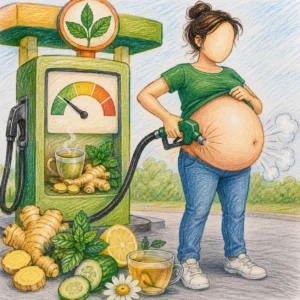
There is a very specific kind of betrayal that happens when your stomach suddenly decides to expand halfway through the day.
You wake up feeling great. Your clothes fit perfectly. Your confidence is high. Then lunch happens. Suddenly your stomach feels tight, swollen, noisy, and uncomfortable—as if you secretly swallowed an air pump without realizing it.
By evening, your jeans feel illegal.
We have all experienced it at some point. Frequent Bloating and Gas can turn even the best day into an uncomfortable struggle. It can make social events awkward, ruin your appetite, drain your energy, and leave you wondering why your stomach seems angry all the time.
The frustrating part is that bloating often appears out of nowhere. You may eat something “healthy,” drink enough water, and still feel like a balloon ready to float away.
The good news is that your digestive system usually is not broken. Most cases of occasional Bloating and Gas are linked to small everyday habits, stress, swallowed air, food sensitivities, or slow digestion. And thankfully, many natural remedies can help calm your gut without relying heavily on medications.
If your stomach constantly feels puffy, tight, or uncomfortable, these simple natural strategies may help you finally feel lighter again.
1. Slow Down While Eating
Modern life has trained us to eat at lightning speed.
Breakfast happens while checking notifications. Lunch disappears during work meetings. Dinner gets inhaled in front of a screen while half-paying attention to what we are actually chewing.
Unfortunately, your digestive system hates this habit.
When you eat too fast, you swallow large amounts of air along with your food. That trapped air enters your digestive tract and creates pressure, leading to uncomfortable Bloating and Gas later in the day.
Your stomach also struggles to break down giant chunks of poorly chewed food.
Think of digestion like washing dishes. It is much easier to clean a plate immediately than deal with hardened food hours later. Your stomach works the same way.
Natural Remedy
- Put your fork down between bites
- Chew slowly and thoroughly
- Avoid talking while chewing
- Eat without rushing whenever possible
The slower you eat, the less air you swallow and the easier digestion becomes.
2. Peppermint Tea: Nature’s Stomach Relaxer
Peppermint has been used for digestive discomfort for centuries, and for good reason.
Peppermint contains menthol, a natural compound known to relax digestive muscles. When your gut muscles tighten or spasm, gas gets trapped inside your intestines, creating pressure and pain.
Peppermint helps those muscles relax so trapped air can move through your system more comfortably.
Imagine your stomach muscles as a clenched fist. Peppermint gently tells that fist to loosen.
Natural Remedy
Drink a warm cup of peppermint tea after heavy meals or whenever your stomach feels tight and uncomfortable.
Many people notice relief within 20 to 30 minutes.
However, if you struggle with acid reflux or heartburn, peppermint may sometimes worsen symptoms because it relaxes the valve between the stomach and esophagus.
3. Carbonated Drinks May Be Secretly Causing the Problem
Many people replace soda with sparkling water believing it is automatically healthier.
While sparkling drinks may contain less sugar, the bubbles themselves still create gas inside your digestive system.
Those fizzy bubbles do not disappear after swallowing. They enter your stomach and add extra pressure.
If you regularly drink:
- Sparkling water
- Soda
- Energy drinks
- Kombucha
- Carbonated flavored water
you may be unintentionally feeding your Bloating and Gas problem.
Natural Remedy
Swap fizzy drinks for:
- Flat water
- Lemon water
- Cucumber-infused water
- Herbal teas
If you truly love sparkling water, sip slowly instead of drinking it quickly.
4. Ginger Helps Food Move Faster
Ginger is one of the most trusted natural digestive remedies in the world.
One major reason bloating happens is because food stays in the stomach too long. When digestion slows down, food begins fermenting inside the digestive tract. Fermentation creates—you guessed it—gas.
Ginger helps stimulate stomach emptying and keeps digestion moving smoothly.
Think of your digestive system like traffic on a highway. Ginger helps clear the traffic jam.
Natural Remedy
Try:
- Fresh ginger tea
- Warm lemon and ginger water
- Small pieces of dried ginger after meals
Even a small amount of ginger can help reduce heaviness and fullness after eating.
5. Sugar-Free Foods Can Create Massive Gas
This one surprises many people.
You may be avoiding sugar to make healthier choices, but many “sugar-free” products contain sugar alcohols such as:
- Sorbitol
- Xylitol
- Erythritol
- Mannitol
Your body struggles to fully digest these ingredients.
Instead, they travel to your intestines where gut bacteria ferment them aggressively, producing large amounts of internal gas.
That “healthy” protein bar may actually be the reason your stomach feels swollen for hours.
Natural Remedy
Read ingredient labels carefully.
If you notice ingredients ending in “-itol,” consider reducing them and see if your symptoms improve.
Natural sweeteners like small amounts of honey or maple syrup are often easier on the stomach.
6. Walking After Meals Works Wonders
When people feel bloated, their first instinct is usually to lie down or curl up on the couch.
Unfortunately, staying still can trap gas even longer.
Gentle movement stimulates your intestines and encourages digestion to continue naturally.
Even a short walk can make a noticeable difference.
Natural Remedy
Take a simple 10 to 15-minute walk after dinner.
You do not need intense exercise. Gentle movement is enough to help move trapped air through the digestive tract.
Many people notice immediate improvement after making this a daily habit.
7. Stress Can Completely Disrupt Digestion
Your brain and digestive system are deeply connected.
When you feel anxious, overwhelmed, or constantly stressed, your body enters “fight or flight” mode. During this state, digestion slows dramatically because your body prioritizes survival over digestion.
Food sits longer in the stomach, digestion becomes sluggish, and bloating increases.
This explains why many people feel stomach discomfort during stressful weeks.
Natural Remedy
Chamomile tea can help calm both the nervous system and digestive tract.
Its soothing properties may reduce cramps, tension, and stomach discomfort linked to stress-related Bloating and Gas.
Other calming habits that support digestion include:
- Deep breathing
- Better sleep
- Meditation
- Slower eating
- Reducing screen time during meals
8. Heat Therapy Can Provide Quick Comfort
Sometimes your stomach simply needs help relaxing.
Warmth increases circulation and helps abdominal muscles loosen, which can ease trapped gas and cramping.
Think about how good a warm shower feels on sore muscles. Your stomach responds similarly.
Natural Remedy
Use:
- A heating pad
- Hot water bottle
- Warm towel
- Heated bean bag
Place it gently over your stomach while lying down and relaxing.
This can provide surprisingly fast relief during painful bloating episodes.
9. Identify Your Personal Trigger Foods
Not all stomachs react the same way.
Some people feel perfectly fine after eating dairy while others experience intense bloating. Some people digest beans easily while others feel miserable afterward.
Common trigger foods include:
- Dairy
- Beans
- Broccoli
- Cabbage
- Wheat
- Fried foods
- Artificial sweeteners
The key is discovering what specifically affects your body.
Natural Remedy
Keep a simple food journal.
Write down:
- What you ate
- When you ate it
- How your stomach felt afterward
Patterns often appear surprisingly quickly.
Instead of following extreme diets, focus on understanding your own digestive triggers.
10. Hydration Matters More Than You Think
Many people do not drink enough water throughout the day.
Dehydration slows digestion and contributes to constipation, which often leads to trapped gas and abdominal pressure.
Your digestive system needs water to move waste efficiently.
Natural Remedy
Drink water consistently throughout the day rather than waiting until you feel thirsty.
Warm water may feel especially soothing for people struggling with stomach discomfort.
11. Stop Ignoring Constipation
Sometimes bloating is not caused by food at all.
Constipation can create significant abdominal swelling because trapped stool and gas remain stuck in the intestines.
If you regularly skip bowel movements or feel incomplete afterward, constipation may be contributing to your symptoms.
Natural Remedy
Support regular digestion by:
- Eating fiber gradually
- Drinking enough water
- Walking daily
- Managing stress
- Eating meals consistently
Do not ignore constipation if it happens frequently.
Your Natural Deflation Game Plan
Living with frequent Bloating and Gas can feel exhausting and embarrassing, but your body is not trying to punish you.
Usually, your gut is simply asking for:
- Slower eating
- Less stress
- Better hydration
- Gentler food choices
- More movement
- Better digestion support
The best part is that small habits often create the biggest improvements.
You do not need to completely transform your lifestyle overnight.
Start simple.
Maybe tonight you:
- Drink peppermint tea after dinner
- Take a short evening walk
- Eat slower
- Skip the sparkling drinks
Tiny changes can create surprisingly powerful relief over time.
Your stomach, your energy, and your confidence will thank you for it.
Which natural remedy are you excited to try first after your next meal?
References
Cleveland Clinic – Ways to reduce bloating naturally