
Picture this.
It is 11:47 PM. You are wrapped in your blanket like a burrito. Your room is finally the perfect temperature. Your phone has slipped from your hand onto the mattress, and your eyes are closing one dramatic blink at a time.
Then it happens.
A horrifying realization crashes into your peaceful moment:
You forgot to brush your teeth.
Immediately, your brain splits into two competing personalities.
One side whispers:
“Relax. You brushed this morning. You barely ate sugar today. Just rinse with water and survive.”
The other side screams:
“If you go to sleep right now, the bacteria in your mouth are about to host a full-blown festival on your teeth.”
Suddenly, you are lying there questioning every dental rule you have ever heard.
Do you really need to brush twice a day?
What happens if you skip one session?
Can brushing too much actually damage your teeth?
And why do children act like brushing their teeth is an extreme sport?
Welcome to the great toothbrush debate.
The good news? Dental care is far less complicated than the internet makes it sound. You do not need a ten-step routine, a futuristic toothbrush worth half your salary, or mint-flavored suffering twice a day.
You just need consistency, balance, and a little understanding of what is actually happening inside your mouth.
So let’s break it all down in simple human language.
The Magic Number: How Many Times Should You Brush Your Teeth?
Let’s answer the big question immediately.
Dental professionals recommend brushing your teeth two times a day for two full minutes each time.
That is the golden standard.
Not once.
Not six times.
Not only when your breath smells suspicious.
Two times a day.
Simple.
Yet somehow, many people still treat brushing like optional homework.
Some people only brush in the morning because they want socially acceptable breath before talking to humans.
Others only brush at night because they cannot stand the fuzzy feeling on their teeth before bed.
And then there are the “emergency brushers” who sprint to the sink only after eating garlic bread, onions, or an entire pack of cookies.
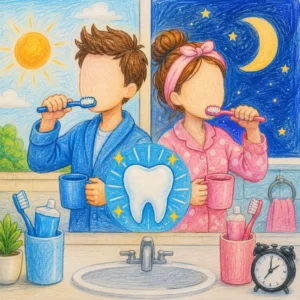
But your teeth need care both morning and night because your mouth goes through two completely different situations during the day.
Why Morning Brushing Matters So Much
Have you ever woken up with a mouth that feels dry, fuzzy, and vaguely haunted?
That unpleasant feeling has a scientific explanation.
While you sleep, your body produces far less saliva.
Now saliva may not sound glamorous, but it is basically your mouth’s security guard, cleaning crew, and protective shield all rolled into one.
It helps:
- Wash away food particles
- Neutralize harmful acids
- Prevent bacteria from multiplying
- Protect enamel from damage
During the day, saliva constantly keeps things balanced.
But at night?
The saliva factory slows down dramatically.
That means bacteria suddenly have freedom to multiply like crazy.
Think of it like this:
Your saliva is normally a street sweeper cleaning your mouth all day long. But once you fall asleep, the street sweeper clocks out and goes home.
The bacteria stay behind and throw a chaotic overnight party.
That is why morning breath exists.
Brushing your teeth in the morning removes that bacterial buildup, freshens your mouth, and prepares your teeth for the rest of the day.
It is basically a reset button for your entire mouth.
Night Brushing Is Even More Important
If morning brushing wakes your mouth up, nighttime brushing protects it from disaster.
Throughout the day, your teeth collect:
- Food particles
- Sugar residue
- Acid from drinks
- Plaque buildup
- Bacteria
Every snack leaves behind traces.
Every sip matters.
Now imagine cooking a huge pasta dinner and leaving the dirty dishes on the counter overnight without washing them.
By morning, everything is crusty, sticky, and impossible to ignore.
That is essentially what happens in your mouth when you sleep without brushing.
Plaque sits on your teeth for hours while bacteria feed on leftover sugars and release acids that slowly weaken enamel.
Over time, this leads to:
- Cavities
- Gum disease
- Bad breath
- Tooth sensitivity
- Expensive dental bills
Night brushing removes the day’s buildup before bacteria get an eight-hour uninterrupted buffet.
If you only brush once a day, most dentists would rather you choose nighttime over morning.
That is how important it is.
Can You Brush Too Much?
Now here comes the plot twist.
More brushing does not automatically mean healthier teeth.
In fact, brushing too aggressively or too often can actually damage your mouth.
A lot of people assume:
“If twice is good, five times must be amazing.”
Unfortunately, your teeth disagree.
Imagine scrubbing a delicate glass plate with steel wool five times a day.
Eventually, the protective surface starts wearing away.
The same thing can happen to your enamel.
Overbrushing may lead to:
Enamel Erosion
Enamel is the hard outer layer protecting your teeth.
Although it is incredibly strong, it cannot regenerate once damaged.
Brushing too hard or too often can slowly wear it down.
This may cause:
- Yellow-looking teeth
- Increased sensitivity
- Pain with hot or cold foods
- Greater risk of cavities
Receding Gums
Aggressive brushing can also push your gums away from your teeth.
When gums recede, they expose sensitive root surfaces that are not meant to handle temperature or bacteria directly.
This can create:
- Sharp pain
- Tooth sensitivity
- Deep pockets for bacteria
- Gum infections
The Right Way to Brush Teeth
Healthy brushing is not about force.
It is about technique.
Here is the ideal routine:
- Brush twice daily
- Use a soft-bristled toothbrush
- Brush gently in circular motions
- Spend at least two minutes brushing
- Replace your toothbrush every 3–4 months
You are cleaning your teeth — not sanding furniture.
Gentle brushing wins every time.
The Kid Zone: Surviving Children’s Dental Care
Now let’s talk about the true challenge:
Getting children to brush their teeth willingly.
Parents already know the struggle.
A simple brushing session can somehow turn into:
- Negotiations
- Crying
- Olympic-level escaping
- Toothpaste explosions
- Sudden dramatic floor collapses
Children often treat toothbrushes like mysterious torture devices.
But building good dental habits early is incredibly important because childhood routines usually follow people into adulthood.
When Should Kids Start Brushing?
Earlier than most people think.
Babies Before Teeth
Even before teeth appear, parents should gently wipe a baby’s gums with a clean damp cloth after feedings.
This helps:
- Remove bacteria
- Keep gums healthy
- Introduce the cleaning routine early
Toddlers
As soon as the first tooth appears, begin brushing with:
- A tiny soft toothbrush
- A rice-sized amount of fluoride toothpaste
Ages 3 to 6
Children can use a pea-sized amount of toothpaste.
At this stage, kids usually want independence, but their brushing skills are still developing.
Let them try first, but adults should always supervise and finish the brushing session properly.
How to Make Brushing Fun for Kids
Children do not care about future cavities or dental insurance.
They care about fun.
So the trick is making brushing entertaining instead of stressful.
The Two-Minute Dance Party
Play a fun song lasting exactly two minutes.
The rule:
The toothbrush keeps moving until the song ends.
Suddenly brushing becomes a dance competition instead of a chore.
The Sugar Bug Mission
Tell your child invisible “sugar bugs” are hiding in their mouth building tiny playgrounds on their teeth.
The toothbrush becomes a superhero laser weapon.
Kids love imaginative games.
Let Them Pick Their Supplies
A dinosaur toothbrush and bubblegum toothpaste can completely change a child’s attitude.
Ownership creates excitement.
Flossing: The Habit Everyone Ignores
Here is the uncomfortable truth.
Brushing alone does not fully clean your teeth.
Your toothbrush cannot properly reach between tight spaces.
Imagine washing your car but ignoring the areas between the doors and wheels.
That hidden dirt still matters.
The same thing happens in your mouth.
Food particles and plaque hide between teeth where bacteria thrive quietly.
Flossing removes buildup from areas your toothbrush simply cannot access.
Without flossing, you are missing nearly 40% of tooth surfaces.
That is a huge gap.
Dentists recommend flossing at least once a day, ideally before nighttime brushing.
It only takes a few minutes, but it makes a massive difference over time.
The Acid Timing Mistake Almost Everyone Makes
Here is a surprising dental trick many people never hear about.
Do not brush immediately after consuming acidic foods or drinks.
That includes:
- Orange juice
- Soda
- Lemons
- Vinegar dressings
- Citrus fruits
- Energy drinks
Acid temporarily softens your enamel.
If you brush immediately afterward, you may accidentally scrub weakened enamel and increase damage.
Think of it like scrubbing wet cement before it hardens.
Instead:
- Rinse your mouth with water
- Wait about 30 minutes
- Then brush normally
This gives saliva time to neutralize acid and protect your teeth naturally.
Why Oral Health Affects Your Entire Body
A healthy mouth is not just about white teeth and fresh breath.
Your oral health connects directly to your overall body health.
Poor dental hygiene has been linked to:
- Heart disease
- Inflammation
- Diabetes complications
- Gum infections
- Chronic bad breath
- Low confidence
Your mouth is not separate from your body.
Everything works together.
That is why brushing your teeth consistently is actually an act of self-care, not just hygiene.
The Real Secret to Healthy Teeth
People often search for complicated solutions:
- Expensive whitening kits
- Fancy electric gadgets
- Viral dental hacks
But the biggest secret is surprisingly boring.
Consistency.
Small habits repeated daily matter far more than occasional perfection.
You do not need flawless dental routines every single day.
You just need steady effort.
Brush in the morning.
Brush before bed.
Floss regularly.
Drink water.
Be gentle with your teeth.
That is the foundation of long-term oral health.
Your Simple Daily Smile Routine
If life feels busy and overwhelming, keep things simple.
Here is the ideal realistic routine:
Morning
- Brush for two minutes
- Clean your tongue
- Drink water afterward
During the Day
- Rinse after sugary foods
- Drink plenty of water
- Avoid constant snacking
Night
- Floss carefully
- Brush for two minutes
- Avoid eating afterward
That is it.
No complicated rituals.
No perfection required.
Just consistency.
Final Thoughts
At the end of the day, brushing your teeth is not about being perfect.
It is about showing up for yourself in small ways that protect your future health.
Those two minutes in front of the bathroom mirror may seem insignificant, but they help prevent pain, disease, embarrassment, and expensive dental procedures later on.
And honestly?
There is something comforting about ending your day with a clean mouth, fresh breath, and the feeling that you at least handled one small thing correctly today.
So the next time you are lying in bed debating whether brushing is worth getting up for…
Trust me.
Future you will be grateful you made the trip to the sink