
There is nothing quite as frustrating as finally getting comfortable in bed, closing your eyes, and preparing for a peaceful night of sleep—only to have your stomach stage a midnight rebellion.
You had a lovely dinner, enjoyed your favorite show, brushed your teeth, and slipped under the blankets. Everything was going perfectly until a sudden burning sensation climbed into your chest and throat. Suddenly, you are wide awake, swallowing repeatedly, coughing, and wondering why your digestive system has chosen 2 a.m. to become the main character.
That unpleasant, fiery feeling is often caused by acid reflux. It happens when stomach contents flow backward into the esophagus, the tube that carries food from your mouth to your stomach.
If this sounds familiar, you are certainly not alone. Nighttime acid reflux can interrupt sleep, leave you feeling exhausted the next morning, and make bedtime something you almost dread.
Naturally, you might wonder whether you need to give up every spicy meal you enjoy, stop eating dinner at an unreasonable hour, or purchase an expensive pillow that turns your bed into a miniature mountain.
Fortunately, there are simpler strategies worth trying.
One particularly interesting option is to sleep on your left side. This small change in sleeping position can help reduce nighttime reflux because of the way your stomach and esophagus are arranged inside your body.
It is not a magical cure, and it will not work equally well for everyone. However, when combined with sensible meal timing and appropriate sleeping posture, it may make your nights considerably more comfortable.
Let’s explore how this simple adjustment works, what it can—and cannot—do for your gut, and how you can build a realistic nighttime routine without turning your bedroom into a digestive science laboratory.
1. Your Stomach Is Not a Perfectly Round Balloon
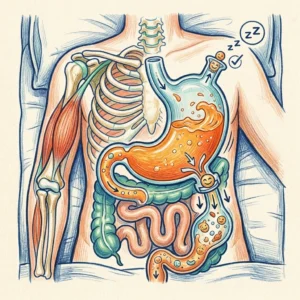
To understand why sleeping position matters, imagine your stomach as a curved, slightly tilted pouch rather than a perfectly round balloon.
Your stomach sits mainly in the upper-left part of your abdomen. Food travels down your esophagus and enters the stomach through an opening surrounded by a muscular ring called the lower esophageal sphincter (LES).
Think of the LES as a small security gate. It relaxes when you swallow, allowing food and liquid to enter your stomach, and normally tightens afterward to help prevent stomach contents from escaping back into the esophagus.
Your stomach also produces acid and digestive enzymes that help break down food. These substances are useful inside the stomach, where its lining is designed to tolerate them. The lining of your esophagus is less protected against repeated exposure to stomach acid.
When the LES relaxes inappropriately, becomes weak, or allows stomach contents to move backward, reflux can occur.
Occasional reflux is common. When it happens frequently or causes troublesome symptoms, it may be associated with gastroesophageal reflux disease, commonly known as GERD.
Here is where body position becomes important: gravity and the relationship between the stomach and the esophagus influence how easily stomach contents can flow backward.
Your digestive system does not stop working when you fall asleep. However, lying flat removes much of gravity’s assistance in keeping stomach contents away from the esophagus. Swallowing also becomes less frequent during sleep, meaning refluxed material may take longer to clear.
In other words, your sleeping position can influence how comfortable your digestive system feels overnight.
2. Why Sleeping on Your Right Side May Make Reflux Worse
Picture a bottle filled with water. When you tilt it, the water moves toward the lower side. Your stomach is obviously more complicated than a bottle, but the basic idea helps explain why body position matters.
When you lie on your right side, the relationship between your stomach and the junction where your esophagus enters it can make reflux more likely.
Stomach contents may collect closer to the esophageal opening, making it easier for acid to move upward when the protective barrier does not function effectively.
This does not mean that sleeping on your right side will automatically cause heartburn. Plenty of people sleep that way without experiencing symptoms. However, research suggests that right-side sleeping can be less favorable for people who experience nighttime reflux.
The effect becomes particularly relevant after a substantial evening meal.
A full stomach contains more food and fluid, and lying down soon afterward can increase the likelihood of reflux. If you already struggle with heartburn, this combination may be enough to turn a comfortable night into an uncomfortable one.
The encouraging news? You do not necessarily need to overhaul your entire bedtime routine to experiment with a different position.
3. The Left-Side Sleep Trick: Let Gravity Help
Now imagine rolling onto your left side instead.
Because of the stomach’s anatomy, this position generally places the junction between the stomach and esophagus in a more favorable relationship to the pool of stomach contents.
As a result, stomach acid is less likely to reach the esophageal opening, and reflux episodes may become less frequent or less prolonged.
A systematic review and meta-analysis published in 2023 found that left-side sleeping was associated with improvements in measures of nighttime acid exposure and reflux-related symptoms compared with other sleeping positions. The evidence is encouraging, although the number and design of studies mean that results should not be interpreted as a guarantee for every individual.
The beauty of this approach is its simplicity. You are not trying to eliminate stomach acid, force your stomach to empty instantly, or manipulate a digestive valve with a special leg position. You are simply using gravity and your body’s natural anatomy to make reflux less likely.
And no, you do not have to remain perfectly still all night. Start on your left side and settle into a comfortable position. If you naturally change positions during sleep, that is normal.
The goal is to reduce reflux, not to win an overnight sleeping-position competition.
4. Does Pulling Your Knee Toward Your Chest Improve Digestion?
You may have heard claims that tucking your knee toward your chest creates a special internal compression that opens the pyloric sphincter, drains stomach acid, or rapidly moves food into the intestines.
It sounds wonderfully convenient. Unfortunately, these claims are not established medical facts.
The pyloric sphincter is the muscular outlet between your stomach and the first part of your small intestine. It helps regulate the passage of stomach contents into the intestine. Its activity is coordinated by muscular contractions, nerves, hormones, and the composition of the meal.
Pulling your knee toward your chest has not been shown to reliably open this valve or trigger a rapid digestive process.
In fact, tightly curling your body or compressing your abdomen could feel uncomfortable for some people, especially after eating a large meal.
You can certainly bend your knees slightly or place a pillow between them if that makes side-sleeping more comfortable. Just think of it as a way to support your hips and spine—not as a secret digestive switch.
For nighttime acid reflux, the more useful combination is left-side sleeping, avoiding lying down immediately after eating, and elevating your upper body when needed.
5. Your Simple Nighttime Routine for a Happier Gut
You do not need a complicated ritual, special equipment, or an entire shelf of wellness products to begin making practical changes.
Try this straightforward routine.
Step 1: Give Dinner Some Breathing Room
One of the most helpful changes is to finish eating at least three hours before lying down for bed, especially if you regularly experience nighttime symptoms.
This gives your stomach time to process some of its contents before you become horizontal.
If your schedule makes an early dinner difficult, consider adjusting your meal size or bedtime where possible. Even a modest change in timing may help.
Step 2: Start on Your Left Side
When you get into bed, roll gently onto your left side.
Keep your shoulders and hips reasonably aligned, and choose a pillow that allows your neck to rest comfortably. There is no need to twist yourself into an elaborate pretzel.
If your knees feel more comfortable slightly bent, let them bend naturally.
The important part is the left-side position, not an exaggerated knee tuck.
Step 3: Elevate Your Upper Body if Necessary
If acid reflux regularly wakes you during the night, consider raising the head end of your bed or using a purpose-designed wedge that elevates your upper torso.
An elevation of approximately 6–8 inches at the head end is commonly recommended in clinical guidance for nighttime GERD symptoms.
The key is to raise your upper body rather than merely stacking several pillows beneath your head. Extra pillows can bend your neck and sometimes increase pressure around your abdomen.
A properly designed wedge or an adjustable bed may provide a more comfortable incline.
Step 4: Avoid Compressing Your Stomach
Choose loose, comfortable sleepwear and avoid tight waistbands that press against your abdomen.
If you have just eaten, avoid curling tightly into a position that makes you feel overly compressed. Comfort matters, and you should not force a posture that causes pain.
Step 5: Notice What Helps You Personally
For the next week, pay attention to when you eat dinner, what symptoms you experience, and whether left-side sleeping makes a difference.
You could keep a brief note on your phone or bedside table.
Do you wake up less frequently? Is the burning sensation milder? Does a smaller dinner make a difference?
These observations can help you identify patterns without unnecessarily eliminating foods you enjoy.
Remember that a comfortable position can support symptom management, but it does not diagnose or cure an underlying digestive condition.
6. Can This Sleeping Trick Help You Digest Food Faster?
This is an important distinction: reducing acid reflux is not the same thing as speeding up digestion.
Your stomach breaks down food through a combination of acid, enzymes, and muscular contractions. It gradually releases partially digested material into the small intestine through the pyloric sphincter.
The speed of this process depends on several factors, including the size and composition of your meal, your digestive physiology, and certain medical conditions.
Left-side sleeping is mainly useful because it may reduce the likelihood of stomach contents flowing backward into the esophagus. It should not be advertised as a proven method for rapidly emptying your stomach, eliminating trapped gas, or preventing every episode of bloating.
Likewise, abdominal gurgling is not proof that a special valve has opened or that acid is draining away. Those sounds are usually produced by the movement of gas and fluid through the digestive tract.
If your main concern is feeling excessively full, bloated, or uncomfortable after meals, consider eating more slowly, trying smaller portions, and noticing whether particular foods trigger your symptoms.
Persistent fullness, repeated vomiting, or difficulty eating comfortably deserves medical assessment rather than relying on sleeping positions alone.
7. Why You Shouldn’t Automatically Blame Your Stomach Acid
It is tempting to think of stomach acid as the villain in every reflux episode. However, acid has an important role in normal digestion.
It helps break down food, supports the action of digestive enzymes, and contributes to the body’s defenses against swallowed microorganisms.
The problem with reflux is often that stomach contents travel into a place where they do not belong—not simply that your body produces acid.
This is why lifestyle changes and medicines address reflux in different ways.
Antacids neutralize some of the acid already present in your stomach. Other medicines, such as H2 blockers and proton pump inhibitors, reduce acid production through different mechanisms.
These treatments can be useful and are recommended for appropriate patients. They are not inherently harmful simply because they affect stomach acidity, and they should not be dismissed in favor of a sleeping-position trick.
If you need medication regularly, discuss your symptoms and treatment options with a healthcare professional. Do not stop a prescribed medicine because you have started sleeping on your left side.
The best approach depends on how frequently you experience symptoms, whether your esophagus has been irritated or damaged, and what is causing the problem.
8. Small Habits That Can Make Nighttime Reflux Easier to Manage
Left-side sleeping is a useful starting point, but it works best as part of a broader strategy.
Eat according to your symptoms. You do not need to ban every spicy, acidic, or flavorful food from your kitchen. Instead, notice which foods and drinks consistently trigger your symptoms. Common triggers can include fatty meals, chocolate, coffee, mint, and spicy or acidic foods, although individual responses vary.
Avoid oversized evening meals. A very large dinner can leave you feeling uncomfortably full and may increase reflux symptoms. Moderate portions may be easier to tolerate.
Limit late-night snacking. If you regularly eat immediately before bed, experiment with moving your last meal or snack earlier.
Maintain a comfortable, healthy weight where appropriate. Excess abdominal pressure can contribute to reflux for some people. If weight management is relevant to your health, a healthcare professional can help you choose a sustainable approach.
Avoid smoking. Smoking can interfere with normal reflux defenses and is associated with several other health risks.
Make bedtime comfortable. A supportive pillow, relaxed clothing, and a consistent sleep schedule can make it easier to settle into a position that works for you.
You do not have to change everything at once. Start with one or two realistic habits and observe whether your symptoms improve.
9. When Nighttime Acid Reflux Needs Medical Attention
Occasional heartburn after a large meal is common. Frequent or persistent symptoms, however, should not simply be accepted as a normal part of life.
Arrange a medical appointment if you experience heartburn often, regularly wake at night with reflux, need over-the-counter treatments repeatedly, or find that lifestyle changes are not helping.
Seek prompt medical assessment if you have difficulty or pain when swallowing, persistent vomiting, unexplained weight loss, or signs of gastrointestinal bleeding, such as black, tarry stools or vomiting blood.
Important: Chest pain should not automatically be blamed on acid reflux. If it is new, severe, persistent, or accompanied by shortness of breath, sweating, faintness, or pain spreading to your arm, back, neck, or jaw, seek emergency medical care.
Your health deserves more than guesswork, especially when symptoms keep returning.
Final Thoughts: A Small Change Worth Trying
Nighttime acid reflux can make even the most comfortable bed feel like the least relaxing place in the world. When burning sensations interrupt your sleep, it is natural to search for a simple solution that does not involve turning your entire lifestyle upside down.
Sleeping on your left side is one practical option worth exploring. It takes little effort, costs nothing, and has scientific support as a strategy for reducing nighttime reflux in some people.
Pair it with sensible meal timing, comfortable sleeping arrangements, and upper-body elevation if necessary. Pay attention to your individual triggers, and seek medical advice when symptoms are persistent or concerning.
Most importantly, do not be fooled by claims that a high knee tuck opens a special digestive valve or that gravity alone can cure acid reflux. Your body is wonderfully complex, and the most useful health advice is the kind that respects that complexity.
Tonight, try settling comfortably onto your left side and giving your stomach a little more time between dinner and bedtime.
You may discover that this small adjustment makes your nights more peaceful—and your mornings a little brighter.
References
National Institute of Diabetes and Digestive and Kidney Diseases (NIDDK) — Treatment for GER and GERD.
American College of Gastroenterology — Clinical Guidelines for the Diagnosis and Management of GERD.
PubMed — Systematic Review and Meta-Analysis of Left-Side Sleeping for GERD.