
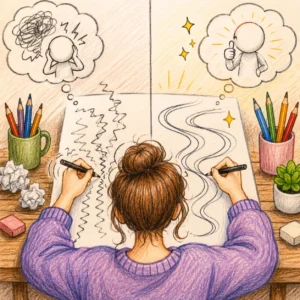
Have you ever spent thirty minutes creating the perfect pencil sketch only to ruin it with one wobbly line?
You stare at your paper thinking, “How did my hand suddenly become an earthquake?”
Congratulations.
You’ve officially joined one of the world’s largest clubs.
Every artist—from complete beginners to professionals—has looked at a shaky line and questioned every life decision that brought them to that moment.
The funny part?
Most people immediately blame their hands.
“My hands are too shaky.”
“I guess I wasn’t born talented.”
“I’ll never draw like those artists online.”
But here’s the surprising truth:
The problem usually isn’t your hands.
It’s how you’re drawing.
Learning to create Smooth Lines has very little to do with natural talent and almost everything to do with technique, posture, confidence, and practice.
Think about learning to ride a bicycle.
The first few attempts look more like a dramatic escape scene than graceful transportation.
You’re wobbling.
You’re overthinking.
You’re terrified.
Then one day…
Something clicks.
Drawing works exactly the same way.
Once you understand how your body moves, your lines begin flowing naturally.
Let’s discover how.
Why Our Hands Shake While Drawing
Before fixing the problem, let’s understand why it happens.
Imagine carrying a full cup of coffee.
If you’re nervous about spilling it, what happens?
Ironically…
You grip the cup tighter.
Your muscles tense up.
Your movements become stiff.
You actually become more likely to spill it.
Drawing follows the same pattern.
The harder you try to force a perfect line, the shakier it often becomes.
That’s because tension is the real enemy—not your hands.
When your wrist locks, your fingers grip too tightly, and your shoulders rise toward your ears, your pencil has no freedom to move smoothly.
Relaxation creates better control.
Not brute force.
Stop Treating Your Pencil Like It Owes You Money
Take a quick look at how you’re holding your pencil.
Be honest.
Are you squeezing it as if someone might steal it?
Many beginners grip their pencil with superhero-level strength.
The result?
Your hand gets tired within minutes.
Your muscles tighten.
Your lines become stiff and shaky.
Instead, hold your pencil gently.
Imagine holding a small bird.
Firm enough that it doesn’t fly away.
Gentle enough that you don’t hurt it.
Your pencil should glide across the paper instead of digging trenches into it.
Your Wrist Isn’t Meant to Do All the Work
One of the biggest beginner mistakes is drawing everything using only the wrist.
That works for tiny details.
But long, confident strokes require larger movements.
Imagine signing your name on a giant billboard.
Would you only move your fingers?
Of course not.
You’d naturally move your entire arm.
The same principle applies to drawing.
For longer lines:
- Move your elbow.
- Let your shoulder guide the motion.
- Keep your wrist relaxed.
Your arm creates smoother movement than tiny wrist adjustments ever could.
Look Where You’re Going
This sounds obvious.
Yet many people make one simple mistake.
They stare directly at the pencil tip while drawing.
Imagine driving a car while looking only at the hood.
Not ideal, right?
Drivers look ahead.
Artists should too.
Instead of staring only at the pencil point, look toward the end of the line you’re trying to reach.
Your hand naturally follows your eyes.
It’s surprisingly effective.
Draw From the Shoulder
Professional artists often talk about “drawing from the shoulder.”
It sounds complicated.
It isn’t.
Stand up for a moment.
Pretend you’re drawing a huge rainbow in the air.
Notice how your shoulder naturally moves?
That’s the motion that creates beautiful, flowing lines.
Your fingers are excellent for tiny eyelashes.
Your shoulder is fantastic for long, graceful curves.
Using larger muscles creates smoother movement.
Slow Doesn’t Always Mean Better
Here’s another surprising truth.
Drawing too slowly often creates wobble.
Imagine pushing a shopping cart.
Move it painfully slowly.
It wobbles.
Push it at a comfortable pace.
It rolls smoothly.
Your pencil behaves similarly.
A confident stroke usually looks cleaner than one made with extreme hesitation.
Don’t rush.
But don’t crawl either.
Aim for smooth confidence.
Practice Ghosting Before Touching Paper
Professional artists use something called ghosting.
Despite the spooky name, it has nothing to do with haunted sketchbooks.
Here’s how it works:
Hover your pencil just above the paper.
Practice the movement several times without touching the surface.
Your arm memorizes the motion.
Then lower the pencil and make the stroke.
It feels much more natural because your muscles already know where they’re going.
Think of it like rehearsing before performing on stage.
Stop Chasing Perfection
This one hurts.
Because everyone wants perfect lines immediately.
But perfection creates fear.
Fear creates hesitation.
Hesitation creates shaky lines.
See the cycle?
Imagine writing your signature.
You don’t carefully calculate every curve.
You simply write.
Why?
Because you’ve done it thousands of times.
Drawing confidence develops exactly the same way.
The goal isn’t perfection.
The goal is progress.
Warm Up Before Every Drawing Session
Athletes don’t sprint without warming up.
Musicians don’t perform concerts without practicing scales.
Artists shouldn’t start complicated drawings immediately either.
Spend five minutes drawing:
- Straight lines
- Curved lines
- Circles
- Ovals
- Spirals
- Boxes
These simple exercises wake up your muscles and improve coordination.
Think of them as stretching for your creativity.
Breathe Like a Human
Many people accidentally hold their breath while drawing.
Seriously.
Pay attention next time.
When you’re concentrating, your breathing often stops.
Your muscles tighten.
Your shoulders tense.
Your lines become shaky.
Instead:
Take slow breaths.
Relax your shoulders.
Keep your body loose.
A relaxed body produces relaxed drawings.
Sit Comfortably
Your drawing posture matters more than most people realize.
Imagine trying to write while balancing on one foot.
Not easy.
Drawing while hunched over a tiny desk isn’t much better.
Try to:
- Sit comfortably.
- Keep your feet flat.
- Relax your shoulders.
- Keep good lighting.
- Position your paper at a comfortable angle.
Comfort reduces unnecessary muscle tension.
Don’t Compare Yourself to Internet Artists
This deserves its own section.
Social media is wonderful.
It’s also incredibly misleading.
You see a thirty-second drawing video.
What you don’t see:
- The twenty years of practice.
- The dozens of failed sketches.
- The editing.
- The mistakes.
Comparing your first chapter to someone else’s twentieth chapter is unfair.
Every artist begins somewhere.
Usually with crooked circles.
Lots of crooked circles.
Practice With Everyday Objects
You don’t need expensive art courses to improve.
Your home is already full of practice opportunities.
Draw:
- Coffee mugs
- Spoons
- Water bottles
- Books
- Shoes
- Keys
- Plants
- TV remotes
These familiar objects help you focus on line quality rather than imagination.
It’s like learning to cook using simple recipes before attempting a five-layer wedding cake.
Make Mistakes on Purpose
This sounds backwards.
But it’s incredibly helpful.
Fill one page with intentionally messy lines.
Draw crooked boxes.
Uneven circles.
Wild zigzags.
Now draw another page carefully.
You’ll notice something interesting.
You’re less afraid.
Why?
Because you’ve already accepted that mistakes are normal.
Confidence often appears after removing the fear of failure.
Build Muscle Memory Every Day
Improvement doesn’t require marathon practice sessions.
Ten focused minutes every day beats three exhausting hours once a month.
Think about brushing your teeth.
You don’t brush for two hours on Saturday and skip the rest of the week.
Consistency builds habits.
Drawing is no different.
Small daily practice creates lasting improvement.
Use the Right Paper Position
Many beginners keep the paper perfectly straight.
Try rotating it.
Seriously.
A small angle can make certain strokes feel much more natural.
Professional artists constantly rotate their sketchbooks.
They’re not being dramatic.
They’re simply making the line easier to draw.
Work with your body, not against it.
Accept That Every Drawing Won’t Be Perfect
Even experienced artists produce bad sketches.
Sometimes the proportions feel off.
Sometimes the lines refuse to cooperate.
Sometimes the paper seems determined to fight back.
It happens.
A rough drawing doesn’t mean you’re a bad artist.
It means you’re an artist who showed up.
That’s what matters.
The Secret Ingredient Is Confidence
Confidence doesn’t magically appear before practice.
It appears because of practice.
Every smooth line you’ve ever admired began as thousands of shaky ones.
Every professional once struggled to draw a straight line.
Every masterpiece started with simple marks on paper.
So don’t wait until you feel confident.
Draw until confidence catches up.
A Simple Five-Minute Daily Exercise
If you only have five minutes, try this routine:
Minute One: Draw straight horizontal lines.
Minute Two: Draw vertical lines.
Minute Three: Fill a page with circles.
Minute Four: Practice long curves using your shoulder.
Minute Five: Sketch one everyday object using only confident strokes.
Repeat this daily for a few weeks.
You’ll likely notice stronger pencil control, steadier movement, and noticeably smoother lines.
Final Thoughts
Learning to create Smooth Lines isn’t about having magical hands or being born with artistic talent.
It’s about relaxing your grip, trusting your movement, practicing consistently, and letting go of the impossible expectation of perfection.
Remember how awkward it felt the first time you tied your shoelaces, rode a bike, or typed on a keyboard? Those everyday skills became second nature because you kept showing up.
Drawing is no different.
Every sketch teaches your muscles something new.
Every shaky line is quietly preparing you for a smoother one.
So the next time your pencil wobbles, don’t sigh, crumple the paper, and declare yourself “not artistic.”
Smile.
Take a breath.
Loosen your grip.
Then draw another line.
Because one day, without even realizing it, you’ll look down at your page and think:
“Wait… did I really draw that?”
And the answer will be a proud, confident yes.
References
The Metropolitan Museum of Art – Drawing and Sketching Resources