
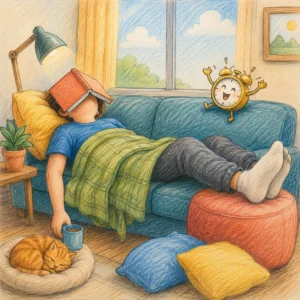
There comes a moment in almost everyone’s day when their energy suddenly crashes.
Maybe you’re sitting at your desk around 2 PM, staring at your screen while your brain feels like it has switched to airplane mode. You read the same sentence three times and still have no idea what it says. Your eyelids feel heavy, your motivation disappears, and all you can think about is finding the nearest pillow.
So you give in.
You lie down for “just a few minutes.”
The next thing you know, you wake up two hours later completely confused. You don’t know what day it is, your neck hurts, your mouth feels like a desert, and somehow you’re even more exhausted than before.
Sound familiar?
If so, you’re not bad at napping. You’ve simply been napping the wrong way.
A good nap can feel like pressing the reset button on your brain. It can improve focus, boost creativity, sharpen memory, reduce stress, and help you power through the rest of your day. A bad nap, however, can leave you feeling like a sleep-deprived zombie wandering through life with half a functioning brain.
The difference comes down to timing, duration, and environment.
Once you understand the science behind napping, you can turn a simple afternoon rest into one of the most powerful productivity and wellness tools available.
Let’s explore exactly how to take the perfect nap and wake up feeling genuinely refreshed.
Why Your Body Wants a Nap in the Afternoon
Before we dive into nap techniques, let’s clear up one common misconception.
Feeling sleepy in the afternoon does not mean you’re lazy.
In fact, your body is biologically programmed to experience a natural dip in alertness during the early afternoon.
Most people experience a decrease in energy between 1 PM and 4 PM. During this period, body temperature drops slightly, alertness decreases, and the brain naturally craves rest. Scientists call this part of your circadian rhythm—the internal clock that regulates sleep and wakefulness.
This means that afternoon tiredness isn’t a character flaw.
It’s biology.
Throughout history, many successful thinkers and innovators embraced daytime naps. Famous figures such as Albert Einstein, Leonardo da Vinci, and Winston Churchill reportedly used naps as part of their daily routines.
Rather than fighting your body’s natural rhythms with endless cups of coffee and sugary snacks, a strategic nap can help restore mental performance and energy levels naturally.
The Secret to the Perfect Nap: Duration Matters
The biggest mistake people make is sleeping too long.
To understand why, you need a basic understanding of sleep cycles.
When you fall asleep, your brain moves through different stages of sleep. It starts with light sleep, progresses into deeper restorative sleep, and eventually enters REM sleep, where dreaming occurs. A complete sleep cycle typically lasts around 90 minutes.
If you wake up during the wrong stage, particularly deep sleep, you may experience something called sleep inertia.
Sleep inertia is that awful feeling of grogginess, confusion, sluggish thinking, and mental fog after waking up. It can last anywhere from several minutes to over an hour.
The good news?
You can avoid it completely by choosing the right nap length.
The 20-Minute Power Nap
This is considered the gold standard of napping.
A 20-minute nap allows your brain to enter light sleep without slipping into deeper sleep stages.
Benefits include:
- Increased alertness
- Better concentration
- Improved mood
- Faster reaction time
- Reduced fatigue
Most experts recommend keeping naps between 15 and 30 minutes for maximum benefits with minimal grogginess.
If you’re looking for a quick mental recharge, this is your best option.
The 90-Minute Recovery Nap
If you’ve had a terrible night of sleep or you’re recovering from sleep deprivation, a longer nap may help.
A 90-minute nap allows your body to complete one full sleep cycle.
Benefits include:
- Enhanced memory
- Better learning ability
- Improved creativity
- Physical recovery
- Mental restoration
Because you’re waking at the end of a complete cycle, you’re less likely to experience severe sleep inertia.
The Dangerous Middle Ground
Here’s where many people go wrong.
Naps lasting between 40 and 60 minutes often cause the worst post-nap grogginess because they wake you directly from deep sleep.
This is why a one-hour nap frequently leaves people feeling worse than before.
If you’re going to nap, aim for either a short power nap or a full cycle nap. Avoid the awkward middle zone whenever possible.
The Genius Trick Called the Caffeine Nap
At first glance, this sounds completely ridiculous.
Why would anyone drink coffee right before sleeping?
Surprisingly, it works extremely well.
Here’s why.
Caffeine doesn’t affect you instantly. It generally takes around 20 to 30 minutes to enter your bloodstream and start increasing alertness.
That means if you drink a cup of coffee and immediately lie down for a 20-minute nap, something interesting happens.
While you’re sleeping, your body clears away some of the adenosine responsible for making you feel sleepy.
Then, just as your alarm goes off, the caffeine begins working.
The result?
You wake up with the combined benefits of both sleep and caffeine.
Many professionals, students, healthcare workers, and shift workers use caffeine naps when they need a rapid energy boost without feeling jittery.
It’s one of the most effective productivity hacks available.
Create the Perfect Nap Environment
Even the perfect nap duration won’t help if you’re trying to sleep in a terrible environment.
Your surroundings play a huge role in nap quality.
Make the Room Dark
Darkness signals your brain to begin relaxing.
If you can’t fully darken your room, consider using an eye mask.
A comfortable sleep mask can instantly create a personal sleep environment whether you’re at home, on a plane, or even in an office.
Reduce Noise
Your brain continues monitoring sounds even while sleeping.
Unexpected noises can prevent you from reaching truly restorative rest.
Helpful options include:
- Earplugs
- White noise
- Brown noise
- Nature sounds
- Noise-canceling headphones
Many people find rainfall sounds or ocean waves particularly calming.
Keep It Cool
Your body temperature naturally decreases as you fall asleep.
A cool room helps support this process.
If your room feels warm and stuffy, you may wake up feeling sweaty and uncomfortable rather than refreshed.
Experts generally recommend a slightly cool environment for optimal sleep quality.
Get Comfortable
You don’t necessarily need a bed.
A sofa, recliner, or comfortable chair can work perfectly for a short nap.
The goal is simple:
Allow your body to relax without creating discomfort that repeatedly wakes you up.
The Best Time of Day to Nap
Timing is almost as important as duration.
Take your nap too late, and you risk disrupting your nighttime sleep schedule.
Most sleep experts recommend napping during the early afternoon, ideally between 1 PM and 3 PM. This aligns with the body’s natural dip in alertness.
As a general rule:
- Nap roughly 6 to 8 hours after waking up
- Avoid naps after 3:30 PM
- Keep late-afternoon naps to an absolute minimum
Think of sleep pressure like hunger.
Throughout the day, your body builds a natural desire for sleep.
A late nap reduces that pressure, making it harder to fall asleep at night.
Protect your nighttime sleep by keeping naps earlier in the day.
How to Wake Up Without Feeling Terrible
Most people focus entirely on falling asleep.
Very few think about waking up.
Yet the wake-up process can dramatically influence how you feel afterward.
Give Yourself a Transition Period
When your alarm sounds, avoid immediately jumping into work.
Instead:
- Sit up slowly
- Stretch gently
- Take a few deep breaths
- Allow your body to adjust
Even sixty seconds can make a difference.
Find Bright Light
Light tells your brain that sleep time is over.
Open your curtains.
Step outside.
Stand near a bright window.
Exposure to natural light helps reduce melatonin production and boosts alertness.
Drink Water
Many people wake up mildly dehydrated.
A large glass of cold water can help clear lingering grogginess and improve mental clarity.
Move Your Body
A quick walk, light stretching session, or even a few jumping jacks can help signal that it’s time to be active again.
You don’t need a workout.
Just a little movement can wake up both your body and brain.
Signs You’re Napping Too Much
Naps are incredibly useful, but they shouldn’t replace proper nighttime sleep.
Watch for these warning signs:
- Frequent daytime exhaustion
- Daily naps longer than two hours
- Difficulty falling asleep at night
- Waking up feeling worse after naps
- Constant reliance on naps to function
If you’re regularly experiencing excessive sleepiness, it may be worth discussing your sleep habits with a healthcare professional.
Sometimes frequent fatigue can indicate poor sleep quality, stress, lifestyle issues, or underlying sleep disorders.
Quick Nap Cheat Sheet
Power Nap
Duration: 20 Minutes
Best Time: 1 PM – 3 PM
Benefits:
- Increased alertness
- Better focus
- Improved productivity
Caffeine Nap
Duration: Coffee + 20 Minutes
Best Time: 1:30 PM – 2:30 PM
Benefits:
- Fast energy boost
- Enhanced concentration
- Reduced sleepiness
Full Cycle Nap
Duration: 90 Minutes
Best Time: Early Afternoon
Benefits:
- Mental recovery
- Physical restoration
- Memory improvement
Zombie Nap
Duration: 45–60 Minutes
Best Time: Never intentionally
Benefits:
- None
Side Effects:
- Grogginess
- Brain fog
- Regret
Final Thoughts
Learning how to take the perfect nap is one of the simplest ways to improve your energy, focus, mood, and overall well-being.
A well-planned nap isn’t a sign of laziness.
It’s a smart way to work with your body’s natural rhythms rather than constantly fighting them.
Instead of pushing through exhaustion with another sugary snack or your fourth cup of coffee, try giving your brain what it may actually need: a short period of genuine rest.
Set your alarm for 20 minutes.
Find a quiet, dark place.
Relax.
When done correctly, a nap can feel like pressing the refresh button on your entire day.
And honestly, who couldn’t use a little more energy, focus, and peace in the middle of a busy afternoon?