
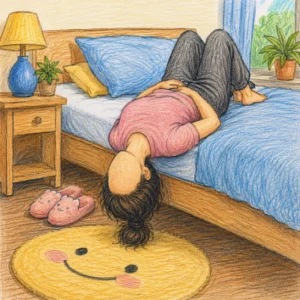
Have you ever promised yourself that “Monday is going to be different”?
You know the routine.
After a weekend filled with extra slices of pizza, binge-watching your favorite series until 2 AM, and somehow managing to avoid every form of physical activity except walking to the refrigerator, Monday arrives carrying a wave of motivation.
Suddenly you’re a completely new person.
You throw away every snack in the kitchen.
You swear you’ll never eat sugar again.
You buy enough vegetables to feed an entire rabbit family.
You download three fitness apps.
You even convince yourself that waking up at 5:00 AM every morning sounds exciting.
For three glorious days, you’re unstoppable.
Then Thursday shows up.
Your muscles ache.
Work becomes stressful.
You’re exhausted.
Someone brings fresh donuts into the office.
You tell yourself you’ll only take one bite…
Twenty minutes later you’re halfway through a burger, wondering if your “healthy lifestyle” lasted long enough to deserve a participation trophy.
Sound familiar?
If so, welcome to the world’s largest club.
Most of us don’t fail because we’re lazy or lack discipline.
We fail because we’ve been taught that health only exists at the extremes.
We’re told to eliminate every guilty pleasure, train like professional athletes, hustle every waking hour, and somehow still have enough energy left to meditate for an hour before bed.
No wonder so many people burn out.
Here’s the truth most wellness trends forget to mention:
The healthiest lifestyle isn’t built on perfection. It’s built on moderation.
Moderation isn’t boring.
It’s not “settling.”
It’s actually the secret ingredient that allows healthy habits to last for years instead of a few exhausting weeks.
Let’s explore why living in the middle—not at the extremes—is one of the smartest decisions you can make for your body, your mind, and your happiness.
Why Our Bodies Love Balance
Imagine you’re adjusting the water temperature in your shower.
Turn the handle too far toward cold and you’ll jump out shivering.
Turn it too far toward hot and you’ll risk burning yourself.
What do you naturally do?
You keep adjusting until you find that perfect warm spot.
That’s exactly how your body works.
Your body constantly tries to maintain balance, a process scientists call homeostasis.
Whether it’s your body temperature, blood sugar, hydration, hormones, or energy levels, your body is always working behind the scenes to keep everything running smoothly.
When we constantly swing between extremes—overeating and starving, overworking and collapsing, exercising obsessively and then doing nothing—we make that job much harder.
It’s a little like asking someone to drive through heavy traffic while you keep yanking the steering wheel.
Eventually, something gives.
Living with moderation creates stability.
Your body doesn’t have to panic.
It can focus on repairing muscles, digesting food efficiently, balancing hormones, strengthening immunity, and keeping your energy steady throughout the day.
And honestly?
That sounds a lot nicer than surviving on coffee until lunchtime.
The Biggest Lie Diet Culture Ever Sold
Every year, there’s a brand-new villain.
- Carbs.
- Fat.
- Fruit.
- Dairy.
- Gluten.
- Seed oils.
- Chocolate.
At this point, it feels like every food has had its turn being blamed for humanity’s problems.
The dieting industry loves extremes because extremes sell.
Moderation doesn’t make flashy headlines.
“Eat reasonably most of the time” isn’t exactly clickbait.
But it’s also the advice that’s most likely to work.
The Forbidden Cookie Effect
Remember being a teenager?
If your parents said,
“Whatever you do, don’t watch that movie.”
What happened?
Suddenly, that movie became the only thing you wanted to see.
Our brains react the same way with food.
The moment you tell yourself,
“I’ll never eat chocolate again.”
Your brain starts thinking about chocolate.
Constantly.
You notice every bakery.
Every commercial.
Every dessert menu.
Your coworker’s birthday cake suddenly becomes the center of the universe.
The restriction itself creates obsession.
Moderation removes that obsession.
When no food is permanently forbidden, it loses its emotional power.
Instead of inhaling six cookies because “the diet starts tomorrow,” you can enjoy one or two without guilt.
That’s freedom.
And surprisingly, freedom often leads to healthier choices.
Why Exercise Shouldn’t Feel Like Punishment
Exercise is one of the greatest gifts you can give your body.
It improves heart health.
Boosts mood.
Strengthens bones.
Helps manage stress.
Supports better sleep.
Improves memory.
The benefits seem endless.
But somewhere along the way, many people started believing that if 30 minutes is good, three hours must be better.
Not exactly.
Think Like a Guitar
Picture an acoustic guitar.
The strings need just the right amount of tension.
Too loose?
No music.
Too tight?
Snap.
Your body works the same way.
Never moving weakens muscles.
Training intensely every single day without recovery eventually leads to exhaustion, injuries, poor sleep, and frustration.
Fitness isn’t supposed to leave you broken.
It’s supposed to make daily life easier.
The best workout isn’t the hardest one.
It’s the one you’ll still enjoy doing next year.
A 20-minute walk after dinner.
A fun dance class.
Playing basketball with friends.
Gardening.
Cycling around the neighborhood.
Swimming on weekends.
These activities may not look dramatic on Instagram, but they build something much more valuable:
Consistency.
And consistency always beats intensity in the long run.
The Problem with “Go Hard or Go Home”
Modern culture celebrates hustle.
Wake up before sunrise.
Answer emails during dinner.
Work weekends.
Sleep later.
Repeat.
Being busy has somehow become a status symbol.
But constantly running at full speed doesn’t make us stronger.
It makes us tired.
Imagine buying a brand-new sports car.
Would you drive it at maximum speed every second of every day?
Of course not.
The engine would eventually fail.
Yet that’s exactly how many of us treat our minds.
Coffee replaces sleep.
Stress replaces relaxation.
Productivity replaces hobbies.
Eventually, burnout shows up and demands attention.
Rest isn’t laziness.
It’s maintenance.
Just like your phone needs charging every night, your brain needs downtime too.
Watching a funny movie.
Taking a nap.
Reading a novel.
Walking outside.
Playing with your children.
Laughing with friends.
These aren’t distractions from life.
They are part of a healthy life.
Moderation Makes Healthy Habits Easier
One of the biggest reasons people abandon healthy lifestyles is because they try changing everything overnight.
Instead of making one small improvement, they attempt twenty.
No sugar.
No bread.
Gym every day.
Ten thousand steps.
Meditation.
Journaling.
Meal prep.
Cold showers.
Reading before bed.
Drinking four liters of water.
It’s exhausting just reading the list.
Real change happens differently.
It happens through small decisions repeated consistently.
Drink one more glass of water.
Walk ten extra minutes.
Eat vegetables with dinner.
Go to bed thirty minutes earlier.
Put your phone away before sleep.
Tiny habits don’t feel exciting.
But they quietly transform your life over time.
Just like saving a few dollars every week eventually builds a healthy bank account, small healthy habits build a healthier body.
The magic isn’t in doing everything.
The magic is doing enough—consistently.
Balance Doesn’t Mean Giving Up Joy
One of the biggest misconceptions about moderation is that it means living a boring life.
It doesn’t.
Moderation actually creates room for joy.
You can celebrate birthdays.
Enjoy pizza night.
Eat dessert at family gatherings.
Go out for ice cream with your kids.
Share popcorn during movie night.
None of these moments destroy your health.
They’re part of living.
Health isn’t measured by one meal.
It’s measured by thousands of choices made over months and years.
One salad won’t make you healthy.
One donut won’t make you unhealthy.
It’s the overall pattern that matters.
Once you stop chasing perfection, healthy living becomes surprisingly enjoyable.
And enjoyable habits are the ones that stick.
References
World Health Organization (WHO). Healthy Diet.
World Health Organization (WHO). Physical Activity.
Harvard T.H. Chan School of Public Health. The Nutrition Source.
Mayo Clinic. Healthy Lifestyle.
American Psychological Association (APA). Managing Stress for a Healthy Mind and Body.