
Have you ever bent down to pick up a grocery bag, reached awkwardly for something on a high shelf, or pushed yourself a little too hard during a workout—only to feel a sudden sharp pain that made you instantly regret all your life choices?
One second everything is fine.
The next, your body sends a loud and unmistakable message:
“Absolutely not.”
Welcome to the frustrating world of the muscle tear.
The good news? Most mild to moderate muscle injuries heal remarkably well with proper home care, patience, and a little common sense. While a muscle tear can feel alarming in the moment, your body is designed to repair damaged tissue. The key is knowing what to do—and what not to do—during the recovery process.
This guide will walk you through everything you need to know about managing a muscle tear at home, reducing pain, speeding up recovery, and knowing when it’s time to seek professional medical help.
What Is a Muscle Tear?
A muscle tear occurs when muscle fibers stretch beyond their normal limits and become damaged. The injury can range from a few tiny fibers being affected to a complete rupture of the muscle. Muscle tears are among the most common sports and everyday injuries and can happen to anyone, regardless of age or fitness level.
Common areas where a muscle tear occurs include:
- Hamstrings
- Calves
- Lower back
- Shoulders
- Neck
- Groin muscles
- Quadriceps
You don’t have to be a professional athlete to suffer a muscle tear. Everyday activities like lifting heavy furniture, carrying shopping bags, gardening, or even slipping on a wet floor can be enough to cause one.
Muscle Tear vs Muscle Strain: What’s the Difference?
People often use these terms interchangeably.
Technically, a strain refers to overstretched muscle fibers, while a muscle tear involves actual damage to those fibers. In practice, healthcare professionals often classify strains into different grades based on how much tearing has occurred.
Grade 1: Mild Muscle Tear
Only a small number of fibers are damaged.
Symptoms include:
- Mild pain
- Minor swelling
- Slight stiffness
- Minimal loss of strength
Grade 2: Moderate Muscle Tear
A larger number of fibers are torn.
Symptoms include:
- Noticeable pain
- Swelling
- Bruising
- Reduced strength
- Difficulty moving the affected muscle
Grade 3: Severe Muscle Tear
The muscle is partially or completely ruptured.
Symptoms include:
- Severe pain
- Significant swelling
- Extensive bruising
- Inability to use the muscle
- A visible dent or gap in the muscle
Grade 3 injuries often require medical evaluation and sometimes surgery.
How Do You Know You’ve Torn a Muscle?
A muscle tear usually announces itself dramatically.
You may experience:
- Sudden sharp pain
- A popping sensation
- Swelling
- Bruising
- Muscle weakness
- Tenderness to touch
- Muscle spasms
- Limited range of motion
Some people describe it as feeling like they were hit by something even when nobody touched them. Others report hearing an actual “pop” at the moment of injury.
The First 72 Hours: Your Recovery Starts Here
The first few days after a muscle tear are crucial.
This is when your body begins controlling inflammation and initiating tissue repair. Your primary goal is preventing further damage while reducing pain and swelling.
Follow the PRICE Method
Healthcare professionals commonly recommend the PRICE protocol for early muscle tear management.
P – Protect
Stop the activity immediately.
Avoid movements that worsen the pain. If necessary, use support devices such as crutches, braces, or slings to protect the injured area.
R – Rest
Rest allows damaged muscle fibers to begin repairing themselves.
This doesn’t mean lying completely still for weeks, but it does mean avoiding activities that cause pain or place stress on the injured muscle.
I – Ice
Ice helps reduce swelling and pain.
Apply an ice pack wrapped in a towel for 15 to 20 minutes every 2 to 3 hours during the first couple of days after injury. Never place ice directly on your skin.
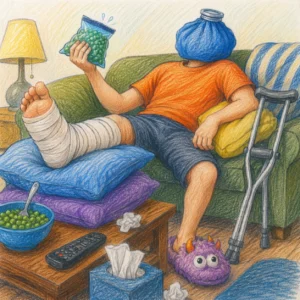
A bag of frozen peas works surprisingly well and has saved many injured athletes and weekend warriors.
C – Compression
Compression helps minimize swelling.
Use an elastic bandage and wrap the injured area snugly—but not tightly enough to cause numbness, tingling, or discoloration.
E – Elevation
Whenever possible, elevate the injured body part above heart level.
Gravity helps move excess fluid away from the injury site and reduces swelling.
What NOT to Do During Early Recovery
Sometimes avoiding the wrong actions is just as important as doing the right ones.
During the first 48 to 72 hours, avoid:
Heat
Hot baths, heating pads, and saunas increase blood flow and may worsen swelling during the acute phase.
Alcohol
Alcohol can increase inflammation and potentially delay healing.
Intense Exercise
Trying to “push through” a muscle tear is one of the fastest ways to make it worse.
Aggressive Massage
While massage can be helpful later, deep massage immediately after a muscle tear may disrupt the healing process and worsen bleeding within the tissue.
Managing Pain Naturally
A muscle tear can be painful, especially during the first few days.
Helpful strategies include:
- Ice therapy
- Proper rest
- Gentle positioning
- Staying hydrated
- Getting adequate sleep
Sleep is particularly important because your body releases growth and repair hormones while you rest.
Think of sleep as your body’s overnight construction crew.
Nutrition for Faster Muscle Tear Recovery
Your body needs building materials to repair damaged muscle fibers.
Focus on:
Protein-Rich Foods
- Eggs
- Chicken
- Fish
- Greek yogurt
- Beans
- Lentils
- Cottage cheese
Protein provides the amino acids needed for muscle repair.
Vitamin C
Vitamin C supports collagen production.
Good sources include:
- Oranges
- Strawberries
- Kiwi
- Bell peppers
- Broccoli
Zinc
Zinc contributes to tissue healing.
Sources include:
- Nuts
- Seeds
- Meat
- Seafood
Hydration
Dehydration can contribute to muscle stiffness and slower recovery.
Aim to drink water consistently throughout the day.
When Should You Start Moving Again?
This is where many people make mistakes.
Some return to activity too soon.
Others become so afraid of reinjury that they avoid movement for weeks.
Both approaches can slow recovery.
As pain and swelling begin improving after several days, gentle movement is usually encouraged. Light movement helps maintain circulation, reduce stiffness, and prevent muscle weakness.
Start with:
- Slow range-of-motion exercises
- Gentle stretching
- Short walks if appropriate
- Controlled movements
If an activity causes sharp pain, stop immediately.
Mild discomfort may be acceptable, but significant pain is your body’s way of saying the tissue isn’t ready yet.
When Is Heat Helpful?
Heat becomes useful later in recovery.
Once the initial swelling has largely subsided—typically after several days—you may benefit from:
- Warm compresses
- Heating pads
- Warm showers
Heat increases blood flow and can help relax tight muscles before stretching or rehabilitation exercises.
How Long Does a Muscle Tear Take to Heal?
Recovery time depends on injury severity.
Mild Muscle Tear
Approximately 1 to 3 weeks.
Moderate Muscle Tear
Approximately 3 to 8 weeks.
Severe Muscle Tear
Several months and may require rehabilitation or surgery.
Patience matters.
Many reinjuries occur because people feel better before the tissue has fully healed.
Signs Your Muscle Tear Is Healing
Positive signs include:
- Reduced pain
- Less swelling
- Improved mobility
- Greater strength
- Reduced tenderness
- Ability to perform normal activities comfortably
Progress often happens gradually.
One day you’ll suddenly realize you climbed stairs, carried groceries, or got out of bed without thinking about the injury.
That’s a good sign.
When Should You See a Doctor?
While many muscle tears heal at home, some require professional care.
Seek medical attention if:
- You heard a loud popping sound during injury.
- You cannot bear weight.
- You have severe weakness.
- A visible dent appears in the muscle.
- Numbness or tingling develops.
- Symptoms worsen instead of improving.
- Severe swelling or bruising occurs.
- Pain remains intense after several days.
These symptoms may indicate a more significant muscle tear that requires imaging, physical therapy, or specialized treatment.
Preventing Future Muscle Tears
Nobody wants a sequel to this experience.
To reduce your risk:
- Warm up properly before exercise.
- Increase workout intensity gradually.
- Stay hydrated.
- Build strength consistently.
- Stretch regularly.
- Get enough sleep.
- Allow adequate recovery between workouts.
- Use proper lifting techniques.
Your muscles perform thousands of movements every day. Taking care of them now can save you weeks of recovery later.
Final Thoughts
A muscle tear can feel like a major setback, especially when it interferes with your daily routine. The pain, stiffness, and frustration can make even simple tasks feel challenging.
Fortunately, most muscle tears improve significantly with proper home care, patience, and gradual rehabilitation.
Remember the basics:
Protect the injury.
Rest wisely.
Use ice during the early stages.
Control swelling.
Gradually return to movement.
Most importantly, listen to your body. Recovery is not a race. Give your muscles the time they need to heal, and you’ll return stronger, wiser, and hopefully a little more cautious the next time you decide to move a couch by yourself.
References
Mayo Clinic – Muscle Strains: Symptoms and Causes