
Most of us treat our mouths like that one chaotic kitchen drawer—the one stuffed with old batteries, random keys, and takeaway menus from a decade ago. It’s there, it works, and unless something goes wrong, we don’t give it much thought.
We use our mouths all day long—to eat, speak, laugh, and express ourselves—but rarely stop to think about what’s happening beneath the surface. Until there’s pain. Or bleeding. Or that sudden sensitivity when sipping hot tea.
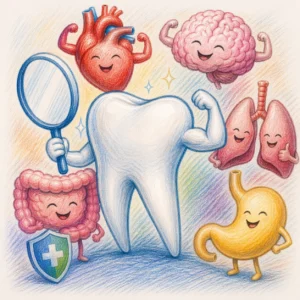
Here’s the truth: your Oral Health is not separate from the rest of your body. It’s deeply connected—more like the “front lobby” of your overall health. And just like any building, when the entrance starts falling apart, it doesn’t take long for the rest to follow.
So if you’ve ever wondered why dentists ask about your general health—or why doctors sometimes ask about your gums—this is where it all comes together.
Let’s explore how taking care of your mouth might just be one of the smartest health decisions you’ll ever make.
1. Your Heart and Your Mouth: Closer Than You Think
At first glance, your gums and your heart don’t seem related. One helps you chew food, the other keeps you alive. Simple, right?
Not quite.
When your gums become inflamed—a condition often called gingivitis—it’s more than just a local issue. Think of inflamed gums like an open door. Harmful bacteria can enter your bloodstream and travel throughout your body.
Once these bacteria reach your heart, they can contribute to inflammation in your arteries. Over time, this can increase the risk of conditions like heart disease.
Imagine ignoring a small cut on your hand for months. It becomes infected, spreads, and suddenly affects your entire system. That’s similar to what can happen when gum issues are left untreated.
Healthy gums don’t just protect your teeth—they help protect your heart too.
2. Brain Fog, Memory, and Your Toothbrush
We’ve all had those moments—walking into a room and forgetting why, misplacing keys, or struggling to focus. It’s easy to blame stress, lack of sleep, or too little caffeine.
But emerging research suggests that Oral Health may play a role in how well your brain functions.
Chronic inflammation in the mouth doesn’t stay contained. It can send signals throughout your body, including to your brain. Scientists have even found links between gum disease bacteria and cognitive decline, including conditions like Alzheimer’s disease.
While brushing your teeth won’t magically make you a genius, maintaining good Oral Health helps reduce inflammation—and that supports better brain function over time.
Think of it as clearing the “mental fog” before it builds up.
3. Diabetes and Oral Health: A Two-Way Relationship
If there’s one relationship in the body that truly goes both ways, it’s between Oral Health and Diabetes.
When blood sugar levels are high, excess sugar appears in your saliva. Bacteria love sugar—it fuels their growth, leading to plaque buildup and gum disease.
But here’s where it gets even more interesting: gum disease can make it harder for your body to regulate blood sugar. The inflammation interferes with insulin function, making diabetes more difficult to control.
It becomes a cycle:
- High blood sugar worsens gum health
- Poor gum health worsens blood sugar
Breaking that cycle often starts with something simple—taking better care of your teeth and gums.
In a way, brushing and flossing aren’t just hygiene habits. They’re part of managing your overall metabolic health.
4. Confidence, Social Life, and Mental Wellbeing
Oral Health isn’t just physical—it’s emotional too.
Think about the last time you felt self-conscious about your breath or your smile. Maybe you held back a laugh. Maybe you covered your mouth while speaking. Maybe you avoided eye contact.
It’s subtle, but powerful.
When you’re not confident in your smile, you start to withdraw—just a little at first. Over time, that hesitation can affect your social life, relationships, and even your mental health.
A healthy mouth gives you something invaluable: freedom.
Freedom to laugh loudly, speak openly, and show up fully.
It’s not about perfection or having “picture-perfect” teeth. It’s about feeling comfortable being yourself.
5. Pregnancy and Oral Health: Caring for Two
During pregnancy, your body goes through incredible changes—and your gums are no exception.
Hormonal shifts can make your gums more sensitive to plaque, leading to a condition often known as pregnancy gingivitis. You may notice swelling, tenderness, or bleeding when brushing.
But Oral Health during pregnancy isn’t just about comfort.
Studies have shown that poor gum health is linked to:
- Premature birth
- Low birth weight
The inflammation in the gums can trigger responses in the body that may influence early labor.
That’s why dental care during pregnancy is so important. Regular cleanings, gentle brushing, and flossing can make a meaningful difference—not just for you, but for your baby too.
6. Sleep Apnea: The Hidden Clues in Your Mouth
If you wake up feeling exhausted—even after a full night’s sleep—your mouth might hold the answer.
Dentists are often the first to notice signs of Sleep apnea, a condition where breathing repeatedly stops and starts during sleep.
Clues can include:
- Dry mouth in the morning
- Jaw soreness or teeth grinding
- Worn-down enamel
- A narrow airway or tongue impressions
These signs might seem minor, but they can point to disrupted sleep—and poor sleep affects everything from your energy levels to your heart health.
Addressing Oral Health issues, such as jaw alignment or grinding, can sometimes improve sleep quality significantly.
7. Digestion Starts in Your Mouth
Most people think digestion begins in the stomach. In reality, it starts the moment you take your first bite.
Your teeth play a critical role in breaking down food into smaller, manageable pieces. Saliva begins the chemical process of digestion, preparing food for your stomach.
But if your Oral Health is compromised—missing teeth, sore gums, or difficulty chewing—you may swallow larger chunks of food.
That forces your digestive system to work harder.
Imagine putting whole fruit into a blender instead of chopping it first. The result? A struggle to process, uneven blending, and extra strain.
Poor chewing can lead to:
- Bloating
- Indigestion
- Reduced nutrient absorption
In other words, your body might not be getting the full benefit of the healthy foods you eat.
Simple Ways to Improve Your Oral Health (Without Overcomplicating It)
Taking care of your Oral Health doesn’t need to feel overwhelming. Small, consistent habits make the biggest difference.
Start with the basics:
1. The Two-Minute Rule
Brush your teeth for at least two minutes, twice a day. Play your favorite song—it makes the time fly.
2. Find a Flossing Method That Works
If traditional floss feels awkward, try alternatives like water flossers or floss picks. The goal is consistency, not perfection.
3. Rinse When You Can’t Brush
After meals, swish water around your mouth. It helps wash away food particles and acids.
4. Pay Attention to Your Gums
Bleeding gums aren’t normal—they’re a signal. Treat them early rather than ignoring them.
5. Stay Hydrated
Water helps maintain saliva flow, which naturally protects your teeth.
6. Regular Dental Checkups
Professional cleanings and early detection can prevent bigger problems down the line.
The Bigger Picture: Your Mouth Reflects Your Health
Your mouth is more than just a place for eating and smiling—it’s a reflection of your overall wellbeing.
When your Oral Health is strong:
- Your heart benefits
- Your brain stays sharper
- Your confidence grows
- Your body functions more efficiently
And when it’s neglected, the effects ripple far beyond your teeth.
The good news? You don’t need perfection.
You don’t need a flawless smile or expensive treatments.
You just need consistency—small daily choices that add up over time.
So tonight, when you stand at the sink, tired and tempted to skip brushing, remember this:
You’re not just cleaning your teeth.
You’re taking care of your entire body.
References
World Health Organization – Oral Health
American Dental Association – Mouth-Body Connection
Centers for Disease Control and Prevention – Oral Health Basics