
When the summer sun is blazing and the air feels heavy with heat, most of us instinctively reach for a tub of ice cream. It has been the classic answer to hot afternoons for generations. A scoop of vanilla or chocolate certainly cools you down—but only for a moment. Before long, you’re left wishing for something more satisfying, more flavorful, and more memorable.
That’s exactly where ras malai shines.
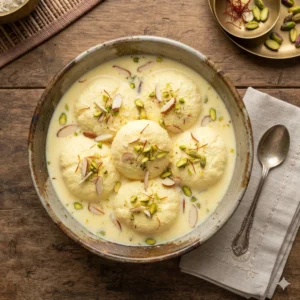
Unlike ordinary frozen desserts, ras malai isn’t just about sweetness. It is a celebration of texture, aroma, tradition, and comfort. Every chilled spoonful combines soft, delicate cheese patties soaked in fragrant saffron-infused milk, creating a dessert that’s rich without being overwhelming and refreshing without relying on ice.
If you’ve only enjoyed ras malai at restaurants or festivals, you might assume it’s too complicated to make at home. The truth is much simpler. With fresh ingredients, a little patience, and the right technique, you can prepare restaurant-quality ras malai in your own kitchen.
Whether you’re making dessert for a family gathering, celebrating a special occasion, or simply treating yourself on a hot afternoon, this guide will show you exactly how to create creamy, cloud-soft homemade ras malai from scratch.
What Makes Ras Malai So Special?
Ras malai is one of the most beloved desserts from the Indian subcontinent. The name itself tells the story:
- “Ras” means juice or syrup.
- “Malai” refers to rich, creamy milk.
Together, they create a dessert where soft cheese dumplings absorb luxurious flavored milk until every bite melts in your mouth.
Unlike many desserts that depend mainly on sugar, ras malai delivers layers of flavor:
- Creamy milk
- Aromatic cardamom
- Delicate saffron
- Crunchy pistachios
- Soft homemade chenna
The result feels elegant enough for celebrations while remaining comforting enough for everyday enjoyment.
Why Ras Malai Is the Perfect Summer Dessert
Many people associate rich desserts with winter, but ras malai is surprisingly refreshing when served cold.
Here are a few reasons why it works beautifully during hot weather:
1. Served Chilled
Unlike warm puddings or baked desserts, ras malai is enjoyed straight from the refrigerator. The cold milk instantly feels refreshing on a hot day.
2. Light Yet Creamy
Although made with full-fat milk, ras malai doesn’t feel excessively heavy. The soft cheese absorbs the milk instead of becoming dense.
3. Naturally Hydrating
Since the dessert contains a generous amount of milk, every serving feels more refreshing than thick cakes or pastries.
4. Rich Flavor Without Excessive Sweetness
Traditional ras malai focuses on aromatic spices instead of overwhelming sweetness, making it satisfying without becoming overpowering.
The Secret Behind Perfect Ras Malai
Making outstanding ras malai isn’t about complicated cooking techniques.
Instead, success depends on balancing two essential components.
The Chenna
Fresh homemade chenna forms the heart of the dessert.
It should be:
- Soft
- Smooth
- Crack-free
- Elastic
- Light enough to absorb milk
Proper kneading creates tiny air pockets that allow the patties to become sponge-like during cooking.
The Flavored Milk
The milk should be:
- Creamy
- Slightly thickened
- Fragrant
- Smooth
- Rich without becoming heavy
When these two elements come together, every bite becomes wonderfully juicy and flavorful.
Ingredients You’ll Need
One of the best things about homemade ras malai is that it requires simple ingredients.
For the Chenna
- 5 cups full-fat milk
- 2 tablespoons lemon juice
- 2 tablespoons water
Sugar Syrup
- 1 cup sugar
- 4 cups water
Rabdi (Flavored Milk)
- 4 cups full-fat milk
- ½ cup sugar
- 1 teaspoon cardamom powder
- A generous pinch of saffron strands
- Slivered pistachios
- Slivered almonds
Step 1: Make Fresh Chenna
Pour the milk into a heavy-bottomed pot and bring it to a gentle boil.
Mix lemon juice with water before slowly adding it to the hot milk while stirring gently.
Within seconds, the milk will separate into:
- Soft white curds
- Greenish whey
Once fully separated, stop stirring.
Step 2: Drain the Curds
Line a colander with cheesecloth or a clean cotton cloth.
Pour the curdled milk into it.
Rinse the curds under cold running water for about 20 seconds.
This step:
- Removes the lemon flavor
- Stops further cooking
- Keeps the cheese tender
Gather the cloth into a bundle.
Gently squeeze out excess water.
Hang it for approximately 45 minutes.
Step 3: Knead Until Smooth
Transfer the drained cheese onto a clean surface.
Initially, it will appear crumbly.
Use the heel of your palm to press and knead continuously.
After about 8 minutes, you’ll notice a dramatic transformation.
The cheese becomes:
- Smooth
- Soft
- Glossy
- Slightly oily
- Easy to shape
Divide into equal portions and flatten each into a smooth disc.
Avoid cracks around the edges.
Step 4: Cook the Patties
Bring sugar and water to a rolling boil.
Carefully place each cheese disc into the syrup.
Cover with a lid.
Cook for about 15 minutes.
During cooking, they will almost double in size.
This happens because the cheese absorbs syrup while steam creates tiny air pockets inside.
Once cooked, allow them to cool.
Step 5: Prepare the Rabdi
While the patties cool, begin preparing the flavored milk.
Bring fresh milk to a boil.
Reduce the heat.
Allow it to simmer gently while stirring regularly.
Reduce the milk by roughly one-third.
Then stir in:
- Sugar
- Cardamom
- Saffron
- Pistachios
- Almonds
The saffron slowly colors the milk into a beautiful golden cream.
Step 6: Bring Everything Together
Gently press each cooked cheese patty between your palms.
This removes excess sugar syrup.
Place them directly into the warm rabdi.
Over the next several hours, they absorb the flavored milk beautifully.
This soaking stage is what transforms good ras malai into exceptional ras malai.
Why Chilling Matters
Many people make the mistake of serving ras malai immediately.
Don’t.
Cover the dessert and refrigerate for at least 5 hours.
Even better—leave it overnight.
During chilling:
- The milk thickens slightly.
- The flavors blend together.
- The cheese absorbs more rabdi.
- The texture becomes silkier.
The next day, every bite is noticeably better.
Common Mistakes to Avoid
Using Low-Fat Milk
Whole milk produces softer, richer chenna.
Low-fat milk often creates dry, crumbly cheese.
Over-Kneading
Too little kneading leaves grainy patties.
Too much kneading makes them dense.
Aim for about 7–8 minutes.
Thickening the Rabdi Too Much
The milk should remain pourable.
Very thick rabdi cannot penetrate the cheese properly.
Cooking Too Aggressively
A gentle simmer keeps the patties tender.
Boiling too hard can damage their delicate texture.
Skipping the Chill Time
Fresh ras malai tastes good.
Well-chilled ras malai tastes extraordinary.
Expert Tips for Soft Ras Malai Every Time
Use Fresh Milk
Fresh pasteurized whole milk consistently produces the best texture.
Maintain Gentle Heat
Avoid sudden temperature changes while reducing milk.
Slow cooking develops richer flavor.
Don’t Rush the Soaking
Allow enough time for the patties to fully absorb the milk.
Add Nuts Before Chilling
The nuts soften slightly while still providing pleasant crunch.
Use Good Quality Saffron
Even a small amount creates remarkable aroma and beautiful natural color.
Delicious Variations
Once you’ve mastered traditional ras malai, you can experiment with exciting flavors.
Mango Ras Malai
Blend fresh mango puree into chilled rabdi.
Perfect during mango season.
Rose Ras Malai
Add a few drops of rose water for a floral twist.
Pistachio Ras Malai
Increase pistachios and blend a small portion into the milk.
Chocolate Ras Malai
Add a light drizzle of melted dark chocolate before serving.
Coconut Ras Malai
Mix coconut milk with regular milk for a tropical variation.
Serving Suggestions
Ras malai looks elegant with simple garnishes.
Try serving it with:
- Extra saffron strands
- Chopped pistachios
- Crushed almonds
- Edible rose petals
- Silver leaf (optional for celebrations)
Serve in chilled dessert bowls for maximum refreshment.
Is Homemade Better Than Store-Bought?
In almost every way, yes.
Homemade ras malai offers:
- Fresher ingredients
- Better texture
- Adjustable sweetness
- Authentic flavor
- No artificial preservatives
- Complete control over quality
Most importantly, homemade desserts carry something no packaged dessert ever can—care and personal attention.
Why Making Ras Malai Is Worth the Effort
Modern life encourages convenience.
Frozen desserts, instant mixes, and ready-made sweets certainly save time.
But there is something deeply satisfying about creating a traditional dessert from scratch.
Watching milk transform into delicate cheese.
Feeling the dough become silky beneath your hands.
Seeing saffron slowly color the milk.
Waiting patiently while every flavor develops overnight.
These aren’t simply cooking steps—they’re part of an experience.
And when someone smiles after taking their very first bite, every minute spent in the kitchen feels worthwhile.
Final Thoughts
If you’ve been relying on ice cream to survive every summer afternoon, it may be time to discover something even more rewarding.
Homemade ras malai is creamy without being heavy, sweet without becoming overwhelming, and luxurious without requiring professional pastry skills.
With fresh milk, fragrant spices, and a little patience, you can create a dessert that has delighted families for generations.
The next time temperatures soar, skip the ordinary frozen treats. Instead, open your refrigerator, lift out a chilled bowl of homemade ras malai, and enjoy a dessert that delivers comfort, elegance, and unforgettable flavor in every spoonful.
Once you master this classic recipe, you’ll understand why so many people consider ras malai one of the finest milk-based desserts ever created.
References
Wikipedia – Ras Malai (History and Background)