
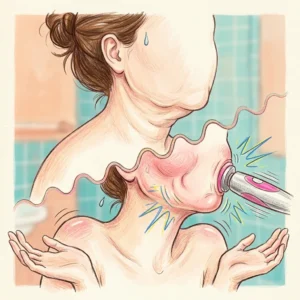
Have you ever looked in the mirror and wondered when your cheeks started looking a little less plump, your jawline became less defined, or your skin stopped bouncing back the way it used to? One day, your face looks fresh and full of life. The next, you are examining your reflection like a detective searching for clues.
Naturally, the beauty industry has an answer for everything. There are creams for wrinkles, serums for dullness, rollers for puffiness, and devices that promise to give your face a complete renovation without the inconvenience of becoming a construction project.
Then you discover a phrase like dermal-epidermal junction flattening. Suddenly, your skincare routine feels less like self-care and more like preparing for a university biology exam.
But here is the good news: understanding your skin does not require a medical degree. Once you learn how your skin maintains its strength, why sagging develops, and what modern facial devices can realistically do, making better skincare choices becomes much easier.
Let’s explore the science behind skin sagging and flattening, the fascinating structures beneath your complexion, and whether sound-wave facial devices deserve a place in your beauty routine.
1. Meet the Microscopic Architecture Beneath Your Skin
Imagine your face as a beautifully constructed building. Its outer walls protect everything inside, while its deeper framework provides strength, flexibility, and support.
Your skin works in a surprisingly similar way.
The outermost major layer is the epidermis, which protects your body from the outside world. Beneath it lies the dermis, a supportive layer containing collagen, elastin, blood vessels, nerves, and other important structures.
The epidermis and dermis meet at a specialized boundary called the dermal-epidermal junction.
Instead of being completely flat, this junction has an undulating, interlocking structure. Think of tiny rolling hills fitting together rather than two perfectly smooth sheets resting on top of each other.
Small projections called dermal papillae contribute to this arrangement. Together with complementary structures from the epidermis, they help create a strong connection between the two layers.
Why does this matter?
Because your skin needs more than a pretty surface. It needs an organized internal structure that helps it withstand everyday movement, friction, and environmental stress.
The junction also supports communication and the exchange of nutrients between the underlying dermal tissue and the epidermis. The epidermis itself has no blood vessels, so it depends on diffusion from the tissues beneath it for nourishment.
Research on aging skin has shown that this junction can become flatter over time, reducing the interlocking surface area and making the skin more vulnerable to mechanical stress.
In other words, those microscopic hills are not decorative landscaping. They are part of your skin’s structural design.
2. Why Does Skin Flatten as We Age?
Here is where the story becomes interesting.
As we grow older, several changes occur throughout the skin. The dermal-epidermal junction can become flatter, collagen production declines, elastic fibers change, and the skin’s ability to recover from mechanical stress may decrease.
These changes happen gradually. They are influenced by genetics, natural aging, sun exposure, and other environmental and lifestyle factors.
Imagine a mattress that has supported you for years. Its outer fabric may still look perfectly respectable, but the material underneath gradually loses some of its original resilience.
Your skin is much more complex than a mattress, of course, but the comparison helps explain why its appearance depends on structures beneath the surface.
When the junction becomes flatter, the connection between the epidermis and dermis becomes less resistant to certain physical forces. At the same time, changes in collagen and elastin can reduce firmness and flexibility.
This is one reason scientists study structural flattening when investigating skin aging.
However, there is an important distinction: flattening of the dermal-epidermal junction is not the sole cause of facial sagging.
Visible sagging also involves changes in deeper connective tissues, facial fat compartments, ligaments, and bone structure. Gravity contributes, but it is only one part of a much larger process.
So, if your cheeks appear less full or your jawline looks softer, it does not necessarily mean one microscopic structure has suddenly collapsed.
Aging is a team effort. Unfortunately, it is not the kind of teamwork anyone asked for.
3. The Difference Between Skin Flattening and Facial Sagging
Although the terms sound similar, they describe different things.
Skin flattening in this context refers to changes in the microscopic junction between the epidermis and dermis. Researchers study these changes to understand how aging affects skin strength, renewal, and resistance to friction.
Facial sagging, on the other hand, describes visible changes in the position and contour of facial tissues. These may include less-defined cheeks, deeper folds around the mouth, and changes along the jawline.
The two processes can occur as part of aging, but one should not be treated as a direct explanation for every visible sign of the other.
Your face contains several layers of tissue, each with its own job. The epidermis provides protection, the dermis contributes strength and elasticity, and deeper tissues help maintain facial volume and contour.
When these structures change over time, the result can be a complexion that looks less firm or a face that appears less lifted.
This distinction matters because it helps you avoid products and devices that promise to fix a complicated structural issue with one simple trick.
A serum may improve hydration. A moisturizer may temporarily soften the appearance of fine lines. A professionally administered skin-tightening treatment may help certain patients.
But these approaches do not all work in the same way, and none should be assumed to reverse every underlying change associated with aging.
4. Can Sound Waves Help Prevent Skin Sagging?
Now we reach the part that sounds as though it belongs in a futuristic beauty laboratory.
Facial devices that vibrate or use acoustic energy have attracted attention because they offer a different approach to skincare. Depending on the technology, a device may use mechanical vibration, ultrasound, or another form of energy.
However, these technologies should not be confused with one another.
A vibrating facial cleansing brush produces mechanical movement at the skin’s surface. An ultrasound device uses high-frequency acoustic energy. A radiofrequency device uses electromagnetic energy to generate heat in tissue.
Their mechanisms, intended uses, and potential risks are different.
Some professionally administered energy-based treatments have evidence supporting specific cosmetic applications, including modest improvements in skin tightness in selected patients. The results depend on the device, treatment protocol, individual characteristics, and the quality of the available research.
But here is the important reality check: there is not sufficient evidence to claim that ordinary handheld facial vibrations rebuild dermal papillae, restore the youthful shape of the dermal-epidermal junction, or permanently stop skin sagging.
That does not mean every vibrating device is useless. A device may provide cleansing, massage, or a temporary improvement in the appearance of puffiness, depending on its design.
It simply means that a pleasant buzzing sensation should not be mistaken for proof of deep structural remodeling.
Your face might enjoy a little technological pampering, but that does not automatically mean its microscopic architecture is undergoing a dramatic renovation.
5. Micro-Vibration: What Can It Realistically Do?
The phrase micro-vibration anchoring sounds impressive, almost as though tiny construction workers are tightening the bolts beneath your cheeks.
Unfortunately, it is not an established medical treatment for rebuilding the skin’s internal anchors.
Mechanical vibration may influence the sensation of massage and, depending on the device and its intensity, temporarily affect local circulation or the appearance of puffiness. Yet these possible effects are different from producing lasting structural changes.
Let’s separate realistic expectations from marketing promises.
Temporary freshness
Gentle facial massage may make the skin look temporarily fresher. Changes in circulation, reduced puffiness, and the natural effects of hydration can influence how your face looks immediately after a routine.
However, a temporary glow does not demonstrate that collagen has increased or that sagging has been reversed.
Improved cleansing
Some vibrating brushes are designed to help remove makeup, oil, and surface debris. Whether one is useful depends on its design and how your skin responds.
If you have sensitive skin, rosacea, active irritation, or a compromised skin barrier, mechanical cleansing may aggravate symptoms. A gentle cleanser used with your fingertips can be sufficient.
Long-term firmness
Long-term improvements require a different standard of evidence. Researchers need to establish that a particular device produces meaningful, lasting changes in skin structure or appearance, rather than simply causing a short-lived cosmetic effect.
Until reliable clinical evidence supports a specific claim, it is best to regard ordinary facial vibration as an optional beauty tool, not a proven method of preventing structural flattening.
6. Are Facial Rollers and Scraping Tools Damaging Your Skin?
If you have ever watched a beauty influencer glide a jade roller across their face with the intensity of someone sanding a wooden table, you may have wondered whether all that pulling is actually helpful.
The answer depends on the technique, the tool, and your skin.
Gentle facial massage is not automatically harmful. A clean roller used with light pressure is unlikely to cause damage simply because it moves horizontally or vertically.
Likewise, there is no good evidence that ordinary gentle rolling necessarily loosens the connection between the epidermis and dermis.
The problem is excessive force.
Aggressive scraping, repeated friction, and prolonged massage can irritate delicate skin. If a tool causes pain, persistent redness, bruising, or broken blood vessels, your routine is too harsh.
People with inflammatory skin conditions or particularly sensitive skin may need to avoid certain tools altogether.
Think of your face as delicate fabric, not a stubborn stain that needs to be scrubbed into submission.
You do not have to abandon every facial roller in your bathroom. Simply use gentle pressure, keep tools clean, and stop if your skin reacts badly.
And remember, a more intense sensation does not mean a more effective treatment.
7. A Simple Routine for Healthier, Firmer-Looking Skin
If your goal is to maintain a healthy complexion and reduce the appearance of premature aging, you do not need a bathroom cabinet filled with complicated gadgets.
A consistent routine built around well-supported skincare practices is a better starting point.
Step 1: Cleanse gently
Use a cleanser suited to your skin type. Wash away makeup, sweat, and daily buildup without leaving your face feeling tight or painfully dry.
You do not need to scrub until your skin squeaks. That squeaky-clean feeling can be a sign that you have removed too much of its natural protective material.
Step 2: Moisturize regularly
Choose a moisturizer that suits your skin.
Ingredients such as glycerin and hyaluronic acid help attract and retain water, improving hydration and making some fine lines appear less noticeable.
A moisturizer will not rebuild deeper facial structures, but well-hydrated skin can look smoother, softer, and healthier.
Step 3: Make sunscreen non-negotiable
If there is one habit worth prioritizing for long-term skin health, it is sun protection.
Repeated ultraviolet exposure contributes to premature skin aging, including wrinkles, uneven pigmentation, and changes in elasticity.
Use a broad-spectrum sunscreen with SPF 30 or higher, and reapply it as directed, particularly when spending extended periods outdoors.
Protective clothing, shade, and sunglasses can also help reduce exposure.
Think of sunscreen as maintenance for your skin’s protective exterior. It will not stop natural aging, but it can help prevent avoidable damage.
Step 4: Consider evidence-based ingredients
Depending on your skin concerns, certain topical ingredients may be useful.
Retinoids, for example, have evidence supporting improvements in some signs of photoaging, including fine wrinkles. They can also cause dryness and irritation, so they should be introduced carefully.
If you are pregnant or planning pregnancy, seek medical advice before using retinoids, and avoid topical retinoids during pregnancy.
Other ingredients may help address pigmentation, dryness, or uneven texture. The best choice depends on your skin type, goals, and tolerance.
You do not need to introduce five active ingredients at once. Start slowly and give your skin time to respond.
Step 5: Treat facial devices as optional extras
If you enjoy using a facial vibration device, follow its manufacturer’s instructions and use it only for its intended purpose.
Do not assume that holding a device against your cheeks for a particular number of seconds will rebuild tissue anchors. There is no established universal micro-vibration routine proven to achieve that result.
Avoid using devices over broken, irritated, or infected skin. If you have a medical condition, implanted electronic device, or other concern, check with a qualified clinician and the device manufacturer before use.
For professional ultrasound, radiofrequency, or other energy-based treatments, consult a qualified dermatologist or appropriately trained medical professional who can explain the evidence, risks, and realistic results.
Step 6: Support your skin beyond the bathroom
Healthy-looking skin also benefits from everyday habits.
Get sufficient sleep, eat a balanced diet, avoid smoking, and maintain a sustainable exercise routine. These habits support general health, although they cannot guarantee a lifted face or reverse established structural changes.
Be cautious of products promising dramatic results based on one secret technique. If a treatment sounds too simple to be true, look for independent clinical evidence before spending your money.
8. The Funny Reality of High-Tech Skincare
Let’s admit something: beauty routines can look absolutely ridiculous when viewed from the outside.
You might be standing in front of your bathroom mirror with a vibrating gadget against your cheek, trying to maintain a dignified expression while your face makes an unexpected cameo in a science-fiction movie.
Your partner walks in. Your dog looks concerned. Your reflection seems to be asking whether this is really how you planned to spend your evening.
And honestly? There is nothing wrong with enjoying a little self-care comedy.
Skincare can be relaxing, entertaining, and a lovely opportunity to spend time looking after yourself. You do not have to turn every routine into a scientific experiment, and you certainly do not have to buy every device that appears in a sponsored video.
Use tools because they suit your needs, not because you are afraid your face will collapse without them.
A simple cleanser, moisturizer, sunscreen, and a little patience can be far more useful than an expensive collection of gadgets that promise miracles.
9. What Really Helps You Age Gracefully?
The most important lesson is that skin aging is a complex biological process, not a single structural problem waiting for one clever device to solve it.
The dermal-epidermal junction really can become flatter with age. Collagen and elastin also change, while deeper facial tissues contribute to shifts in volume and contour.
Understanding these changes is valuable because it helps you make informed decisions about prevention and treatment.
But there is a difference between understanding a biological mechanism and proving that a beauty device can reverse it.
At present, ordinary facial vibration should not be promoted as a proven way to restore dermal papillae, rebuild microscopic anchors, or permanently prevent sagging. More evidence is needed to support those specific claims.
That does not mean you have to surrender to every wrinkle or abandon your skincare goals. It means focusing your time and money on strategies with better evidence, while approaching newer technologies with healthy curiosity and realistic expectations.
Final Thoughts: Give Your Skin the Care It Deserves
Your skin is an extraordinary, living structure that protects you, adapts to your environment, and changes throughout your life.
Its microscopic architecture helps explain why aging skin can become more fragile and why maintaining its health matters. But no single sound wave, serum, roller, or miracle gadget can guarantee that your face will remain permanently firm and lifted.
Instead of chasing a perfect, age-proof complexion, concentrate on what you can control: protect your skin from the sun, moisturize consistently, choose suitable products, avoid unnecessary irritation, and seek professional advice when you need a more targeted treatment.
If you enjoy facial massage or gentle vibration, make it a comfortable part of your routine rather than expecting it to rebuild your skin from the inside out.
Because the real beauty secret is not finding a magic button that stops time. It is learning enough about your skin to care for it wisely, without fear, unnecessary expense, or a bathroom cabinet that looks like a medical equipment warehouse.