
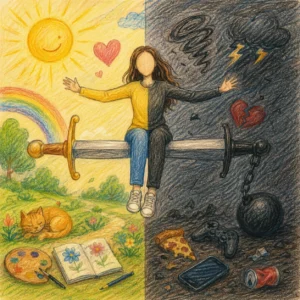
There’s always that one thing.
Maybe it’s a song you once played on repeat until your neighbors probably knew every lyric by heart. Maybe it’s your favorite comfort food, a relationship, a hobby, your job, or even scrolling through your phone at midnight “for just five minutes.”
At first, it feels magical. It lifts your mood, gives you purpose, and makes life feel brighter.
But then something strange happens.
The same thing that once made you happy slowly starts draining your energy, stealing your peace, or controlling your routine. Suddenly, your favorite thing becomes exhausting instead of exciting.
That’s one of the strangest truths about life: sometimes the things we love the most carry the biggest risk of consuming us.
The real challenge isn’t avoiding joy. The challenge is learning how to enjoy something without letting it quietly take over your lifestyle.
Because happiness without balance can quickly turn into burnout.
Why Humans Ruin the Things They Love
Human beings are creatures of repetition.
When something makes us feel good, we naturally want more of it. More comfort. More attention. More success. More entertainment. More validation.
Our brains are wired this way. According to research from the American Psychological Association and the Harvard Medical School, repeated pleasure can reduce sensitivity over time, meaning we often need “more” of the same thing to feel the same emotional reward. This is sometimes called hedonic adaptation. American Psychological Association
Harvard Medical School
In simple words: what once felt exciting slowly becomes normal.
And when “normal” no longer feels exciting, we either overconsume it or lose appreciation for it entirely.
That’s how joy quietly turns into a trap.
1. When Passion Stops Feeling Like Passion
We constantly hear advice like:
“Follow your passion.”
“Do what you love.”
“Turn your hobby into income.”
And honestly, that advice sounds amazing.
Until your passion becomes a schedule, deadlines, pressure, bills, customer complaints, and exhaustion.
The Everyday Reality
Imagine loving pizza so much that you decide to work in a pizza shop every single day.
At first, it smells incredible.
By week three, the smell of melted cheese alone makes you tired.
The same thing happens in real life.
A person who loves painting starts stressing over commissions.
A fitness lover becomes obsessed with calories.
A writer who once enjoyed creativity starts fearing deadlines.
The joy disappears because the thing that once felt free now feels like obligation.
Why This Happens
Passion becomes dangerous when it loses boundaries.
When work consumes your identity, rest starts feeling “unproductive.” Suddenly, you can’t relax without guilt.
That’s not healthy ambition anymore. That’s emotional overinvestment.
A balanced life needs space between who you are and what you do.
Even dream jobs can become emotional prisons if they’re your only source of happiness.
2. Love Can Heal You — Or Smother You
Love is one of the most beautiful experiences in life.
Feeling understood by another person creates emotional safety that humans naturally crave.
But love becomes dangerous when connection turns into dependency.
The Weighted Blanket Problem
Love is like a cozy weighted blanket.
On a cold night, it feels comforting and secure.
But imagine trying to wear that same blanket while running in the summer heat.
Eventually, comfort becomes suffocation.
That’s exactly what happens in relationships where people lose themselves completely.
Signs It’s Becoming Unhealthy
- You can’t enjoy life without the other person
- Your mood depends entirely on their attention
- You stop investing in your own interests
- Your identity slowly disappears
Healthy relationships add to your life. They shouldn’t replace it.
The strongest couples are usually two complete individuals walking beside each other — not two people desperately trying to become one identity.
Love should feel supportive, not consuming.
3. The Dangerous Side of Ambition
Ambition is powerful.
It pushes people to improve their health, build businesses, study harder, and chase goals that once felt impossible.
Without ambition, many dreams would never exist.
But ambition has a dark side nobody talks about enough.
Productivity Addiction Is Real
You start using a planner.
Then productivity apps.
Then optimization videos.
Then morning routines at 5 AM.
Soon, your entire life becomes performance.
Even your relaxation feels scheduled.
You’re no longer living. You’re managing yourself like a machine.
The Trap
Many people become so obsessed with the “next goal” that they forget how to enjoy the present moment.
They finally reach one mountain… and immediately start staring at the next one.
Achievement becomes endless hunger.
And the scary part?
Society often praises this behavior.
People applaud burnout because it looks like discipline from the outside.
But constantly chasing “more” without contentment creates emotional emptiness.
A successful life without peace still feels exhausting.
4. Comfort Zones Quietly Shrink Your Life
Comfort feels safe.
Predictability feels safe.
Routine feels safe.
And there’s nothing wrong with enjoying stability.
The problem begins when comfort becomes avoidance.
The Sweatpants Analogy
Your favorite sweatpants are perfect at home.
But if you wear them everywhere — job interviews, weddings, first dates — eventually comfort stops helping you.
It starts limiting you.
That’s how comfort zones work psychologically.
They protect you from fear, but they also protect you from growth.
What Comfort Slowly Steals
- Curiosity
- Courage
- New experiences
- Confidence
- Personal growth
The longer people avoid discomfort, the scarier life becomes.
Eventually, even small risks feel overwhelming.
A healthy lifestyle needs occasional uncertainty. Growth almost always feels uncomfortable before it feels rewarding.
5. Technology: The Helpful Thief
Technology has improved modern life in unbelievable ways.
We can learn new skills instantly.
Talk to family across oceans.
Work remotely.
Access information in seconds.
But technology is also one of the biggest examples of “too much of a good thing.”
The Two-Hour Scroll
You unlock your phone to check one recipe.
Suddenly, you’re watching videos of raccoons stealing sandwiches two hours later.
Now you’re tired, distracted, and somehow emotionally drained.
Sound familiar?
The Hidden Cost
Technology steals quietly.
Not always through dramatic damage — but through tiny daily distractions that slowly reshape your lifestyle.
It steals:
- Attention span
- Sleep quality
- Presence
- Focus
- Real-world connection
According to studies from Mayo Clinic and National Sleep Foundation, excessive screen exposure and late-night phone use are linked to poor sleep and increased stress levels.
Mayo Clinic
National Sleep Foundation
Technology is an incredible tool.
But tools become dangerous when they begin controlling the person holding them.
6. Helping Everyone Can Destroy You
Being kind feels good.
Helping others gives people purpose, connection, and emotional fulfillment.
Generosity is beautiful.
But endless giving without boundaries creates exhaustion.
The “Always Available” Person
You’re the one answering late-night calls.
The one fixing everyone’s problems.
The one organizing everything.
The one saying “yes” to every request.
Meanwhile:
- your room is messy,
- your sleep schedule is ruined,
- your stress is rising,
- and deep down, resentment starts growing.
Why This Happens
People often confuse self-sacrifice with kindness.
But constant emotional availability can destroy your mental health.
Saying “no” doesn’t make you selfish.
It makes you sustainable.
You cannot continuously pour energy into others while ignoring yourself.
Even batteries need recharging.
7. Nostalgia Can Trap You in the Past
Nostalgia feels warm and comforting.
Old songs. Old photos. Old memories.
Sometimes remembering simpler days feels emotionally healing.
But nostalgia becomes unhealthy when it prevents you from appreciating your current life.
The Social Media Time Machine
You spend hours looking through old photos thinking:
“Life was so much better back then.”
Now suddenly your current life feels disappointing in comparison.
But here’s the truth:
Most people romanticize the past because memory edits out many painful details.
We remember highlights, not full realities.
The Danger
If you constantly compare the present to an idealized version of the past, you stop fully living today.
And eventually, today becomes another missed memory you’ll later wish you appreciated more.
Life moves forward, not backward.
The Real Secret: Balance Beats Intensity
Most things in life are not inherently good or bad.
The real issue is usually imbalance.
Too much work destroys peace.
Too much comfort destroys growth.
Too much ambition destroys contentment.
Too much technology destroys focus.
Even healthy things become unhealthy without moderation.
That’s why balance matters more than intensity.
How to Keep Joy From Becoming Destruction
1. Audit Your Happiness
Every month, ask yourself:
“Is this still making my life better, or am I running on habit?”
Sometimes we keep doing things simply because they used to make us happy.
2. Diversify Your Joy
Never depend on one thing for all your happiness.
If your entire identity depends on:
- one relationship,
- one career,
- one goal,
- or one routine,
then losing it can emotionally collapse your entire world.
Healthy people build multiple sources of meaning.
3. Respect Your Energy
Your body usually notices imbalance before your mind does.
Pay attention if your “happy thing” starts causing:
- exhaustion,
- irritability,
- anxiety,
- emotional numbness,
- or constant stress.
Those are warning signs, not weaknesses.
4. Let Interests Evolve
Not everything is meant to stay forever.
Some hobbies belong to certain seasons of life.
And that’s okay.
Outgrowing something doesn’t mean it failed you.
It simply means you changed.
5. Protect Space for Real Living
Don’t optimize every second.
Leave room for boredom, spontaneity, rest, and quiet moments.
Life isn’t meant to feel like a never-ending performance review.
The Beautiful Truth About All of This
Here’s the encouraging part:
If the same thing can become destructive, it also means you have power over the outcome.
You decide:
- when to pause,
- when to continue,
- when to step back,
- and when to reconnect.
That’s the beauty of self-awareness.
Life isn’t about avoiding joy.
It’s about learning how to hold joy gently instead of gripping it so tightly that it breaks.
Your lifestyle shouldn’t feel like punishment.
It should feel alive.
Flexible. Human. Balanced.
Some days you move fast. Some days you rest.
Both matter.
Final Thought
Don’t fear the things you love.
Just learn to respect them.
Fire can warm your home or burn it down. The difference is how carefully you tend the flame.
The happiest people aren’t the ones who avoid pleasure.
They’re the ones who know when to lean in — and when to step back.
So tonight, take five quiet minutes and ask yourself:
“What’s the biggest source of joy in my life right now?”
Then ask the harder question:
“Am I enjoying it… or am I slowly becoming controlled by it?”
That answer could change your future.
References