
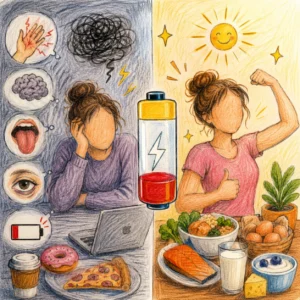
Let’s talk about something most people don’t think about—until their body starts acting strangely: Vitamin B12.
It’s not flashy like protein or trendy like collagen, but make no mistake—Vitamin B12 is essential. Quietly working behind the scenes, it supports your nerves, fuels your brain, and helps your body produce red blood cells that carry oxygen everywhere you need it most.
Think of it like this: if your body were a smartphone, Vitamin B12 wouldn’t just be the battery—it would be the charging cable, the power source, and the system update keeping everything running smoothly.
When your levels are good, you feel energized, focused, and mentally sharp. But when they drop? Things start to feel… off.
The tricky part? Vitamin B12 deficiency doesn’t always scream—it whispers. And those whispers are easy to ignore until they become impossible to overlook.
Let’s break down the subtle signs your body might be sending—and how you can gently restore balance using natural, everyday foods.
Why Vitamin B12 Matters More Than You Think
Before we jump into symptoms, it helps to understand why Vitamin B12 is so important.
This nutrient plays a key role in:
- Supporting your nervous system
- Producing DNA (your body’s blueprint)
- Creating healthy red blood cells
- Maintaining brain function and mood balance
It also helps regulate important brain chemicals like serotonin and dopamine, which influence how you feel emotionally.
When Vitamin B12 levels drop, these systems don’t just slow down—they start to misfire.
5 Sneaky Signs of Vitamin B12 Deficiency
1. Tingling or “Pins and Needles” Sensation
Ever felt a strange tingling in your hands or feet—even when you haven’t been sitting awkwardly?
This sensation can be linked to your nerves.
Vitamin B12 helps produce myelin, a protective layer that surrounds your nerves. Without enough B12, this layer weakens, and your nerves struggle to send clear signals.
The result?
- Tingling
- Numbness
- A “buzzing” or electric feeling
It might seem harmless at first, but frequent tingling shouldn’t be ignored.
2. Brain Fog and Forgetfulness
You walk into a room and forget why.
You misplace your phone—again.
You struggle to focus on simple tasks.
Sound familiar?
Low Vitamin B12 can affect brain function, leading to what many describe as “brain fog.”
This can include:
- Poor memory
- Difficulty concentrating
- Mental confusion
Many people assume it’s stress or aging, but sometimes, it’s simply your brain asking for more nutrients.
3. Pale or Slightly Yellow Skin
Take a look in the mirror. Does your skin look unusually pale or slightly yellow?
This could be linked to how your body produces red blood cells.
Without enough Vitamin B12:
- Red blood cells become fragile
- They break down easily
- Oxygen delivery decreases
This can lead to:
- Pale complexion
- Fatigue
- A yellowish tint (mild jaundice)
Your glow literally depends on what’s happening inside your bloodstream.
4. A Smooth, Sore Tongue (Glossitis)
This one surprises a lot of people.
A Vitamin B12 deficiency can cause a condition called Glossitis.
Signs include:
- A smooth, shiny tongue
- Redness
- Burning or soreness
It happens because the tiny bumps on your tongue disappear, making it look and feel different.
If your tongue suddenly feels sensitive or uncomfortable, your diet might be worth reviewing.
5. Mood Swings, Low Energy, and Irritability
Feeling unusually tired? Snappy? Emotionally low?
Vitamin B12 plays a major role in mental well-being. Since it helps produce mood-regulating chemicals, low levels can affect how you feel day-to-day.
Common signs include:
- Fatigue (even after rest)
- Irritability
- Low mood
Over time, deficiency can even contribute to conditions like Vitamin B12 Deficiency, which may impact both physical and mental health.
Why Vitamin B12 Deficiency Happens
You might be wondering: How does this even happen?
Here are some common reasons:
- Low intake of animal-based foods
- Poor digestion or gut health
- Aging (reduced absorption)
- Certain medications
Since your body cannot produce Vitamin B12 on its own, you must get it through food or supplements.
How to Recover Vitamin B12 Naturally at Home
The good news? In many cases, you can restore your Vitamin B12 levels naturally—right from your kitchen.
Let’s explore simple, practical ways to do that.
1. Add Nutritional Yeast to Your Meals
If you’re vegetarian or vegan, this is a game changer.
Nutritional yeast is often fortified with Vitamin B12 and has a savory, cheesy flavor.
Easy ways to use it:
- Sprinkle on popcorn
- Mix into pasta
- Add to soups or salads
It’s one of the easiest plant-based solutions.
2. Include Seafood in Your Diet
If you eat fish, you’re in luck—some of the richest sources of Vitamin B12 come from the sea.
Top options:
- Clams (extremely high in B12)
- Sardines
- Salmon
- Trout
Even adding fish twice a week can make a big difference.
3. Don’t Skip Eggs and Dairy
Simple, affordable, and effective.
Vitamin B12-rich options include:
- Eggs (especially yolks)
- Milk
- Yogurt (especially Greek yogurt)
- Cheese
These foods are easy to include in everyday meals—no complicated recipes needed.
4. Improve Your Gut Health
Here’s something many people overlook:
You can eat all the Vitamin B12 you want—but if your gut isn’t absorbing it properly, it won’t help much.
To support digestion:
- Eat fermented foods (like yogurt or pickles)
- Try small amounts of apple cider vinegar before meals
- Avoid overeating processed foods
Your gut plays a huge role in how well nutrients are absorbed.
5. Try Fortified Foods
Some foods are enriched with Vitamin B12, such as:
- Breakfast cereals
- Plant-based milk (like almond or soy milk)
These can be especially helpful for people with dietary restrictions.
Vitamin B12 Food Cheat Sheet
Here’s a quick guide to help you remember:
| Food | B12 Level | Why It Helps |
|---|---|---|
| Clams | Extremely High | One serving covers multiple days |
| Liver | Very High | Nutrient-dense powerhouse |
| Fish | High | Great weekly addition |
| Eggs | Moderate | Easy daily option |
| Dairy | Moderate | Supports steady intake |
| Nutritional Yeast | Moderate–High | Best vegan source |
How Long Does Recovery Take?
Let’s be honest—this isn’t an overnight fix.
Depending on how low your levels are:
- You may notice small improvements in a few weeks
- Full recovery can take a few months
Consistency matters more than speed.
Stick with nutrient-rich foods, and your body will gradually rebalance.
When to See a Doctor
While natural recovery works for many, some cases need medical attention.
You should consider testing if:
- Symptoms are severe or persistent
- You have digestive disorders
- You follow a strict vegan diet without supplementation
A simple blood test can confirm your Vitamin B12 levels and guide next steps.
Final Thoughts: Listen to the Whispers
Your body is incredibly smart—it’s always communicating with you.
The problem is, we often ignore the early signs.
That tingling.
That fatigue.
That mental fog.
They’re not random—they’re signals.
By paying attention and making small dietary changes, you can restore your energy, sharpen your focus, and feel like yourself again.
And the best part? You don’t need anything complicated—just real food, consistency, and a little awareness.
References